
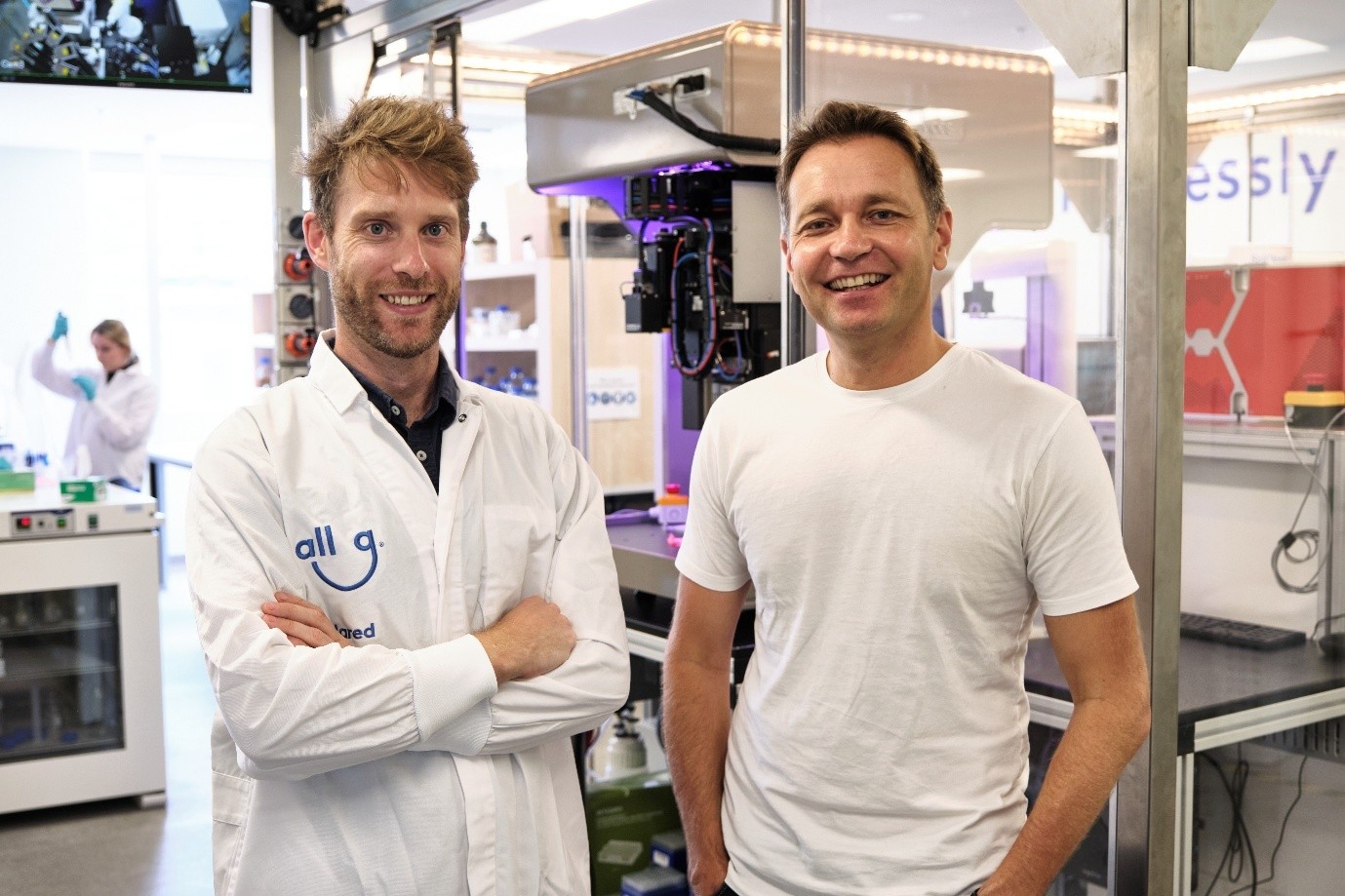
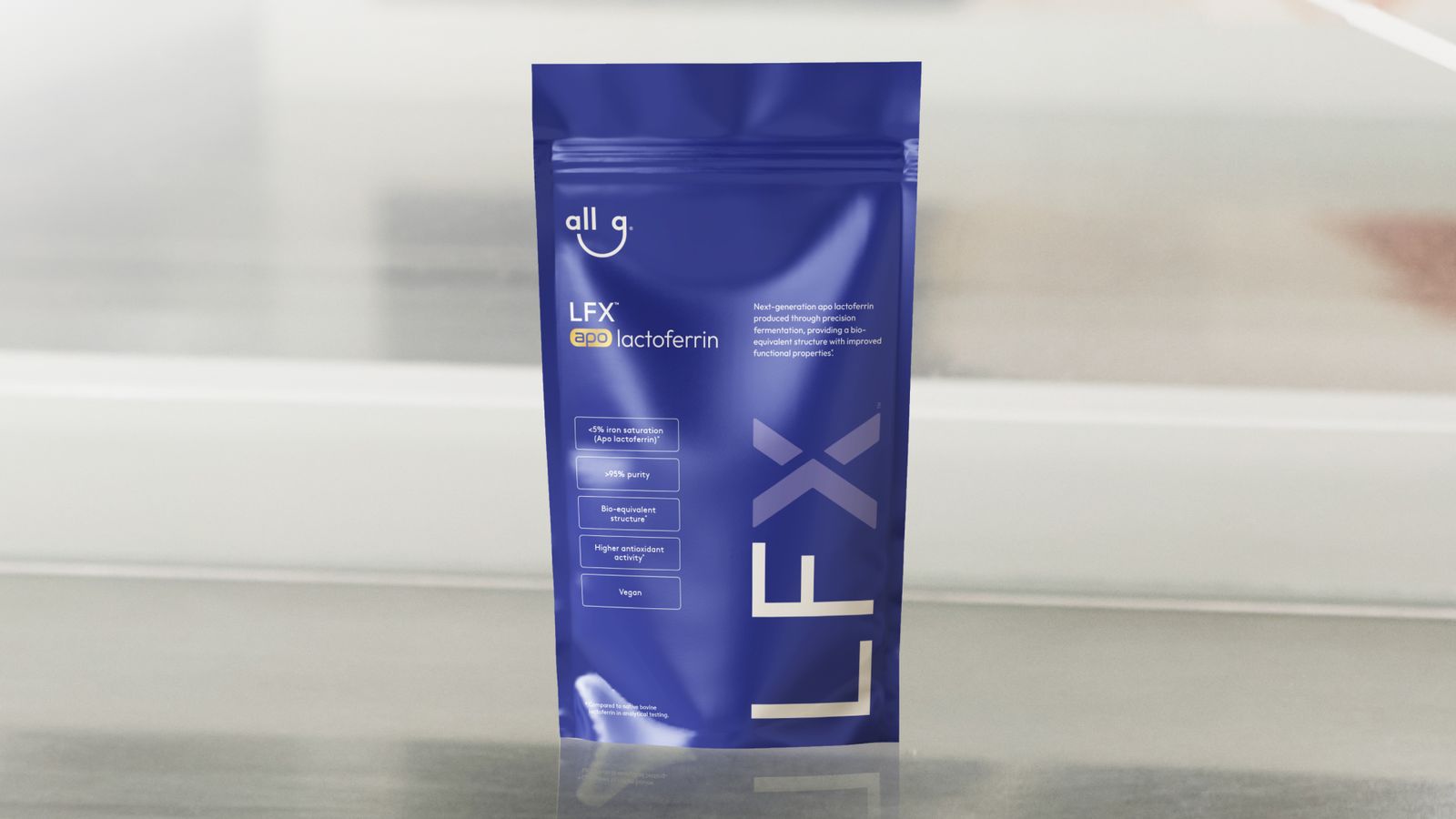
Australian startup All G has made its US debut with LFX apo-lactoferrin, bovine-equivalent lactoferrin made via precision fermentation with less than 5% iron saturation.
An iron-binding anti-microbial protein found in mammalian milk, lactoferrin has multiple health benefits, but has historically only been available in small quantities owing to the high cost of isolating it from cow’s milk.
As a result, prices can top $650/kilo, making it an attractive candidate for firms in precision fermentation, who claim they can unlock new markets in active nutrition, gut health, healthy aging, women’s health, immune support, and infant formula.
With multiple startups now piling into the segment (Vivici, All G, PFerrinX, TurtleTree, Helaina, Eclipse Ingredients, PFx Biotech, Daisy Labs, and Noumi), some players are attempting to differentiate themselves by modulating levels of iron saturation.
In its “apo” state, lactoferrin acts as a sponge for free iron and starves harmful bacteria and fungi that rely on iron to survive, claims All G.
“When iron saturation is low, empty iron-binding sites can bind excess free iron and help regulate homeostasis, limit iron available to harmful bacteria, support gut health, promote immune cell activity, and improve dietary iron absorption without requiring more iron to be consumed. The result is a fundamentally different approach to iron management. LFX works as an iron regulator, not just an iron source.”
An industry first
CSO and cofounder Jared Raynes, PhD, told AgFunderNews: “Although we welcome any competition, achieving a low iron saturation at commercial scale is significantly more challenging than at lab scale and we have yet to see any other company prove that it can be done.
“From publicly available data relating to our precision fermentation competitors, they are producing lactoferrin that is very highly saturated. On top of our low iron saturation, our product carries over 93% protein content, over 95% purity and over 95% binding to heparin – the latest industry standard measure for bioactivity.”
Asked how All G’s apo-lactoferrin compared to animal-derived lactoferrin, he said: “The regular iron saturation of dairy-derived lactoferrin sits at around ~20%; whereas All G’s specification sits at below 5%. The dairy industry can only achieve apo-lactoferrin through harsh intervention in downstream processing – by lowering the pH in order to strip the iron from the lactoferrin.”
According to Raynes, this process is “well known to degrade the protein. Up until now, apo-lactoferrin has only been offered for pharmaceutical applications as the price is close to double the price of partly saturated lactoferrin.”
Positive unit economics
All G, which has an FDA GRAS ‘no questions’ letter for its bovine lactoferrin, has proven its tech at pilot scale with Döhler and is scaling up with contract manufacturers, said the firm, which is currently producing LFX at a scale of “multiple metric tons per year.”
CEO Jan Pacas added: “We are currently producing at 60,000-liter scale and at a yield that is giving us positive unit economics when selling at the current market price of milk-derived lactoferrin.
“We are producing with one of the top global fermentation CMOs in China that gives us the scale and quality consistency that will allow us to scale precision fermented lactoferrin globally. Talks of a second facility, likely in Europe, are well underway. On this part we are leveraging our established relationships with our joint venture partner Savencia [a leading producer of bovine lactoferrin] and our strategic investor Döhler. All G keeps local stock in the US for fast fulfilment of US customers.”
The firm, which is backed by investors including Agronomics and Döhler Ventures, recently announced a joint venture with French dairy ingredients expert Armor Protéines and aims to capitalize on the latter’s scientific expertise, distribution channels, and long-standing relationships with leading players in infant formula, adult nutrition, and supplements.
Human lactoferrin will also come in apo-form
All G hopes to secure self-affirmed GRAS status for human lactoferrin by the year end and aims to be on the market within six months, said Pacas.
“The data we have generated from our scale-up human lactoferrin batches is significantly superior to what is currently on the market. One thing we can share now is that our human lactoferrin will also come in apo-form, mimicking human breast milk at around 4% iron saturation. ”
He added: “We believe that human and bovine equivalent lactoferrin will co-exist, with human lactoferrin serving the markets where it makes the biggest difference such as women’s health and infant nutrition. At the same time, bovine lactoferrin remains one of the most studied and proven proteins for human health, backed by thousands of peer reviewed papers and dozens of clinical trials. We can’t simply dismiss that body of research and write off this protein just because human lactoferrin is now available.”
Bovine and human lactoferrin will be priced differently, “putting bovine in a more accessible category and keeping the option open for formulators that are price conscious,” he explained.
According to Pacas, the “main market is for supplements, but increasingly we are seeing demand come in for functional foods and sports nutrition. We expect significant growth in the total market size for lactoferrin since lack of supply has been one of the main constraints for brands.”
Raynes added: “The traditional claim areas for lactoferrin are iron absorption, gut health and immune support. For all of these claim areas, the mechanisms are strengthened by the low-iron saturation in our apo-lactoferrin.”
Further reading:
Nestlé taps Helaina to explore bioactive proteins in infant nutrition
TurtleTree, Novonesis strike partnership to scale up precision-fermented lactoferrin
Vivici bags $14.4m EIC funding to scale precision-fermented dairy proteins