Long before the term “regenerative agriculture” hit the vernacular, Lundberg Family Farms was expounding on the principles of soil health and working by the motto, “Leave the land better than you found it.”
The California-based rice producer’s long history with regen-aligned practices—as well as its organic status that goes back to the 1960s—would seemingly make it a shoe-in for official regenerative-organic certification—something food companies large and small now seek.
As it turns out, the process of getting that certification isn’t automatic, even for a seasoned player like Lundberg.
Working with the Regenerative Organic Alliance (ROA), which issues Regenerative Organic Certification (ROC) to qualifying farms, the company had to analyze everything from when to plant cover crops to whether wildlife counted as livestock to its employees wages.
Lundberg Family Farms received ROC in 2023.
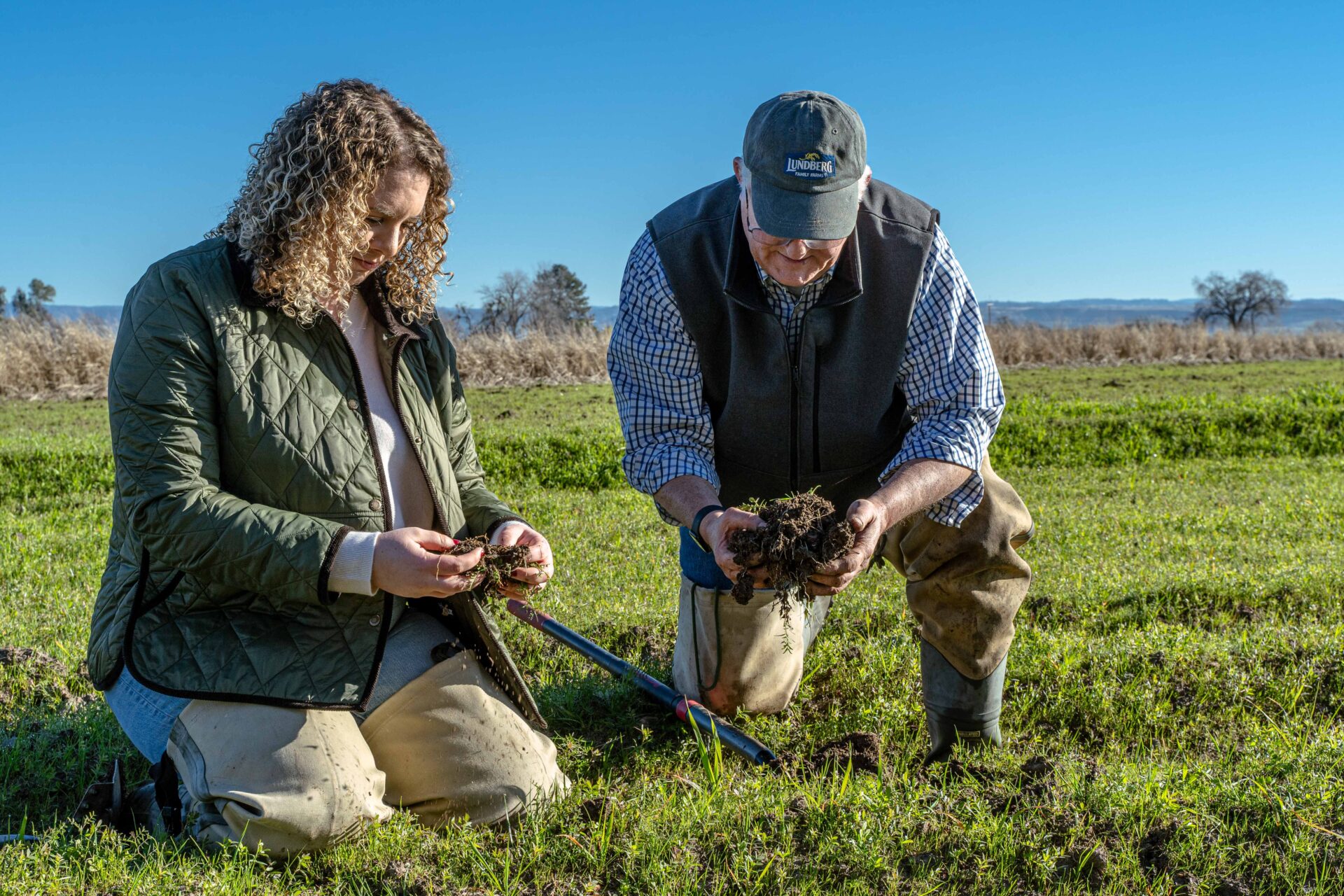
“Ultimately, it felt like a validation of the fact that we’ve been farming regeneratively for generations, back to the 1930s when my great grandpa moved here and said, ‘We’re going to leave the land better than we found it,'” says Brita Lundberg, a fourth-generation farmer who also works for the main company.
In a chat with AgFunderNews, she and her father/fellow farmer Bryce Lundberg unpacked the process of becoming regenerative-organic certified and how it has changed the business for good.
AgFunderNews (AFN): Lundberg was essentially founded on regenerative principles. What had to change for the company to become officially certified “regenerative-organic” by the ROA?
Brita Lundberg (BL): When regenerative first started to feel like a buzzword, maybe seven to 10 years ago, it was super closely aligned to no-till. But we grow rice in super-heavy Adobe clay soil that holds water like a bathtub, and tilling is part of our organic system. We don’t do in-season tillage, but we do till in the spring to get the cover crops into the ground and also prep the fields for planting, and in the winter, after harvest, to get the nutrient-rich rice straw into the soil.
Some of our hesitations in the early days were around whether our system would be considered “regenerative” if we were doing what we consider conservation tillage. But regenerative, especially regenerative-organic, has since kind of moved away from that “no-till-or-bust approach.”
With the evolution of the standards, we found that regenerative was a really good fit, especially around another concern: would we be considered regenerative-organic if we weren’t raising animals?
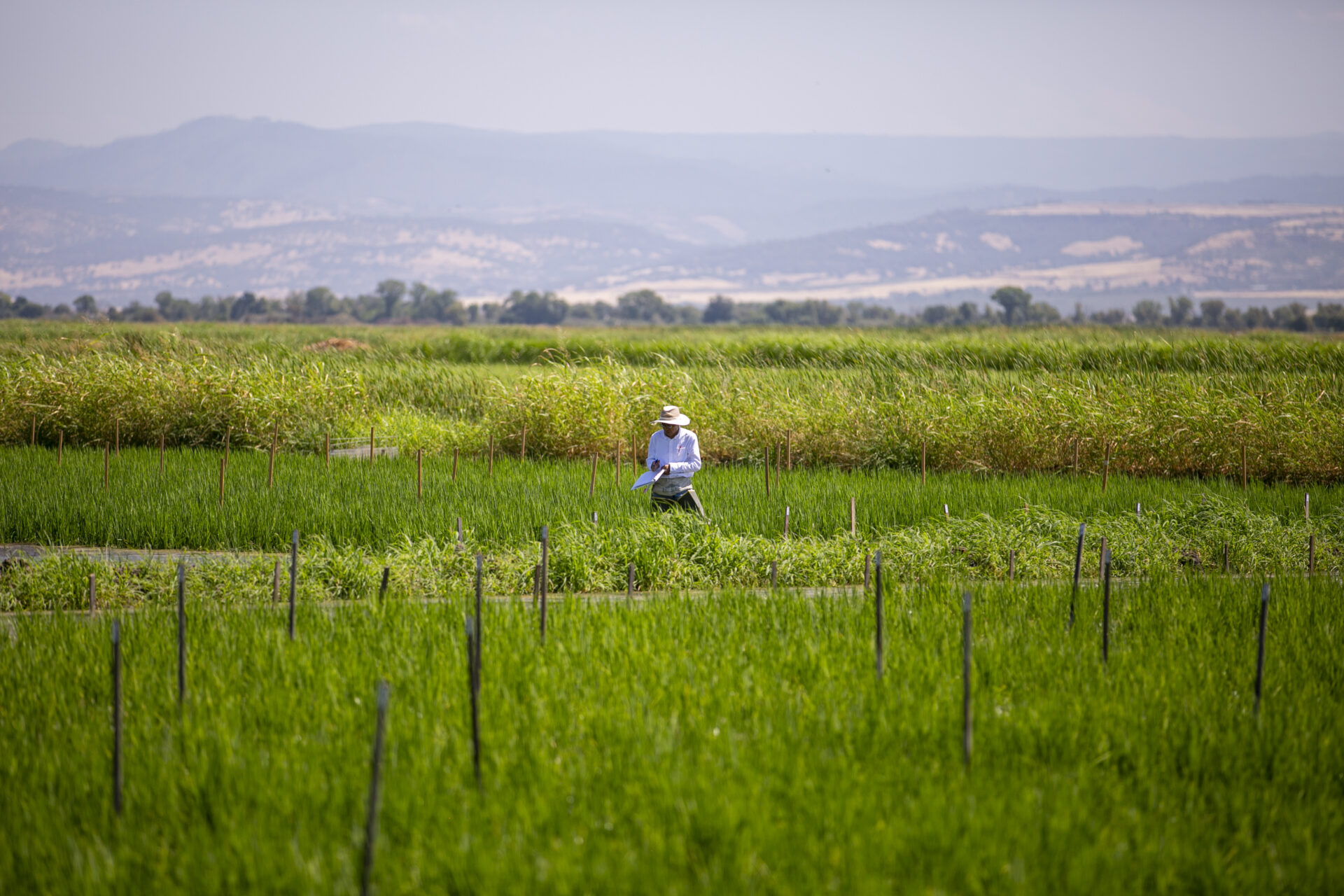
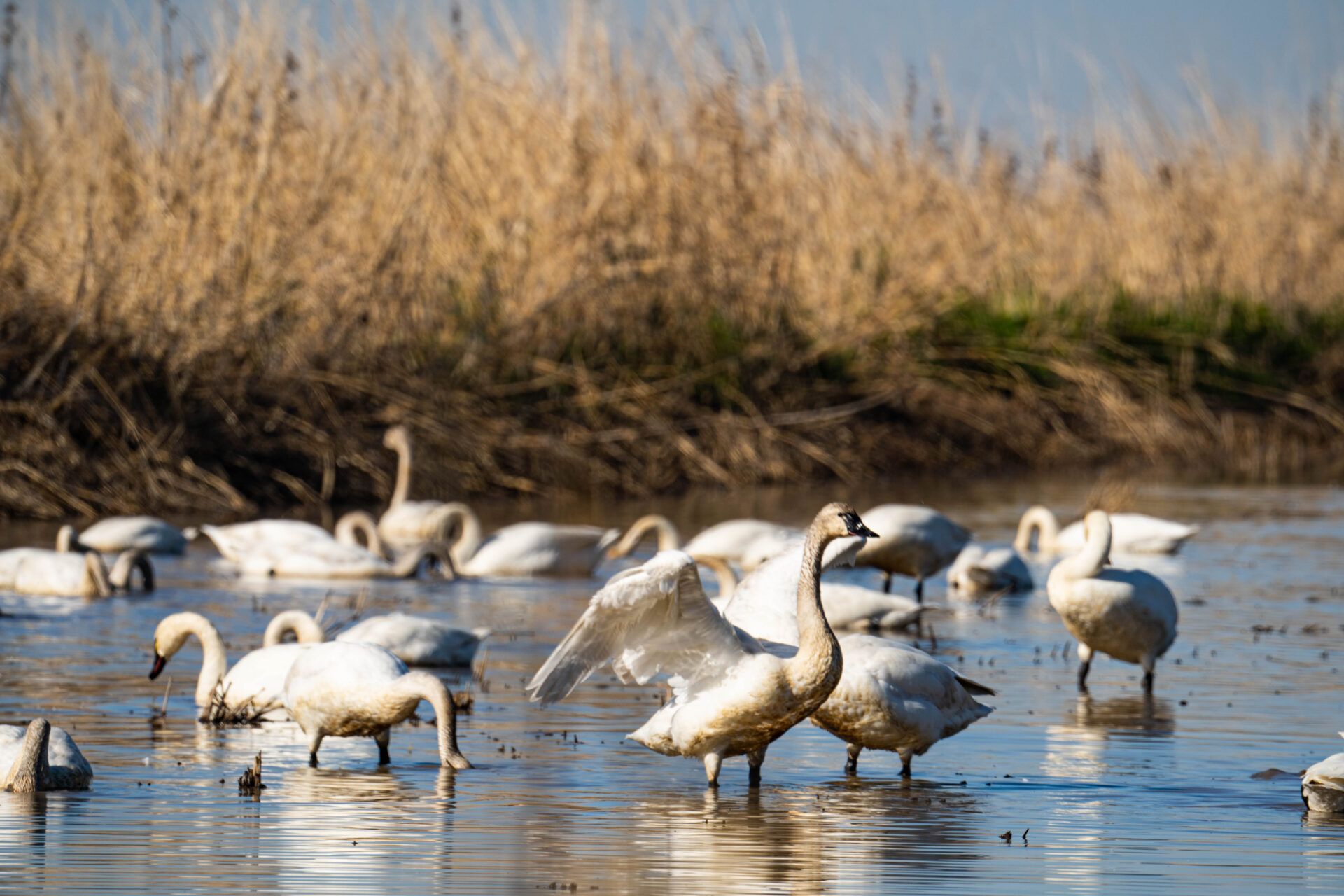
Livestock isn’t part of our system. But our farms are part of the Pacific Flyway, which is a major migratory pathway for birds. During the winter, our fields are filled with thousands of ducks, geese, swans, central cranes, and we flood a portion of our fields to provide food and habitat. So we can have a relationship with animals and with animal welfare without owning livestock or owning birds.
AFN: What about data? Did ROA require Lundberg to track specific elements of farm operations differently?
Bryce Lundberg (BrL): We always do a stewardship report, and that has a biodiversity component to it. But ROA said, “We’d like to see more than that.” They wanted to know what species we’re seeing, where we’re seeing them, and when. They also wanted to know how often land is uncovered—so we have reports on tillage and how often the soil is uncovered.
My brother and I changed our [farming] strategy for how we handle cover crops that we harvest in the summer. We usually go right in and work the ground and prep it for the winter, but now we wait and leave the ground covered longer. That’s good to have that encouragement [from ROA] to keep the land covered longer and not have the soil exposed to the sun and the elements.
In regenerative-organic there’s the soil component, there’s the wildlife/animal component, and the people component. The inspection also includes an interview with our team members. ROA wants to see wages and talk to some of our team members to confirm we’re not asking [people to work] seven days a week or in unsafe conditions.
AFN: Has the certification changed the way you communicate with your customers?
BL: It’s been incredible as a tool to connect with consumers, to reintroduce them to to our farming practices. I think we’ve seen the impact of that on the sales and marketing side as well. Maybe we haven’t changed our farming practices, but we’re talking about them in new ways.
It was actually one of our customers who first asked us to consider becoming regenerative-organic certified. They also asked us to consider revisiting packaging and the way that we were telling our story. They said, “Your farming practices are top tier, but you’re not telling the story effectively enough.” So I think that we’ve really, along with the certification, doubled down on telling that story in an accessible way.
AFN: In your experience, are consumers willing to pay more for a regenerative-organic-certified product?
BL: If the data is anything to go by, we’ve heard from our consumers that more than 60% of them are interested in regenerative-organic certified and willing to pay more for it.
That said we didn’t increase our prices when we transitioned to regenerative-organic certified because we were already at a premium price point. We didn’t want to end up having consumers choose between organic and regenerative-organic certified.
The ROA is [about to reach] 20 million acres certified, and with that, they’re seeing a 24% increase in sales. I think that’s a clear indication that consumers [are interested] in regenerative-organic-certified products and willing to pay for them.
BrL: Being able to find our products on the shelf is the first step though. If consumers can’t find them, they don’t have the option to evaluate whether they want to buy regenerative-organic. So we’re keeping regenerative-organic certified rice at the forefront of our innovation strategy and starting to use it in more products.
BL: We’re using regenerative organic-certified rice in maybe unexpected ways. For example, we use it in our 90-second microwave rice and more “mainstream” products in hopes that we can introduce a broader audience to regenerative-organic certified.
Further reading:
🌾 Why the ‘regenerative organic’ certification exists—and why the food system needs it
🌾 ‘We’re off track’ when it comes to regenerative agriculture certification, says Force of Nature CEO
🌾 Organic is a long game. Iroquois Valley invests in farmers accordingly