Despite the rise in organic food certification in the US, organic production still represents less than 1% of the country’s farmland. That’s largely because transitioning to organic production is a costly and time-consuming process for established farmers on short-term leases. Those in the younger demographics often can’t even access land needed to start growing.
Real estate investment trust (REIT) Iroquois Valley long ago recognized the need for what it calls “farmer-friendly mortgages” and built a business model to directly address such challenges.
Since 2007, the company has helped farmers across 19 states transition more than 36,000 acres to organic production, and says it has directed some $127 million in investments towards this group.
Why it matters:
Transitioning land to organic production is a long game. Building back soil health takes years, and in the US, land must be free of any chemical residues for at least three years before the USDA will even consider certifying it for organic production.

All of this conflicts with the short-term leases (often just one year long) so prevalent nowadays. Short leases inherently cause uncertainty, regardless of the farming operation; they make it outright impossible to farm with conservation, regeneration, and clean food in mind.
Iroquois Valley’s business model directly addresses this by offering farmers long-term leases that typically run about six years, with “evergreen” renewal options after.
“By providing long-term leases, we offer farmers the stability and runway they need to steward the soil, complete the organic transition, and operate profitably over the long term,” Iroquois Valley CEO Chris Zuehlsdorff explains to AgFunderNews.
He says the company chose this model because it aligns not only with farmers interests but also those of investors.
“As a public benefit corporation and SEC-registered REIT, Iroquois Valley is structured to prioritize long-term land stewardship alongside financial performance,” he notes. “Our evergreen approach gives farmers the stability they need to complete the organic transition and profitably manage the land over time—an approach which can deliver consistent returns across market cycles.”
How it works:
Some 1,000 impact-driven individual and institutional investors support the Iroquois Valley mission of providing long-term leases to farmers.
- Investors can participate through either REIT equity shares or Iroquois Valley’s “Rooted in Regeneration Notes.”
- REIT investments range anywhere from $10,000 to $9 million, according to the company, and are open to both accredited and non-accredited investors.
- Rooted in Regeneration notes are specifically designed to support farmers that qualify as “socially disadvantaged” under the USDA’s current definition (which includes BIPOC farmers). These fixed-income investments help fund discounted mortgages for farmers in this group practicing conservation-based agriculture.
Iroquois Valley by the numbers:
Earlier this year, Iroquois Valley released a bundle of data showing its impact over the last decade from organic agricultural practices. Among the findings are:
- 29 million: number of pounds of synthetic chemicals eliminated through organic farming
- 100,000: metric tons of carbon removed from the atmosphere
- 700 million: gallons of water retained in the soil
- 30%: increase in the number of wild bees supported versus conventional agriculture
- 20% increase in the number of native birds
- 95,000: tons of topsoil saved from erosion
- $30: increase per acre Iroquois Valley farmers earn
“We measure success through farmer retention, operational resilience, and consistent performance across market cycles,” explains Zuehlsdorff.
“By focusing on Midwest row-crop farms, we’re able to scale both impact and returns while helping strengthen the food system for the benefit of everyone’s health and well-being.”
Connecting first-gen farmers to the land
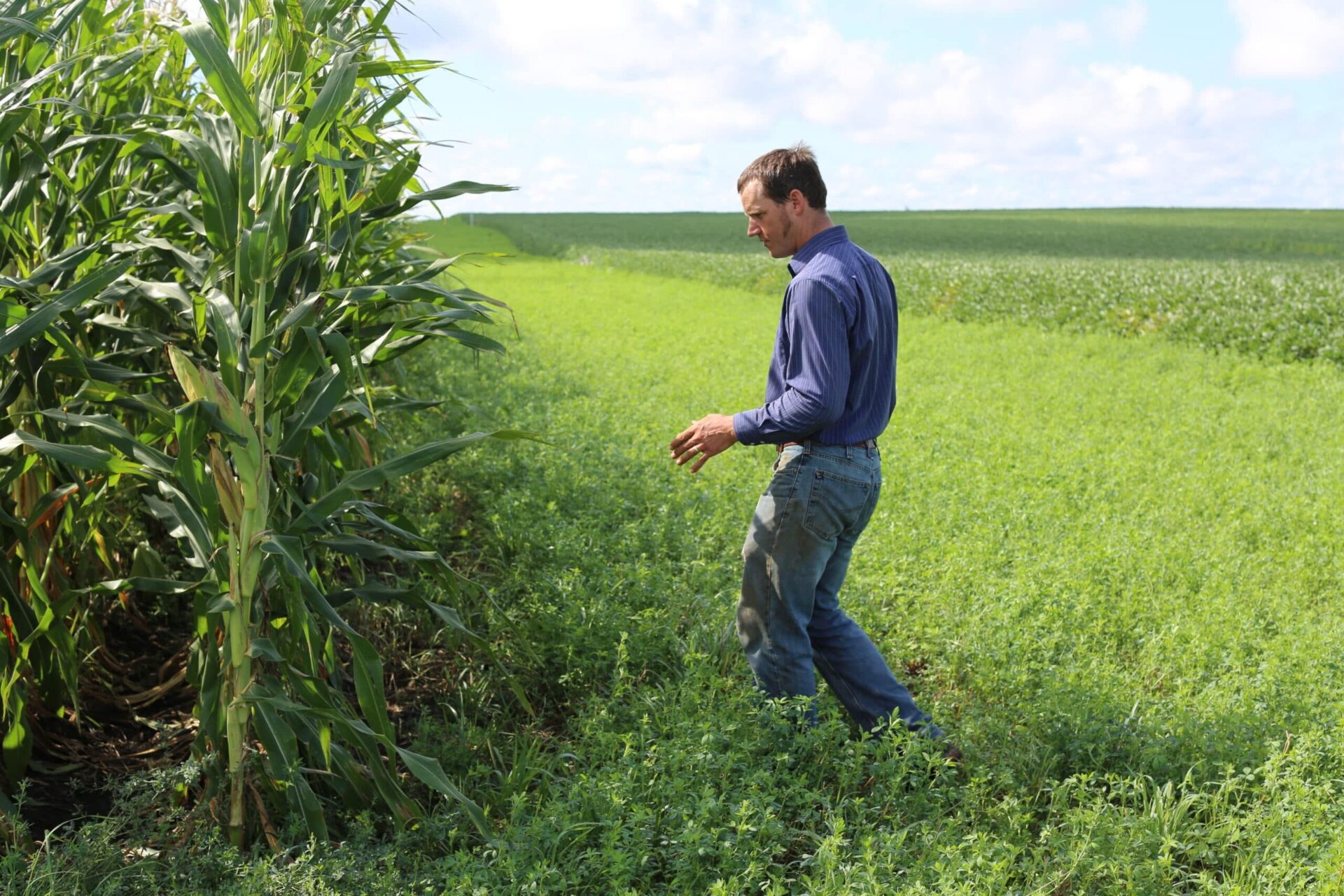
Iroquois Valley says about 65% of its farmers are millennials or Generation Z, and many of them are first-generation growers. Access to land is the top challenge for this group right now.
“The hardest part about becoming a farmer is that you can’t just knock on someone’s door and say, ‘I want to manage your multi-million dollar asset. I think I can do it better than anyone else, even though I am just a farmhand and not a farm owner right now,'” notes Adam Roberts of Roberts Family Farm in Illinois.
Roberts approached Iroquois Valley after learning about it from another local farmer. Despite having never owned a farm before, he was nonetheless an attractive investment due to his long experience working in organic grain production.
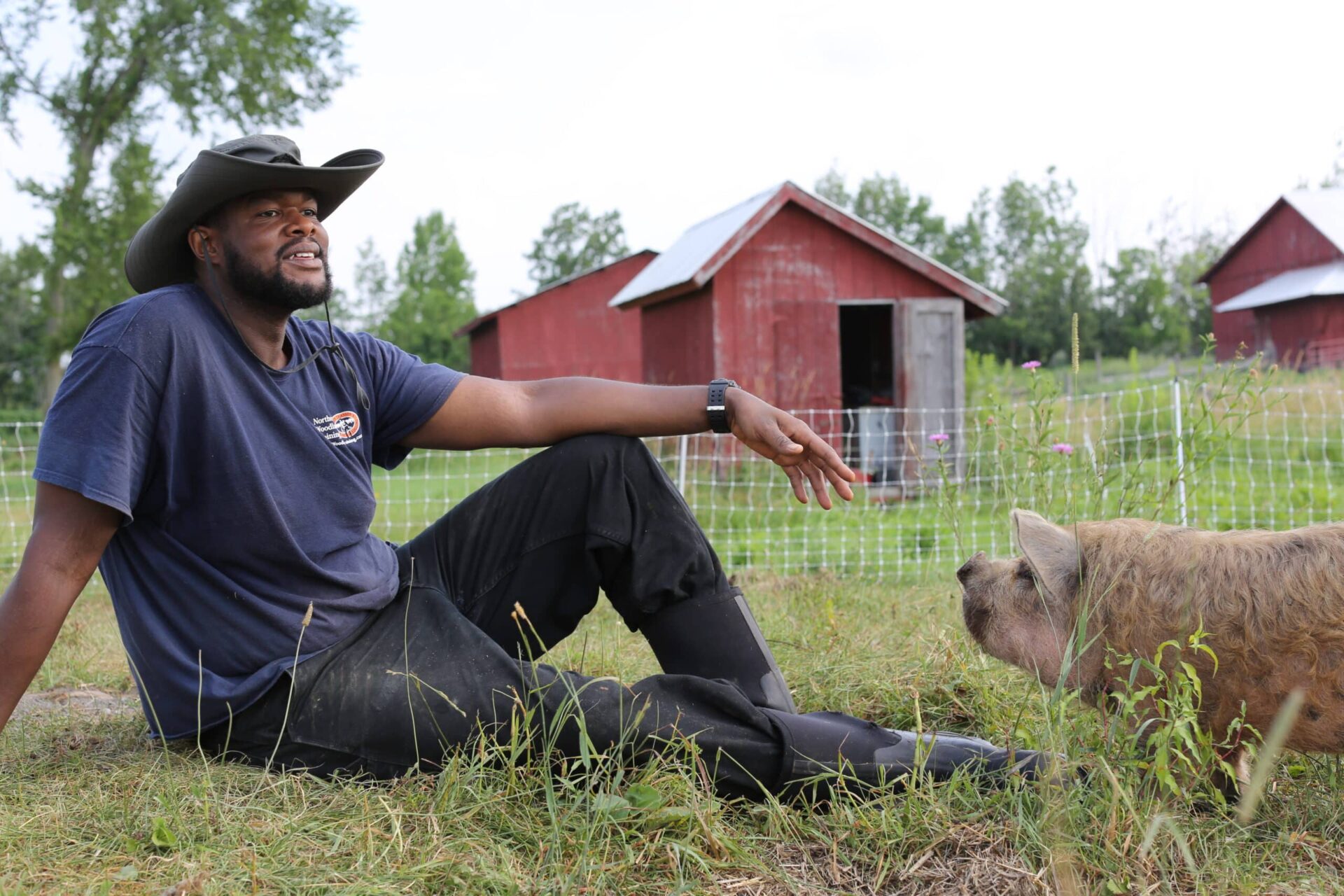
US navy veteran and Black Wind Farm owner Justin Butts faced similar challenges when looking for farmland in New York state. VA loans don’t support commercial farms, and conventional banks required down payments in amounts far too large for Butts and most other first-time farmers.
Butts was able to leverage support from the Rooted in Regeneration program, and today does organic livestock production on over 100 acres in Albany County, New York.
In-depth: organic certification
Whether the world needs more organic and/or regenerative certification is a topic up for debate right now, with some calling it vital and others saying it’s a distraction.
Zuehlsdorff says Iroquois Valley is fully committed to the concept of organic certification.
“Organic standards are legally enforceable, nationally recognized by the USDA, and provide a level of accountability that creates trust across the marketplace—for producers, consumers, and investors alike,” he says.
“They also deliver well-documented environmental benefits, including improved soil health, cleaner water, enhanced biodiversity, and increased carbon sequestration.”
He adds that many Iroquois Valley farmers choose to go beyond the organic baseline, adding regenerative practices and certifications to their list.
While these “deepen” ecological outcomes, Zuehlsdorff cautions that they do not replace “the strong, credible framework that organic certification provides.
“From our perspective, regenerative and regenerative-organic certifications can add value, but organic certification remains the essential, proven standard that anchors the industry.”