

AI tools for measuring and managing food waste are gaining traction, but adoption remains fragmented, with companies relying on a patchwork of solutions. Some technologies have been in use for years in places like commercial kitchens, some are in the earliest stages of development, and some may have little impact at all.
For agrifoodtech investors, it’s important to understand where these differences lie—something addressed in a new report from ReFED and The Spoon.
“AI is very much in the zeitgeist right now. However, there is often a disconnect between what is working and what is hype,” says Asch Harwood, VP, data and insights at ReFED.
The report aims to “take a more realistic look at what deployments were mature and what aren’t, as well as thinking about what might be in the future. We also thought it was important to understand the barriers or major considerations about AI for it to make a difference.”
Making waste ‘visible’
For investors, it’s important to remember that most AI in the food waste realm still focuses on waste measurement and decision support.
“While generative and agentic AI is starting to be incorporated, it is still not widely deployed and has not yet proven itself,” says Harwood.
“At the end of the day, reducing food waste is about human decision-making and changing policies at the farm, store, or restaurant level. So any visibility into waste or any decision recommendations that are coming from AI need to be aligned with the incentives and capacity of these folks to actually make changes.”
Investors should prioritize AI tools that can make waste “visible.” Applications that enable better decisions that prevent more waste tend to have greater impact, be it financial, environmental, or social, says the report.
Harwood notes that another crucial point for investors to consider is data.
“AI tools require high-quality data. As a result, food businesses may need to change their data collection practices or update their legacy software to work with these new tools.”
ReFED encourages investment into data infrastructure that enables waste reduction. This might be a system that improves accuracy or affordability of food waste-monitory platforms, or platforms that can clean, standardize, and integrate food system data.
Strella, for example, puts sensors inside storage and ripening rooms that can monitor the release of ethylene gas. Machine learning models process this data to predict when produce will ripen, so that operators can prevent spoilage much faster than possible with traditional methods.
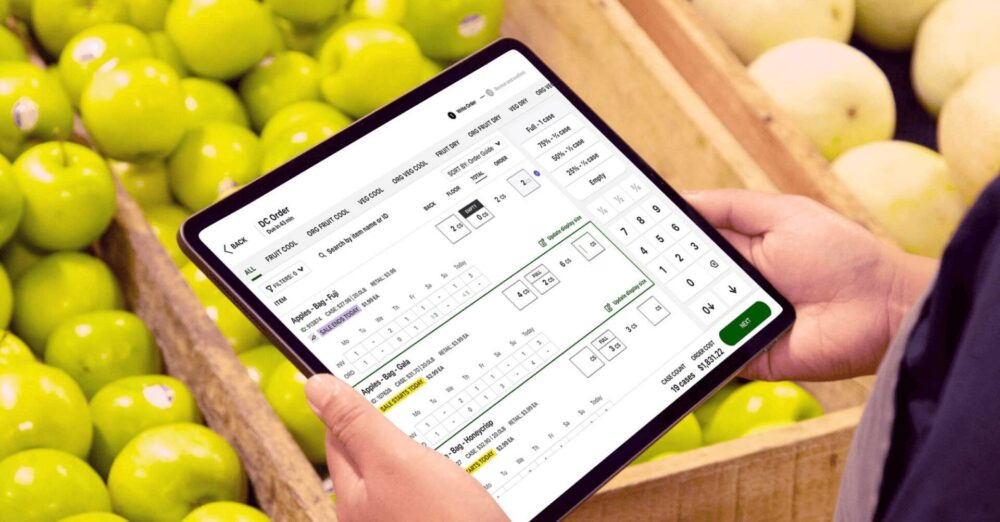
Another well-known company is Afresh, which employs AI to analyze data around sales, available inventory, weather, seasonality, and other factors to make store-level ordering recommendations for fresh produce, dairy, and, most recently, non-perishable food.
“Solutions are more likely to succeed where incentives, coordination across handoffs, and operational flexibility enable waste reduction, and when tools easily integrate into existing workflows,” notes the report.
Real-world results
Up to now, businesses like restaurants and supermarkets have treated food waste as just another cost to doing business.
But AI tools in their various forms have been part of these operations for years, starting with computer vision and sensor-based technologies that “make waste visible in real time,” notes the report. AI-based forecasting tools followed. Now, generative AI tools and advanced analytics are generating more recommendations through better data integration, and in some cases even making decisions.
According to the report:
- AI is already helping to reduce food waste in certain settings such as commercial foodservice operations, where some businesses have cut waste by 20–53% using AI-powered measuring tools.
- In food retail, AI-driven demand forecasting prevented around 200 million pounds of food loss across 26 countries, according to interviewees for the report.
- AI-powered storage-monitoring systems enabled more precise inventory decisions and as a result saved roughly 20 million pounds of apples across 1,500 storage rooms.
The consumer household challenge for food waste
The consumer household sector has farther to go when it comes to AI being an effective food waste tool.
“Presumably, AI could help consumers understand how much food they’re wasting, why they are wasting food, and how to identify solutions,” says Harwood. “But changing behavior can be really difficult.”
Consumers are also surrounded by factors that don’t allow for behavioral change. For example, building AI tools into existing kitchens or via new appliances is expensive and requires retrofitting and updating a space, says Harwood. For many consumers, a kitchen renovation to accommodate AI is not a financial reality.
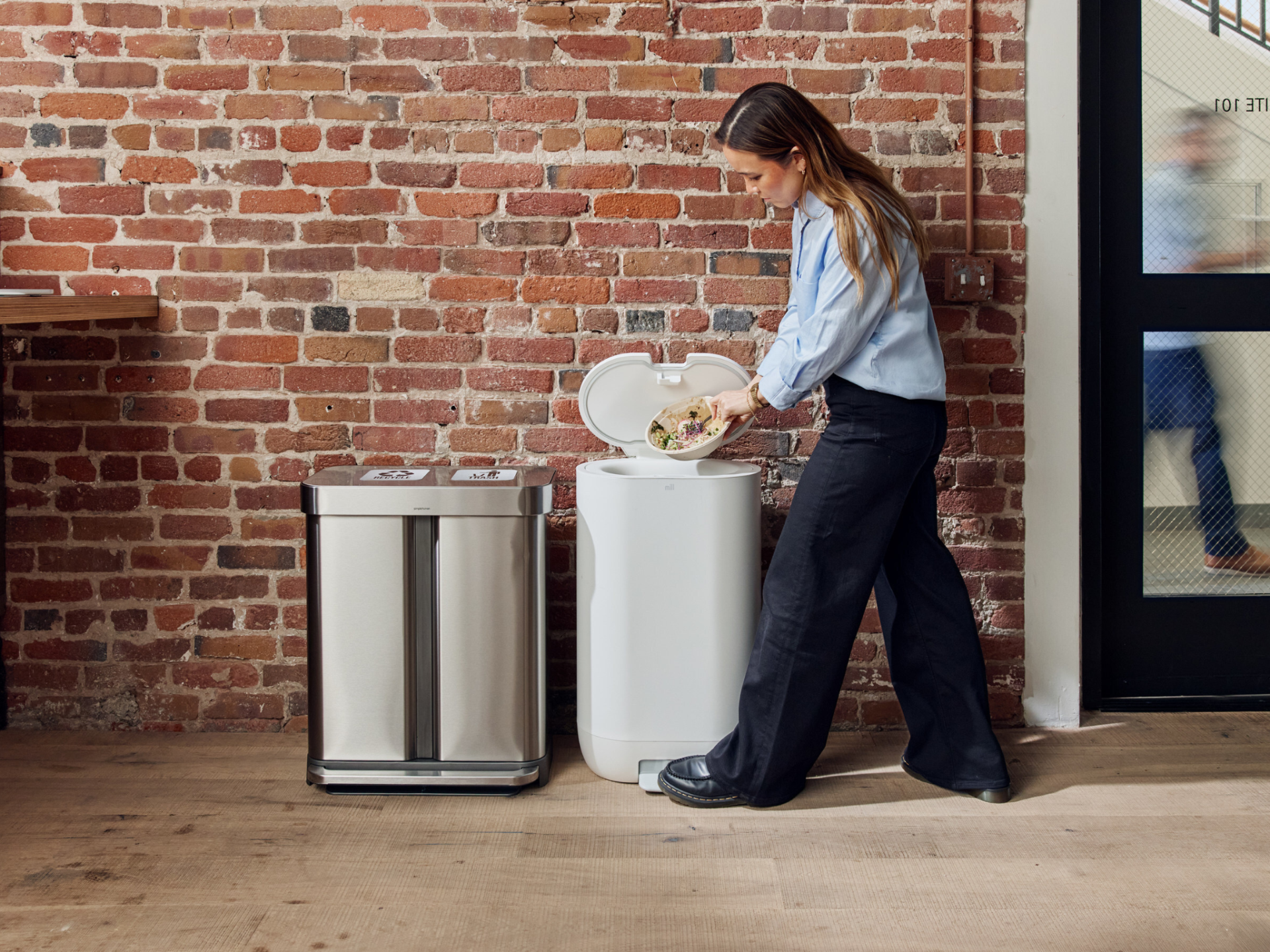
However, most kitchens can accommodate an small appliance, such as Mill‘s in-home food recycler.
Its in-home food recycler, which resembles any other household waste bin, processes food scraps (even dairy, bones, and meat) into nutrient-rich grounds that can be used in gardening and other projects around the home. A companion app tells the user how much food they put into their bin each day, week, and month. (Mill also has a commercial offering that includes camera vision technology to categorize waste and give businesses a more granular view of their food waste.)
The key for such tools lies in closing the gap between knowing about food waste and acting to prevent it. As noted, this hasn’t yet happened in the home like it has in commercial settings.
“It’s essentially meeting people where they are,” says Harwood. “Once that happens inside of a kitchen, that is going to reduce some of the friction that currently exists in situating AI and helping to solve problems that ultimately reduce waste.”
Further reading:
Which technologies will actually help fight at-home food waste?
Apeel founder on MAHA, misinformation, layoffs, and a second act in post-harvest tech
Anti-obesity medications offer an opportunity to cut food waste—and costs