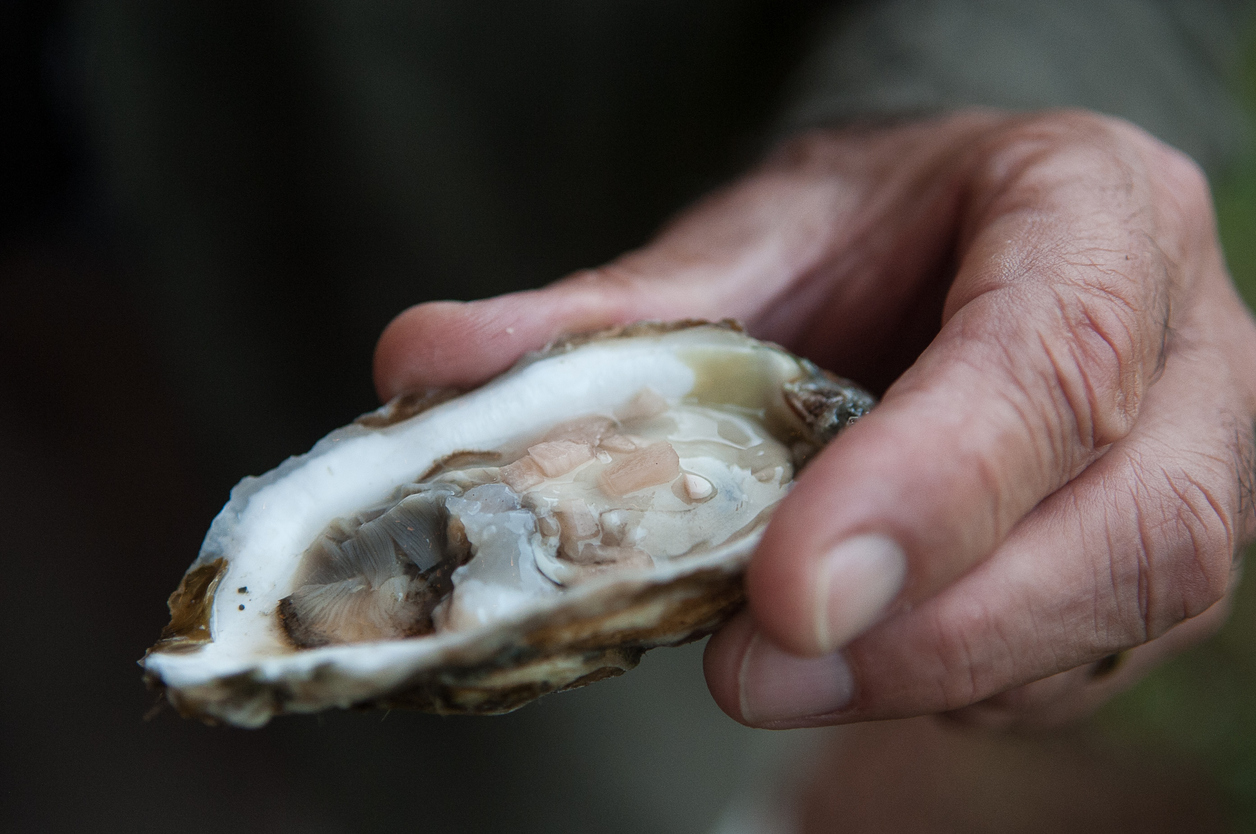
The oyster farming industry has been grown steadily but the tech has not kept pace, says robotics startup Seascape Aquatech, which aims to automate every stage of the process to boost yields and slash labor costs.
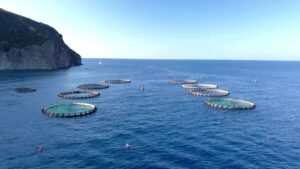
While many salmon and shrimp farms now deploy automated feeders, net cleaners, camera/AI monitoring, water quality sensors, and grading and harvesting machines, most oyster farms still rely heavily on manual labor, says Seascape CEO John Nicholas, who owns an oyster farm in East Hampton, New York.
The farm will serve as a test bed for a series of high-tech innovations including autonomous robotic boats developed by CTO and robotics specialist Mitchell London. The goal is full-cycle automation from nursery to harvest, including:
- Dockside floating upweller system (which pumps water through bins to grow oyster seed) and nursery automation
- Baywater grow-out, harvesting, and sorting
- Float cage maintenance with robotic boats (inspection, de-fouling, flipping, and winterization)
- Dockside maturation and finishing
- Shellfish processing, bagging, and digital tracking
The business model
Nicholas and London are looking to raise $2.5 million to prove out the tech at East Hampton and then implement it at a series of oyster farms it intends to acquire, with payback coming from higher yields and lower labor costs.
Nicholas—who spent 20+ years in finance and real estate before getting into oyster farming—told AgFunderNews: “Our strategy is to use our technology as a profit driver and M&A lever.
“In phase one, we plan to acquire and begin to scale-up operations at target farms. In phase two we plan to implement and optimize process automation at our farm in East Hampton, and in phase three, we will deploy the tech across our portfolio of farms. There are 3,000 oyster farms in America, we’re targeting six or eight of them.”
He added: “The people that invest in the R&D are going to own a part of the production of every farm that we produce in the future. So they’re not just investing in R&D, they’re investing in a portion of the roll-up strategy. Our plan is to utilize a roll up strategy to purchase other farms because oyster farmers won’t buy into this unless they see all of it working.”
Mechanizing oyster farming
The primary concern in oyster farming is maintaining water flow to the oysters, said Nicholas. “If algae accumulate on the bags [mesh bags that contain oysters], that will impede the flow, and your main job is to keep the flow going.
“To do that, you have to clean the oysters and the bags. To promote better growth, you also have to incorporate a process called tumbling [to chip shell edges] to promote a preferred shape, which is a deeper cup, so the oysters grow fatter and taste better. Tumbling also promotes greater hinge strength, which is important to restaurants.
“Next you have to do sorting, as oysters grow at different speeds, so you want to keep oysters of the same size together.”
Seascape is “redesigning everything, the bed, the float, the boat, the tumbler, the sorting tables, the oyster washer, to turn it into an automated process that can work for the majority of oyster farms,” he explained.
“Our initial system is designed for open water operations in the bay where the water is at least six feet deep but typically around 15-20 feet and is a mix of fresh water and salt water. To improve yield you have to maximize utilization of the water column. Right now, for example, human efforts to flip bags are limited to the first 12 to 18 inches from the water line. With mechanical means you can easily go 36 inches and double your production capacity from the same footprint.”
As Seascape is preparing patent applications, it can’t yet share images or describe its inventions in detail, said Nicholas. “But it’s a series of innovations.”
He added: “There’s a great company called Flipfarm Systems that invented a way to flip the oyster bags [to jostle the oysters, helping clean them and promote more even shell growth]. But it’s not autonomous, although it’s definitely time-saving, and you still need people to operate it.
“They also have huge tumbling and sorting machines that require people to operate them, whereas we are developing much smaller machines designed to operate autonomously 24:7.”
What’s next?
Seascape is currently operating its core machinery on land and testing a variety of materials for the open-water setup, which is more challenging in part due to the corrosive effects of salt water, he said.
“One of the advantages of our model it is we get to test it and perfect it on our own farm so that by the time we roll it out to the other farms, we’ll know it works. We’re totally changing the way oysters are going to be grown in the future.”
He added: “We’re first looking to raise $2.5 million, then an additional $2.5-5 million to accelerate the build out of the farm and manufacture the machinery. Then we’re looking to raise $20 million in a roll up fund to buy other oyster farms, which would be mostly debt.”
While the benefits of automating a largely manual system in an established market are obvious, he said, some education is still needed: “Not too many investors understand oysters and robotics.”
Further reading:
Atarraya’s flat-packed high-tech shrimp farms roll out in New Jersey as tariffs upend trade