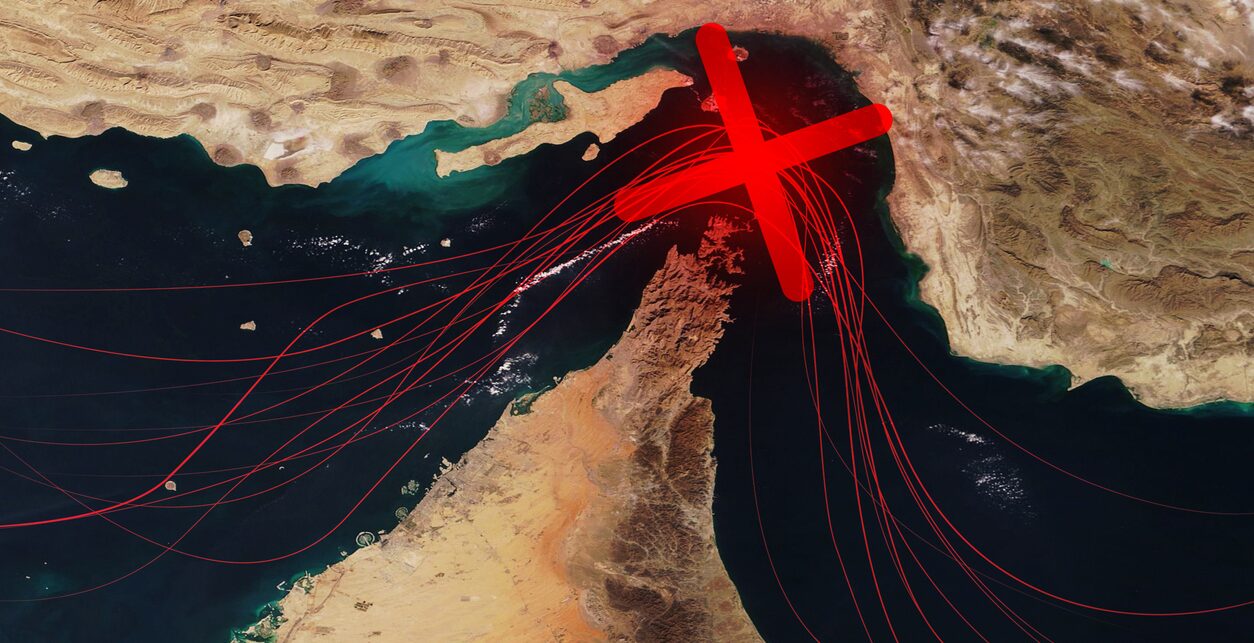
Were the conflict in the Persian Gulf to end tomorrow, global food prices could rise 12-18% above pre-crisis levels by the end of 2026, says one startup deploying AI to help procurement managers assess risk and plan accordingly.
And they will get even higher in the first half of 2027, predicts the cofounder of Helios AI, an AI-powered platform aggregating billions of data points to provide a real-time view of the climate and economic risks affecting 77 agricultural commodities across 90 countries.
Helios’ scenario reflects three challenges, says Francisco Martin-Rayo, a former Boston Consulting Group principal who teamed up with ex-Google AI/ML engineer Eden Canlilar in late 2022 to create Helios.
The first is already here: surging fuel costs, which are driving surges in transportation costs and shortages and price hikes in fertilizer. The second will arrive later this year, when spring planting shortfalls start translating to lower yields in grains and oilseeds. The third will begin next year, he tells AgFunderNews.
“When you’re applying less fertilizer, either because you don’t have it, or because it’s a lot more expensive, that will hit your harvest. And then it’s going to start to hit grain stocks, because you have to take up more than you expected. If you look at winter wheat in Australia, we expect lower production yields. So if you’re a wheat grower in the US, you might plant extra because the price is going to be higher.
“And then you get countries that restrict exports as we saw in 2022 on wheat, beef, palm oil… the ecosystem is so intertwined that with any of these ingredients, even if you have availability, prices could go significantly higher.”

Impacts will be uneven
With oil the US and some other countries have reserves and are somewhat prepared for supply shocks, he says. “There’s a global framework to try and manage this that doesn’t exist for food, where it is very much every country on its own, which we saw during Covid-19. That’s why we’re going to see more of an emphasis on food security.”
The strait will eventually reopen, and bombed sites will be repaired, he says. But the clock can’t be turned back: “You can’t put fertilizer in the ground in June that you missed putting in in March or April [and expect the same result].”
That said, the impact of this crisis will be highly uneven, he notes. Fertilizer-intensive crops such as corn—and animal protein markets relying on corn as feed such as chicken and dairy—are especially exposed, while other crops may not be notably impacted, although higher transportation costs will impact the entire industry.
From a geographical perspective, meanwhile, even regions with domestic fertilizer supply—such as the US—remain vulnerable because “you might have access to the fertilizer that you need, but… prices are set globally,” he points out.
‘If you’re a procurement manager today, the whole world is on fire’
Against this backdrop, Helios AI is seeing surging demand for tools that help procurement teams triage risk in real time, he says: “If you’re a procurement manager today, the whole world is on fire.”
He adds: “We’re now starting to engage much more deeply with some of our customers on supply chain risks: who are the suppliers that might go bankrupt if they can’t afford a 50% increase or 100% increase in fertilizer prices?
“The beauty of the Helios Horizon [AI-based] platform is that people can engage with it using natural language. Gen AI has really upended the entire business model [around ag/food intelligence]. What people want to know is what do I need to do today so that I’m not in worse trouble three or six months from now?”
Meanwhile, he says. “Everyone is also looking closely at force majeure clauses in their contracts and reading the footnotes [small print].”
Given the number of supply shocks over the past six years, he observes, “Procurement teams are much better at dealing with crises, but they are also exhausted. We did some research, and I think there are three times more supply shocks on average every year now than there were 10 years ago, yet procurement teams have not grown by 3x. We talk to people who run 50 suppliers so they need to rely more and more on AI to be able to do their job effectively. ”
How does this compare to what happened in 2022?
His comments came as Canada-based global investment research firm Alpine Macro issued a report suggesting that while severe, the current crisis is unlikely to have the same immediate impact on food prices as Russia’s invasion of Ukraine in early 2022.
“The 2022 crisis was unusually potent because it struck multiple pillars of the global food system simultaneously,” says the report. “By contrast, the current conflict is primarily a fertilizer and energy shock. It does not directly displace major agricultural-producing regions from global markets, and global crop output remains broadly intact. Any impact on yields is likely to materialize with a lag, rather than through an immediate disruption to spot-market supply.”
According to Alpine Macro:
👉 Persian Gulf producers account for a third of global urea exports, a quarter of ammonia exports, a meaningful share of global phosphate fertilizer exports, and half of global sulfur exports, a key raw material for phosphate fertilizer production.
👉 Qatar has halted liquefied natural gas output following strikes on its energy infrastructure, disrupting downstream fertilizer production, while Iran’s urea and ammonia production has experienced severe disruptions.
👉 Leading fertilizer exporters including China, Russia, and North America, are unlikely to be able to rapidly ramp up shipments to offset supply shortfalls.
👉 Canada’s nitrogen production facilities operate at high utilization rates, leaving limited room to boost output. Expanding production would require multi-year investments in new plants.
👉 Exposure to events in the Gulf is most acute in South and Southeast Asia. North America is slightly less exposed but still impacted by global price hikes. Europe has rising dependence on imports and weak domestic fertilizer production.
👉 Brazil depends on imports for 85% of its fertilizer needs. Sustained disruption could meaningfully raise input costs for soy and corn.
Startups working on solutions to replace or reduce synthetic fertilizers:
TerraBlaster: Uses laser-induced breakdown spectroscopy to determine levels of NPK and other nutrients in the soil, which can be used to guide the more precise application of fertilizer, delivering ROI in the form of reduced input costs and increased yield.
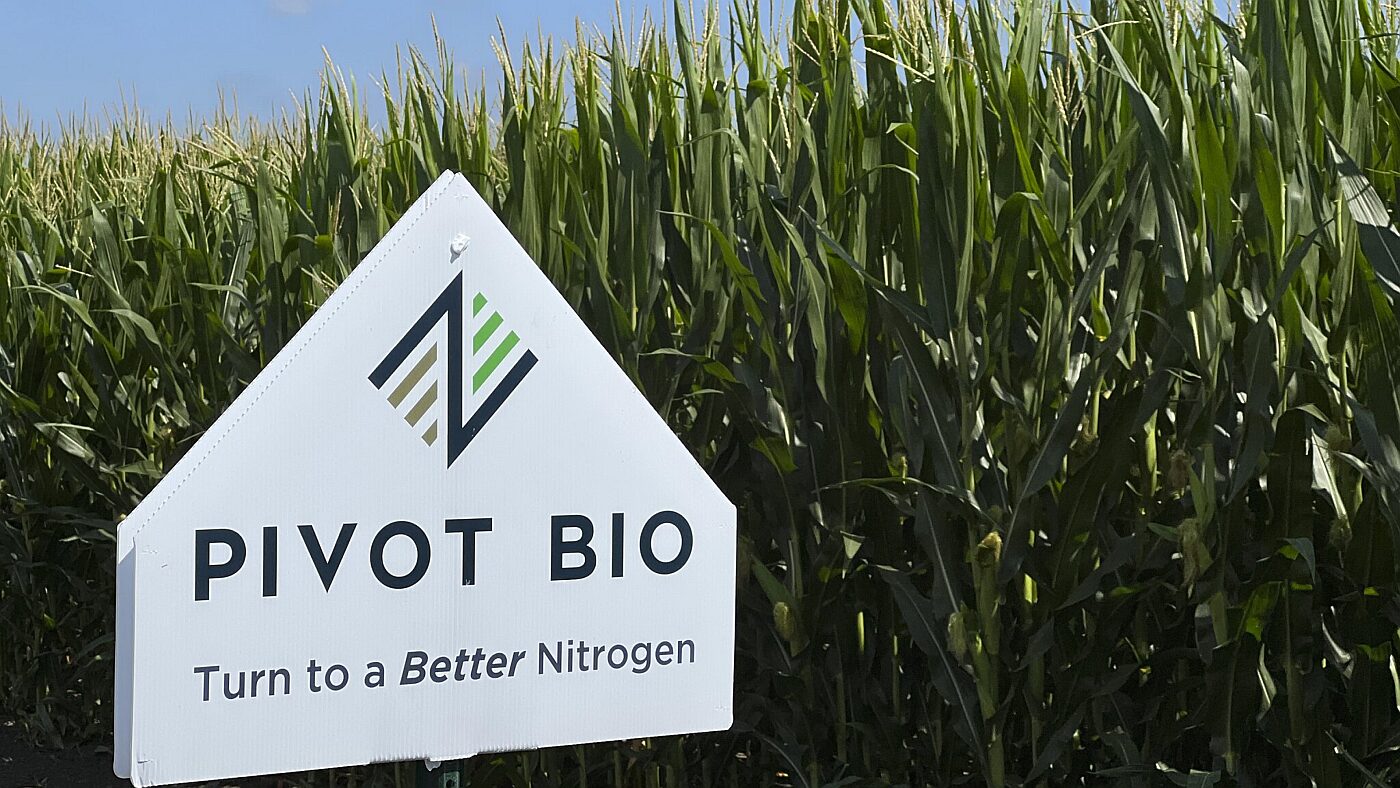
Pivot Bio: Engineers microbes that fix nitrogen directly on plant roots, reducing synthetic fertilizer use by 20-25%, a number CEO Chris Abbott reckons he could get to 40-50% over the next five growing seasons as the firm optimizes its wares.
Kula Bio: Leverages nitrogen-fixing soil bacteria to reduce reliance on synthetic fertilizers. The bacteria are fortified in a proprietary process that helps them build up larger than normal stores of energy and nutrients.
Joyn Bio (Bayer + Ginkgo): Developing engineered microbes for nitrogen fixation.
Switch Bioworks: Pioneering an approach that enables engineered microbes to first compete and establish themselves on plant roots before “switching on” nitrogen fertilizer production.
Azotic Technologies: Biological nitrogen fixation using a naturally occurring bacterium that lives inside the plant, fixing nitrogen inside plant tissues throughout the season.
Sound Agriculture: The firm’s soil activator (applied as a foliar spray) mimics a plant signal that activates soil microbes to improve nitrogen and phosphorus uptake in crops, reducing growers’ reliance on synthetic fertilizers.
Nitricity: Produces organic nitrogen fertilizer from air, water, renewable energy, and upcycled almond shells. Its new plant should be at full capacity (8,500-tons) later this year. The liquid “Ash Tea” fertilizer is designed for application through irrigation lines.
Windfall Bio: Uses methane-eating microbes to convert waste methane from farms and landfill sites into nitrogen-rich organic fertilizer.
Solugen: Use its enzyme-based biocatalysis platform to convert nutrients in hog manure into a certified organic liquid nitrogen fertilizer.
NitroVolt: Decentralized ammonia production via converting a lithium salt in solution into metallic lithium using electricity. The metallic lithium reacts with nitrogen gas to form lithium nitride. This is converted into ammonia by adding hydrogen (obtained from water via electrolysis). The lithium is then released back into the system and reused. This makes ammonia in milder conditions vs Haber-Bosch, says the firm, which is building its first container-sized demo unit.
Atmonia: Deploys low-temperature ammonia synthesis utilizing a novel catalyst in an electrochemical cell to reduce atmospheric nitrogen and split water to form ammonia in a single step process. Currently still at lab-scale.
Nium: Developing modular systems to enable decentralized “green ammonia on demand.” Its small-scale reactors combine hydrogen (sourced from water via electrolysis) and nitrogen from air using a proprietary catalyst to synthesize ammonia at low temperatures and pressures, significantly reducing energy consumption and carbon emissions vs the Haber-Bosch process.
N2 Applied: Uses plasma technology powered by renewable energy to convert manure into nitrogen fertilizer on-farm.
Aqua-Yield: Develops nanotechnology-based crop nutrition and input delivery systems to improve nutrient uptake and efficiency.
Phospholutions: A dry phosphate fertilizer developed to improve phosphate-use efficiency in plants that also minimizes runoff.
Ostara: Recovers phosphorus from wastewater and sells it as slow-release fertilizer.
EasyMining: Extracts phosphorus from sewage sludge ash at scale.