Virtual fencing company NoFence recently launched its third-generation cattle collar, the N3, alongside a precision livestock management platform. The announcement reinforces the idea that the technology’s greatest value has little to do with actual fence posts.
For the Oslo, Norway-founded company—which also operates in the US, Sweden, and Ireland—it’s about precision management of land and livestock, and the ability to give producers hours in a day back, says Alex Bell, acting director, US, at NoFence.
“NoFence has a 99.7% containment rate. Containment has been solved. And it’s been solved in such a way that gives producers time back that they used to spend moving fences or driving long distances to check on cattle. They can move cattle on a schedule that meets the animals’ needs and supports forage quality.
“In addition to having time they can use to grow their business, they have data about their livestock and forage to make informed decisions about herd health, reproduction and land use.”
N3 at a glance
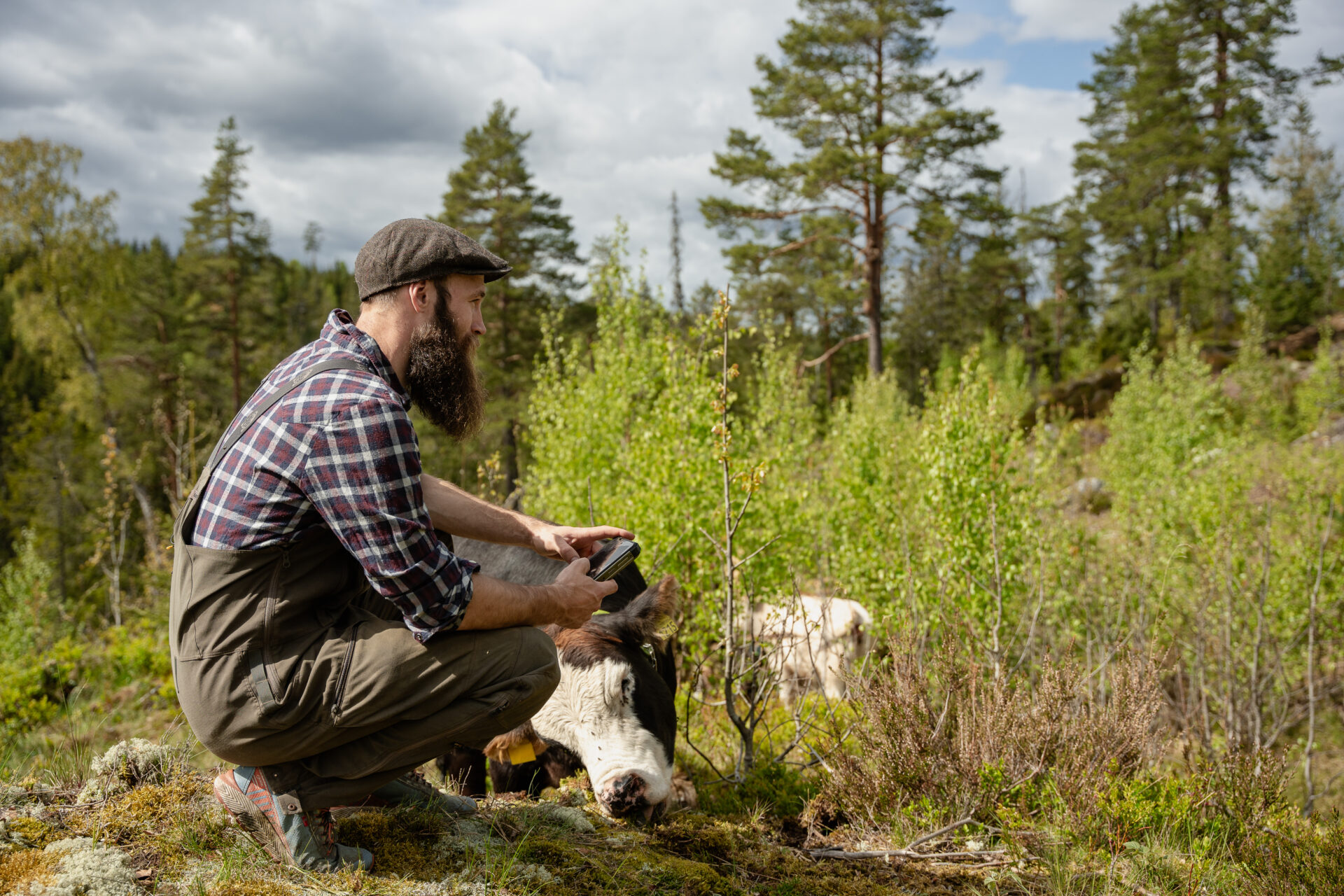
Founded in 2011, NoFence makes solar-powered, GPS-enabled collars for cattle, sheep, and goats. The collars define virtual boundaries set within a smartphone app; animals that cross into a boundary zone hear a rising audio tone, and receive a mild electric pulse only if they move through the full warning sequence without turning back. Over time, animals learn to respond to sound alone.
NoFence describes the N3 as “five times more durable” than its predecessor, based on lab and field testing. It adds triple-layer connectivity — IoT cellular, NoFence’s proprietary collar-to-collar mesh network (HerdNet), and satellite backup — a design intended to maintain herd visibility in remote terrain where cellular coverage can be spotty.
The more significant part of the announcement is the software layer the N3 enables. NoFence’s cattle management platform includes several tools that, put together, offer ranchers a continuous, automated picture of what’s happening on the land.
The system automatically generates grazing reports for each paddock, recording stocking density, grazing days, herd size, and pasture details. This can eliminate the need for manual record-keeping, and it can also produce documentation needed for participating in NRCS conservation programs or gaining other certifications.
Scheduled paddock moves can be set in advance and executed automatically, reducing the need for physical presence during routine herd movements. “This reduces the need to be physically present for routine herd movements and supports more consistent grazing rotations,” notes Bell.
The system also tracks rumination and activity levels to generate a heat score, helping producers identify animals approaching estrus without manual observation.
The company notes that producers always own their data, which is aggregated only to improve product performance and never sold or shared without consent.
US driving year-on-year growth
NoFence raised a $35 million Series B round last year and has been focused on expansion into the US, Ireland, and Sweden. It describes the US as its strongest growth market, while noting that virtual fencing penetration in the country is still under 5% of the sector. This is a sharp contrast with adoption levels in Norway, where the technology has been in commercial use for more than a decade.
That said, the US “is a big country, a big market, with a lot of cattle and a lot of producer interest,” says Bell. “We’ve seen year-over-year growth, much of it driven by US uptake.”
The company cites three adoption hurdles: misconceptions about the technology’s maturity, general awareness, and the trust required for producers to adopt new infrastructure. Regulatory developments, such as those from the NRCS, the Forest Service, and the Bureau of Land Management have provide some tailwind for new adoption, while conservation organizations are increasingly part of the conversation, too.
As Bell notes, “Removing physical fences and implementing precision livestock management means producers and landowners don’t have to choose between profitability and environmentally positive production practices; the technology supports both.”

Sign up for our weekly newsletter.