Liberation Bioindustries has received “no acceptable offers” following a strategic review to explore a sale or joint venture, and still needs a sizable sum to get its contract biomanufacturing facility in Indiana up and running, says key shareholder Agronomics.
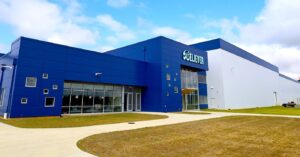
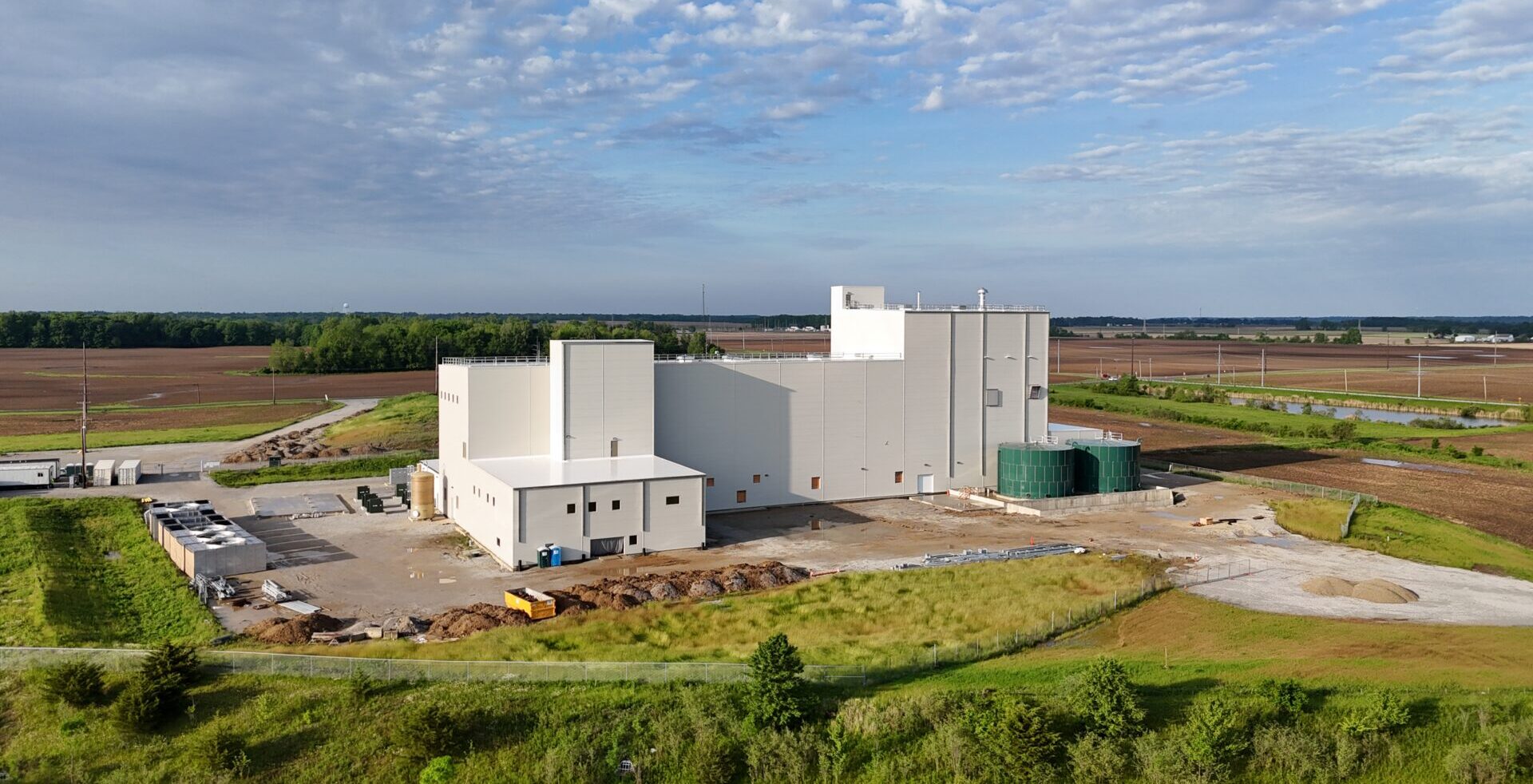
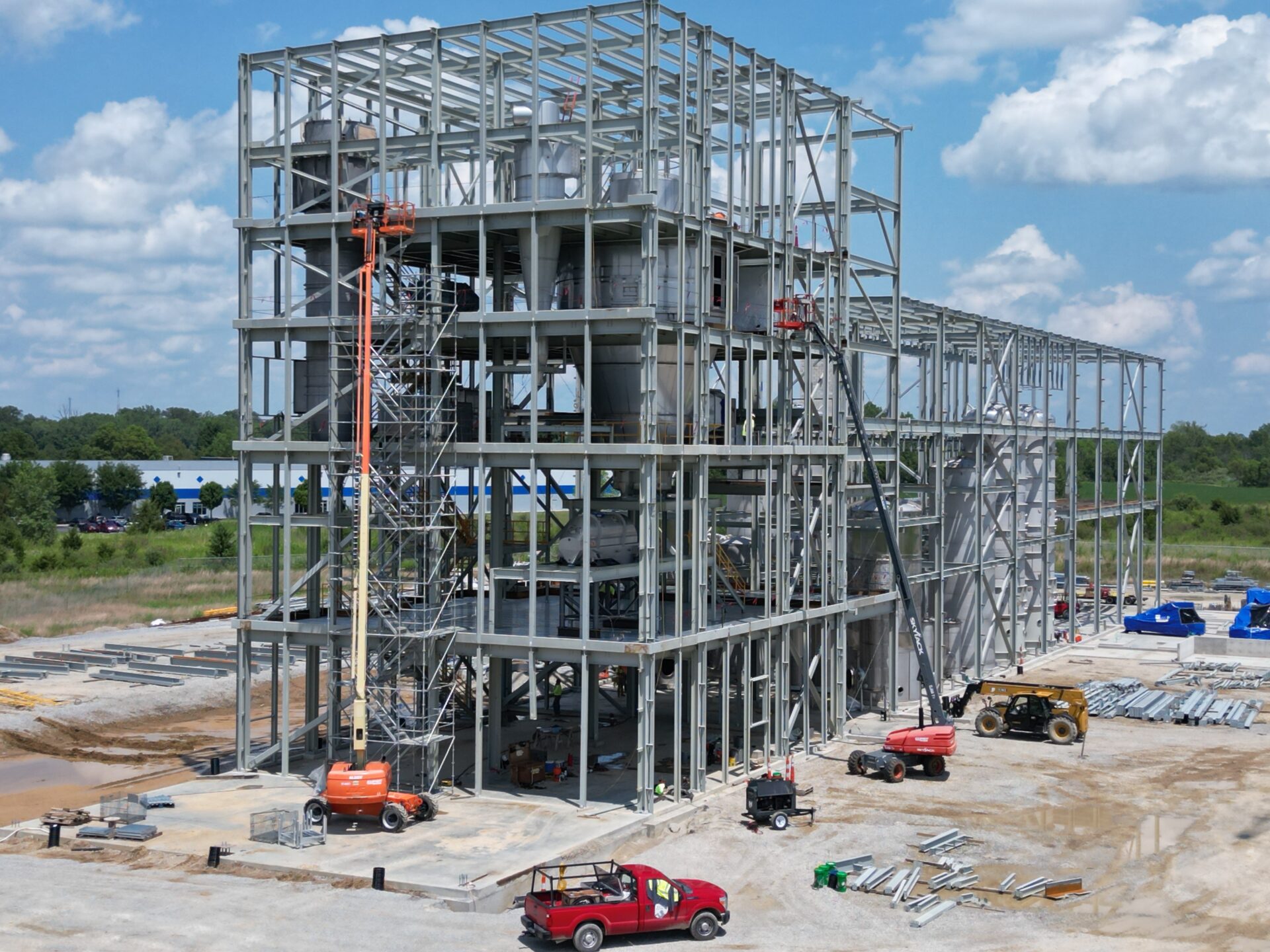
Construction at the 600,000-liter purpose-built facility in Richmond, Indiana, which was originally set to become operational by the end of 2024, is on pause as the firm seeks another $25 million to get it over the finish line. This is on top of $125 million in equity, debt, and other support already deployed.
In a Sept 29 stock market filing, Agronomics explained that, “It was previously expected that funds raised to date by Liberation would be sufficient to complete the facility. However certain funding that was expected as part of its financing package was not received.
“In addition, recent delays and exceptional costs linked to the project, together with increased costs due to global economic conditions, mean that a funding gap has been identified.”
Although Liberation Bio was in talks with two undisclosed lead parties during a four-month strategic review, no acceptable offers materialized, said Agronomics. As a result, Liberation will have to complete the facility without an external partner.
Should it secure the extra funds, the Richmond site could be up and running in six months from that date, added Agronomics, which is working with other institutional shareholders to secure the funding. This is expected to comprise “additional equity from shareholders alongside further secured debt, public authority grants and loans, and customer pre-payments.”
While the timing is uncertain, “Liberation and Agronomics are working toward having a full funding package in H1, 2027,” Agronomics explained, noting that all major construction elements are complete, with the remaining funds largely needed for “piping, welding, and electrical work.”
Why it matters
The Richmond site, pitched by cofounder Mark Warner in 2023 as “the first fit-for-purpose precision fermentation food protein manufacturing facility in the world,” was designed to solve a problem holding many startups back.
Aging biopharma contract manufacturing capacity was unsuited for food-grade projects, said Warner, while investors were unwilling to fund new facilities for startups with no experience of industrial scale fermentation. Liberation Bio could plug this gap.
Three years later, however, its failure to secure the capital needed to get the site over the finish line raises uncomfortable questions for the sector. If lack of commercial-scale fit-for-purpose manufacturing capacity was a critical bottleneck, why is a purpose-built facility with $125 million already invested struggling to secure the final $25 million needed to become operational?
Are there simply fewer firms ready to operate at commercial scale than anticipated? Has new capacity come online elsewhere offering better terms? Or have investors simply turned their attention elsewhere?
The gap between interest and bankable demand
One biomanufacturing source told AgFunderNews: “They’ve got I think a very well-designed facility. But I think they’re sitting at a space where they’re not at the scale that gets the technology all the way down the cost curve, but they’re not small either. And the capital markets just seem structurally unwilling to finish that facility.”
One precision fermentation founder making animal proteins added: “Not many startups in the field are in a position to actually commit to multi-million dollar annual contracts. Of course many will be ‘interested’ but binding commitments are another thing entirely.
“The facility is large and very few companies are ready for 200kl+ fermentation annual contracts churning non stop. Also a new site with new equipment and new ops team adds risk, in addition to the significant process/scale-up risk that start-ups are already trying to manage on aggressive timelines.”
He added: “On the other end, what the other person said [about the scale of the Richmond facility] is correct. They bring the cost down significantly but not to the max economies of scale. And because it’s a shared facility, the downstream process is not fully optimized and tailored to anyone’s process. It satisfies most use cases but not all. Overall the DSP [downstream processing] equipment is currently fairly limited vs the other more mature sites that have been operating as CDMOs for 5-20+ years.”
A veteran biomanufacturing source we spoke to noted that Liberation has room for adding or removing DSP unit operations, adding that “These kinds of customizations are also something that will need to happen at nearly every CMO.”
The question, he said, is how many startups are at the stage where they could sign with a CMO, where a multi-year contract would typically require firms to be sufficiently advanced to have a GRAS no questions letter from the FDA and a “conditional purchase order or other contract for a multi-year supply.”
He added: “Many of the start-ups dramatically underestimated how challenging it is to bring a new food ingredient to market.”
Stepping back, he said, “The GRAS notice inventory is probably the best way to forecast which companies will soon have a need for Liberation’s assets or something similar. Of the pending GRAS notices which require protein fermentation many are outside of North America or are filings from big companies which already have their own fermentation assets.
“[GRAS notices] 1319 and 1322 might be the right ones for Liberation in my list, but gosh has it gotten small fast.”
Asked whether the arrival of new capacity in India from firms such as Symbiotec had changed the equation, he added: “They have an interesting offering which might be more economically competitive, but running a factory in India comes with a whole other set of operational risks, unless your start-up is in the same hemisphere.”
‘AI has sucked all the air out of the rooms inhabited by most investors’
Another precision fermentation expert told us: “With any cost curve it really depends on the product and process in question. Liberation has designed the facility mainly for production of purified food proteins. That site isn’t big enough to support the total demand you’d expect from most of those, but I think they are an excellent site as a company’s first factory.
“A new partner may know they are going to outgrow it, but can still use it for building out their first launch as they grow their customer base. Getting to the bottom of the cost curve is secondary to securing your first customer with a supply agreement.”
The bigger problem is the current financing environment, he speculated. “AI has sucked all the air out of the rooms inhabited by most investors, and interest rates are really high.”
A chicken and egg situation
Liberation Bio CEO Etan Bendheim did not respond to requests for comment this week.
Speaking to AgFunderNews over the summer, however, he said there was “qualified stated interest for well over 200% of the available capacity” at the site, but acknowledged the firm was in a chicken and egg situation.
Customers, he said, want certainty on when the facility will be operational before making binding commitments, while capital providers want firmer commitments before signing checks.
“There’s a saying in project finance that when it comes to first-of-a-kind facilities, everyone wants to be first to be second. But we’re working really hard with our customers and our funders and other kind of solutions-oriented folks in the space to see if we can create a solution that meets everyone’s needs.”
While new capacity in China, India, and Europe has come online recently, a dedicated US facility for precision fermentation remains compelling, claimed Bendheim. “We don’t believe that the competitive set is the thing that’s holding us back.”
Further reading:
Amyris CEO on the post-bankruptcy re-boot: ‘We’re a drastically different company’