

Mafix has raised $5.4 million in pre-seed funding to scale a novel approach to enhanced rock weathering that makes silicate minerals weather more rapidly.
The tech can remove carbon, simplify measurement, reporting and verification (MRV), boost crop yields, and potentially reduce fertilizer costs.
The round was led by Azolla Ventures with support from Counteract VC, Astera Institute, Plug and Play Ventures, Impact Science Ventures, and a Dutch family office.
The capital injection will help the California-based startup produce 1,000 tons of product for trials across the US, says cofounder Jade Marcus.
Why it matters
Enhanced rock weathering accelerates a natural geological reaction by spreading crushed silicate rocks such as basalt or olivine on farmland. When they react with rainwater, they chemically bind atmospheric carbon dioxide and convert it into stable bicarbonates that can be stored long-term, while also improving soil quality for agriculture, much like ag lime. Players in this segment can then generate carbon removal credits.
Mafix—deploying tech developed at Stanford University by Matt Kanan, PhD and PhD candidate Jade Marcus—further accelerates this process by heating a combination of silicate minerals and limestone in cement kilns to trigger a solid-state ion exchange that creates more reactive calcium-magnesium silicates.
When spread on farmland, these dissolve rapidly, dramatically accelerating weathering and CO₂ removal, which Mafix claims makes MRV cheaper and easier.
One challenge with conventional enhanced rock weathering is that slow mineral dissolution can produce a carbon-removal “signal” that is difficult to distinguish from natural variation in soil and water chemistry (“noise”), making measurement and verification challenging. Mafix argues that faster weathering creates a stronger signal that can be measured more quickly, Marcus told AgFunderNews.
“What you hear a lot about in the ERW space is that there’s not enough signal to noise. MRV is super expensive and you’re having to go out there and do it year after year. By having something that can weather quickly, you’re able to get over that signal to noise barrier.”
Beyond carbon removal
Mafix’s silicates also release nutrients into the soil, improving yields, although larger-scale trials are needed to validate this claim, said Marcus: “The alkalinity trapped inside silicate rocks is one of the largest untapped resources on the planet. Our breakthrough is releasing it deliberately and quickly, transforming the most abundant rocks on Earth into a fertilizer that feeds crops and permanently removes CO2 at the same time.”
“Weathering rocks on land is one of the simplest ways to remove carbon from the atmosphere, but in our experience the payoff for landowners has often not been good enough,” said Counteract VC partner Andrew Shebbeare.
“With traditional minerals, slow weathering means payment delays and racking up measurement expenses for several years. Mafix minerals weather in a single growing season and offer real agronomic benefits to draw down carbon faster and make crops more resilient at the same time – a win-win for landowners and the climate.”
How it works
With global cement kiln capacity significantly underutilized, Mafix plans to partner with cement producers to utilize spare capacity, building a distributed logistics network that uses kilns to process limestone generally available at cement facilities and silicate rocks sourced from a 20-60-mile radius.
While Mafix is adding an additional layer of cost and creating new carbon emissions by introducing a mineral processing step before spreading its product, this is more than offset by the efficiency gains, claimed Marcus.
“We operate at very similar temperatures and processing conditions to the cement kiln. So for example, with olivine, the calcium carbonate [in limestone] attacks the magnesium silicate lattice [in the olivine], and what comes out is a mixed calcium magnesium silicate that is much more reactive and orders of magnitude faster than the starting material.”
She added: “Yes, you need to put in some energy and you release some CO2, but you’re net tripling the total alkalinity that you can remove.”
The agronomic proposition
A central part of Mafix’s pitch is that the product is also a source of plant-available silicon, distinguishing Mafix from ERW companies principally relying on carbon credits to generate revenue.
Most silicon in soils is not readily available to plants, said Marcus. Mafix’s material is intended to supply silicon in forms crops can access, which can strengthen plant tissues and improve resilience.
Marcus also sees potential for Mafix to reduce demand for conventional NPK fertilizers by improving nitrogen and phosphorus use efficiency. Plant-available silicon can help release phosphorus that would otherwise be bound in soil, while healthier, stronger plants use nitrogen more efficiently.
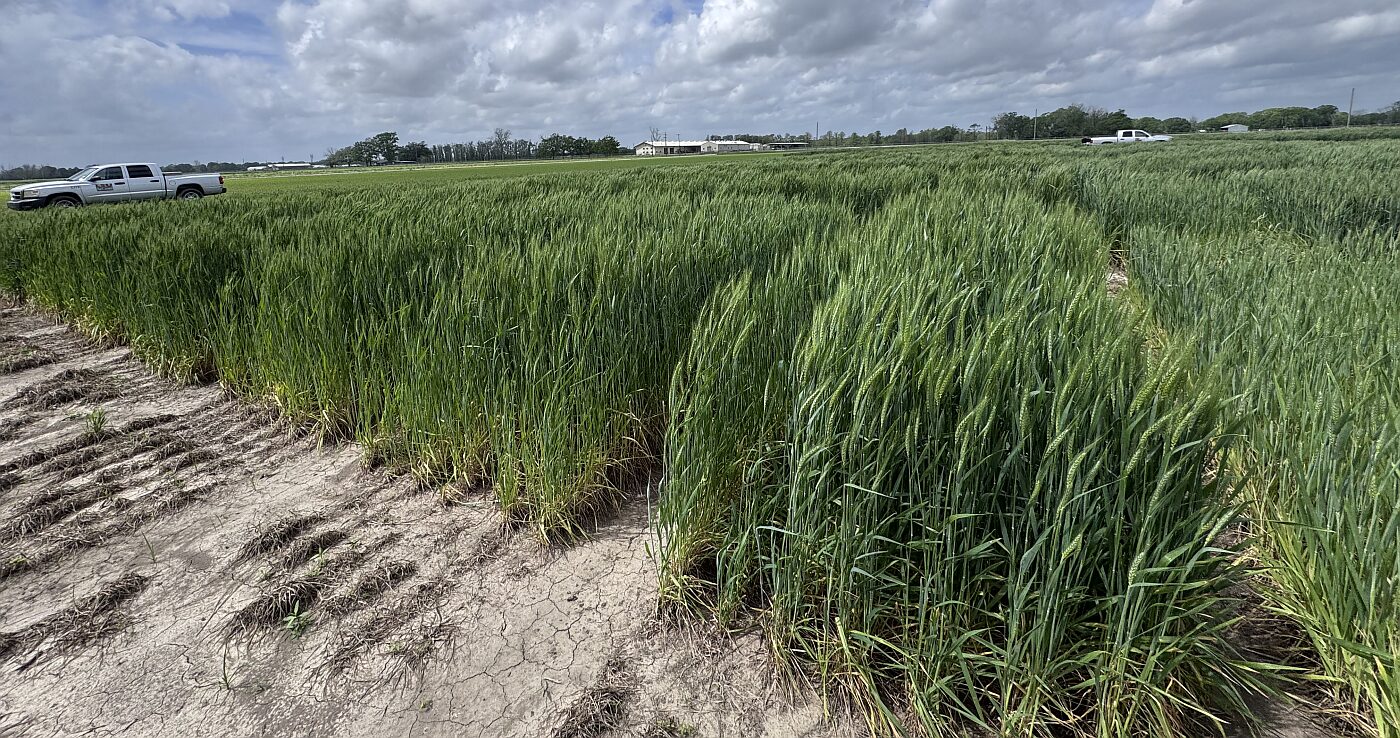
Marcus also pointed to potential benefits around reduced lodging (bending or falling down) and resilience to drought, pests and fungal disease.
However, she stressed that Mafix still needs more field data before making agronomic claims.
Business model: carbon markets first, fertilizer economics longer term
Rather than asking farmers to pay for an unfamiliar input before its agronomic value has been thoroughly demonstrated, Mafix expects carbon-credit revenue to support the business in the first instance so that it can supply farmers with the product for free.
Longer term, however, it wants the agricultural product to stand on its own economically.
One potential route to market could involve incorporating Mafix into conventional fertilizer blends, said Marcus: “NPK blends usually have some sort of inert filler. We can replace that with our product to make a better nutrient use product.”
Mafix’s product has a 126% calcium carbonate equivalent (CCE), suggesting it has more acid-neutralizing capacity than ag lime on a weight-for-weight basis, showing that it can function as an effective liming material for farmers seeking to raise soil pH.
That potentially offers multiple benefits for farmers alongside carbon removal including liming, silicon nutrition, and improved nutrient-use efficiency and crop resilience.
‘You can’t have a product that solely relies on the carbon market’
Armed with the new funding, the plan is to make about 1,000 tons next year, enough for roughly 1,000–2,000 acres depending on application rates. This will allow Mafix to run much larger agricultural trials while generating revenue from carbon-markets, in which enhanced rock weathering credits currently garner anything from $200-500/ton.
Mafix believes it could ultimately deliver carbon removal for under $100/t CO₂, although the economics will depend on scale and profitability requirements.
However, any business that is solely reliant on carbon markets presents a risk, said Marcus, who studied chemical engineering at Georgia Tech and went on to join McKinsey’s sustainability practice before heading to Stanford in 2023.
“A lot of the products you see are carbon first and products later. What we see is that you first need to create a product that people want that also is good for the planet.”
What has Mafix demonstrated so far?
Marcus pointed to a 2025 Nature paper from Matt Kanan’s lab at Stanford demonstrating Mafix’s underlying mineral chemistry and rapid dissolution. One silicate rock tested was “fully carbonated in seven weeks,” meaning it had reacted with CO₂ to its full capacity, converting reactive minerals into stable carbonates.
She also cited mesocosm experiments in controlled, semi-enclosed systems that allow researchers to track inputs and outputs more precisely than in an open field: “We removed over 4.7 tons of CO2 in 10 weeks, whereas basalt and olivine had close to zero negligible removal [over this time period].”
IP and funding
Mafix’s IP covers the core ion-exchange activation process combining limestone with silicates under specified processing conditions, along with applications of the resulting material as a fertilizer or carbon-removal product.
The $5.4 million raise will give Mafix enough runway for at least two growing seasons and trials across multiple geographies, said Marcus, who previously secured $1.5 million in non-dilutive funding to develop and scale the technology at Stanford.
“I think the thing that stood out about our product is that we have this potential for other revenue [beyond carbon removal].”
Further reading:
Terradot acquires Eion to build global enhanced rock weathering carbon removal platform
Varaha signs major offtake agreement with Microsoft for biochar carbon removal in India
Switch Bioworks tests ‘switchable’ nitrogen-fixing microbes in corn for fertilizer
Fertilizer… without Haber Bosch: Can AI-optimized plasma make green ammonia cost-competitive?