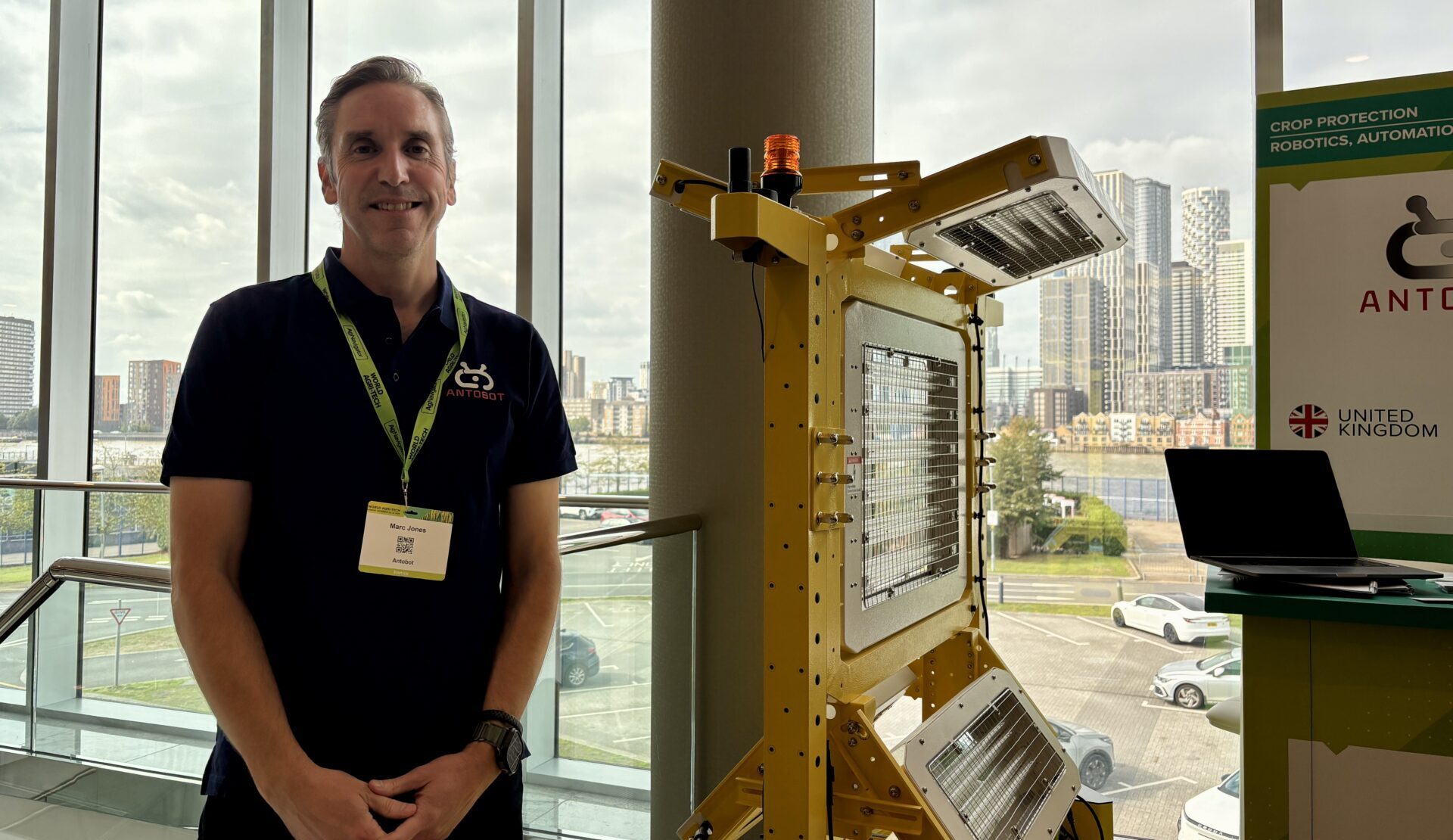
UK-based startup Antobot is aiming to deploy 300 autonomous robots in strawberry crops next year as more growers become comfortable with using UV-C light to tackle powdery mildew and other fungal pathogens.
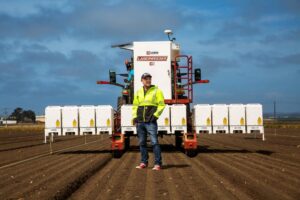
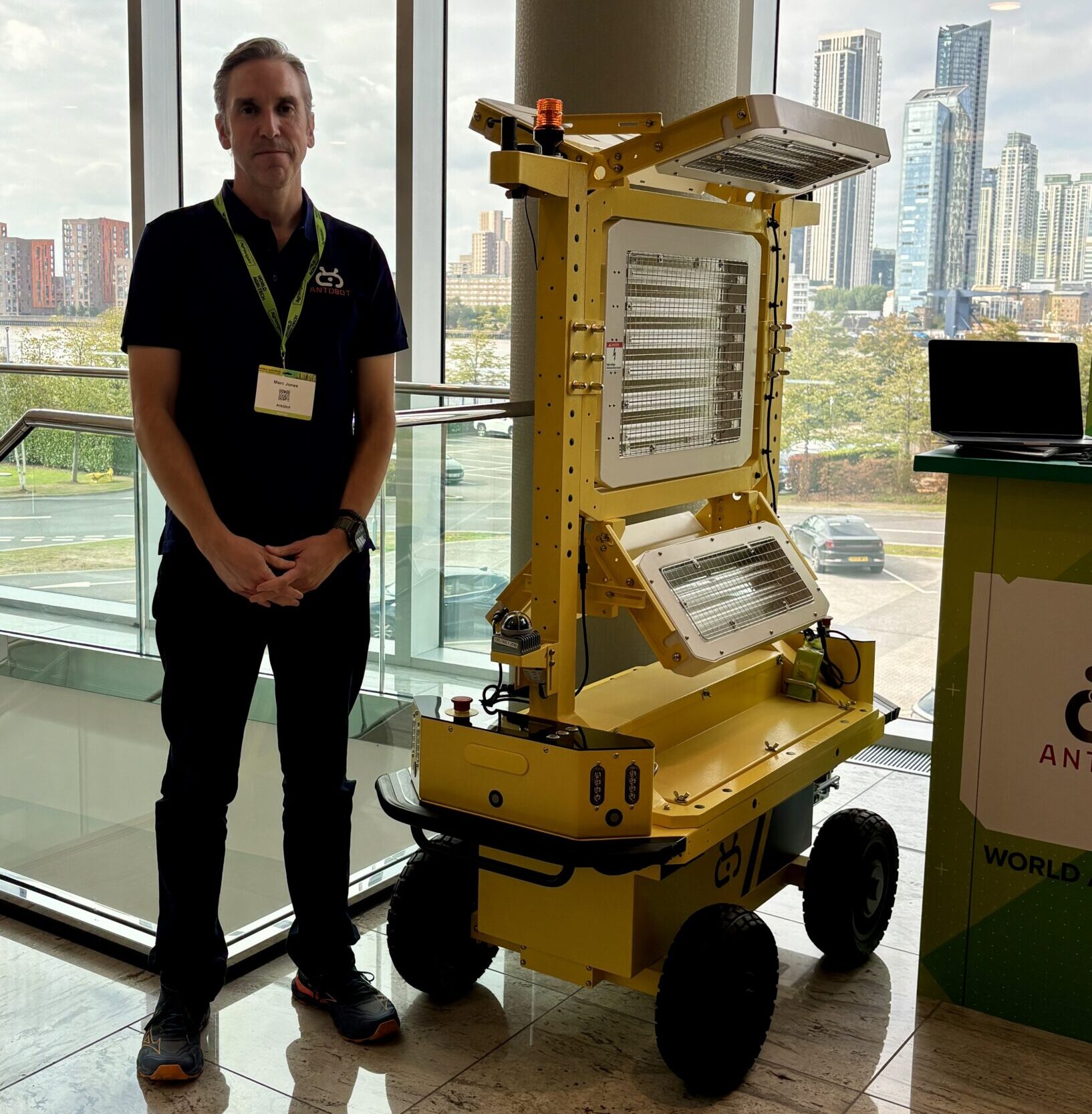
Rather than spraying fungicides on crops, the ‘bots apply UV-C light to damage the pathogens’ DNA so they can’t replicate. The tech—also utilized by firms including Saga Robotics, TRIC Robotics and CleanLight—can reduce labor and input costs and help firms adopt a chemical-free positioning, according to VP commercial Marc Jones.
“We’re getting great results, big reductions in chemical spraying and also, interestingly, quite good increases in yield. Some of that is obviously from having less disease, but also we’re seeing that the canopy in general is healthier,” added Jones, who was speaking to AgFunderNews on the sidelines of the World Agri-Tech Innovation Summit in London.
Antobot, which was founded by Howard Wu, PhD, in 2019, is now operating in the UK, Spain, Portugal, the Netherlands, Canada and parts of Asia. It has historically engaged directly with customers including Driscoll’s and Tiptree but is now building out a distributor network, said Jones.
“We’ve signed distributor agreements in the UK and Spain. We’re looking at Canada and we’ve set up a joint venture in Asia.”
As deployment numbers increase, Antobot is also changing its business model.
Until last year, it operated exclusively through robots-as-a-service, lowering the upfront barrier for growers but leaving Antobot responsible for servicing and day-to-day operations, said Jones. “But as you grow, this model gets more challenging, so next year we’re going to move most of our customers over [to acquiring the machines and operating them themselves].”
Capital equipment grants in markets including the UK and Spain can make upfront purchasing more attractive, he noted.
Different markets, different drivers
In the UK, concerns from retailers and consumers about pesticide residues are an important driver for “chemical-free” UV-C light treatment, whereas in Asia, growers are interested primarily because existing approaches are struggling to control disease, said Jones.
Spain combines both dynamics, with exporters serving the UK market while also facing pressure to shift growers toward more sustainable production methods.
Canada presents another use case, with many strawberry growers operating on just two or three hectares and unable to justify the kind of spraying equipment used by large UK growers, he said.
In some cases, improved disease control is also giving growers greater confidence to expand production because it reduces the risk of having to shut down part-way through the season.
While using UV-C light to zap fungal threats is its primary focus, Antobot has also developed scouting modules that enable growers to monitor fruit count, size, and maturity, forecast yields, improve supply chain planning, and optimize sales and marketing strategies, said Jones.
“The 300 targeted are primarily going to be UV-C platforms next year, however a portion of these will be other applications [scouting, spraying, logistics], which will increase over the next few years.”
‘Autonomy needs bedding in’
The key lesson from early deployments has been that introducing autonomous machines onto farms requires changes in day-to-day operations as well as reliable hardware, said Jones.
Operational headaches can be mundane, from tractors blocking routes to locked gates or changed access codes, he observed.
Antobot has also modified its machines in response to experience in the field, including moving to swappable batteries and simplifying aspects of the suspension.
Some growers are already operating more than 10 machines, he said, allowing one person to supervise several units at once.
Seeking growth capital
Antobot—which has to date funded itself through grants, a small seed round led by Intron Technology Holdings, and revenues—is now looking for growth capital to support the next stage of expansion, said Jones.
“We’re looking for growth capital now we’ve got traction. I think we’ve got a good story, a good customer base and a good platform for scaling.
Further reading:
🎥 ‘The whole system is now more investable’: Reservoir makes the case for ag robotics
🎥 TRIC Robotics scales to 1,500 strawberry acres with 15-robot fleet
🎥‘Like a Roomba for vineyards…’ Bien Nacido puts Saga Robotics’ UV-C robots to the test