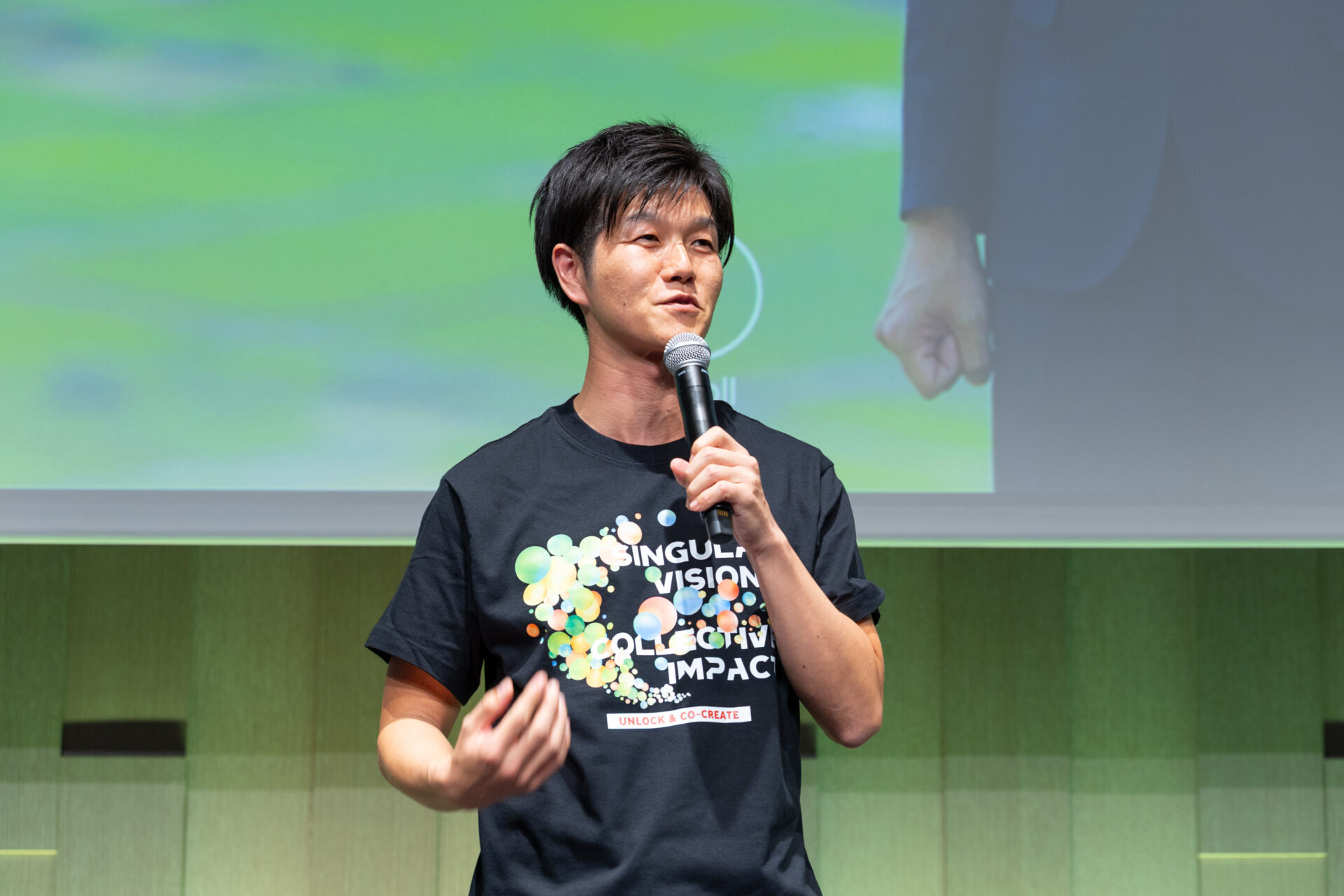
Japan’s minister of agriculture, forestry, and fisheries, Norikazu Suzuki, made a surprise appearance at the recent SKS Japan summit in Tokyo. He had an unusual message: that food and agriculture industries should generate serious revenue, not just survive.
His words indicate a clear shift from the ministry’s typically protectionist stance.
“Ensuring food security, stability, and protecting rural regions remain vital—but beyond that, Japan has incredible new technologies. The message is: let’s use them to earn and compete globally,” said Suzuki.
Suzuki referenced a recent conversation about his appointment where he was told to “earn, earn! (稼ぐのよ!稼ぐのよ!) in his new role. While not explicitly stated, the audience broadly assumed the caller was Japan’s new prime minister, Sanae Takaichi.
Why it matters: The language marks a sharp break from typical Japanese bureaucratic speak.
Using the phrase 稼ぐのよ!稼ぐのよ! was “quite shocking,” Barry O’Neill, partner at Tokyo-based impact investor Value Create Ventures, told AFN.
“MAFF ministers usually talk about protection or safety nets,” said O’Neill. Suzuki’s words are “a direct challenge to the old image of farmers as recipients of support. He’s reframing them as entrepreneurs; as businesses that can export, commercialize tech, and compete globally.”
Suzuki went further to say the era of ministry protectionism “must change.”
The big picture: Suzuki’s words come at a time of deep agrifood sector challenges in Japan:
- Labor: Japan has a rapidly aging and declining population.
- Nearly half of the agricultural labor force is over 70 years old.
- Labor shortages are appearing across the supply chain.
- Food self-sufficiency: Japan imports over 60% of its food supply, and even more for critical staples like wheat (90%) and corn (100%). This compares with United States (124%), France (131%), and Australia (193%).
- Farm inputs: Japan imports about 80% of its fertilizer and 90% of its animal feed.
- Geopolitical vulnerability: A potential conflict in the Taiwan Strait could cut off a key agrifood shipping route.
Suzuki also referenced the need for the country to contribute to global challenges, including global warming, population growth, and record refugee numbers. These “demand collective solutions.”
What’s next: Suzuki will focus on commercializing Japan’s food tech for global competition—signaling MAFF’s shift from gatekeeper to growth ministry.
“If he follows through, that changes how startups and investors can engage with government,” said O’Neill.
MAFF is already finalizing Japan’s first dedicated foodtech strategy after two years of discussion among multiple stakeholders. Hirotaka Tanaka, CEO of Unlockx, the organiser of the SKS Summit, will chair the strategy group.