
Around the world, climate change, supply chain disruptions, geopolitical tensions, and pest and disease outbreaks put the fresh produce supply chain at risk. For many CPGs and food retailers, a lack of real-time visibility into sourcing and farm operations adds to that risk.
These factors have rendered the traditional sourcing and supply playbook that once defined CPG and food retail as no longer relevant, says Cropin CEO Krishna Kumar. Companies can no longer rely on these methods to do business.
He highlights recent events in the agrifood supply chain that illustrate this.
An ongoing cocoa shortage brought on by bad weather and crop disease drove cocoa prices up to a 60-year high earlier in 2025. Similar upheaval is happening in the coffee supply chain and the US citrus supply chain.
“In each case, the fundamental issue was the same: climate extremes rewriting the rules of production, compounded by geopolitical shocks threatening import/export strategies,” says Kumar.
“To survive, as well as thrive, agrifood companies must reimagine their production and sourcing strategies, and the core of that innovation lies in AI and ML technologies.”
Cropin, founded in 2010, was working on the digitization of agriculture long before the concept went mainstream.
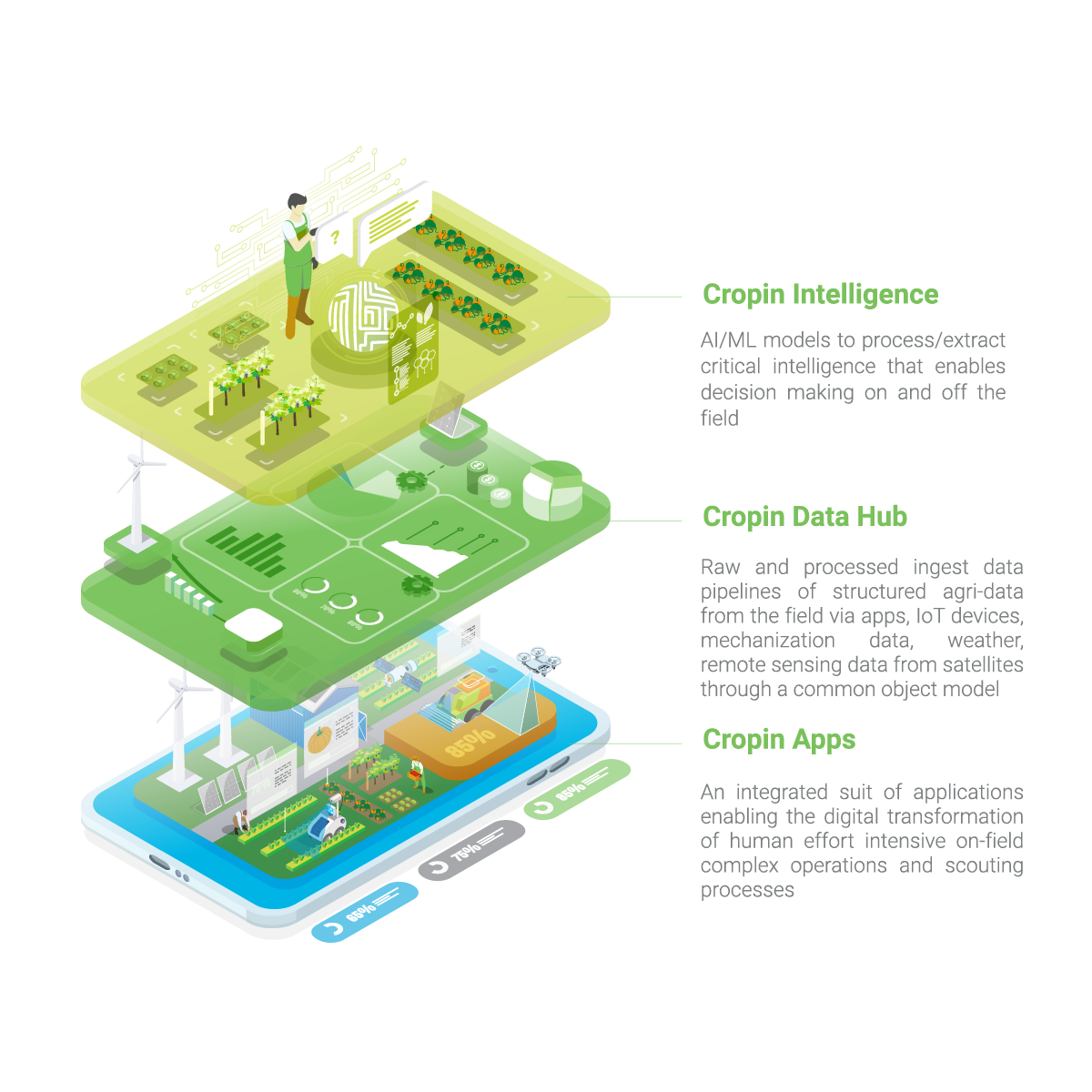
Cropin harnesses GenAI, agentic AI, and LLMs to transform complex crop, climate and geospatial data into actionable insights for growers and food companies. From detecting blight early and forecasting price shifts to optimizing irrigation and yield plans, Cropin converts uncertainty into confident, timely decisions across planting, harvesting, and procurement.
Bringing ‘end-to-end visibility’ to potato production for PepsiCo
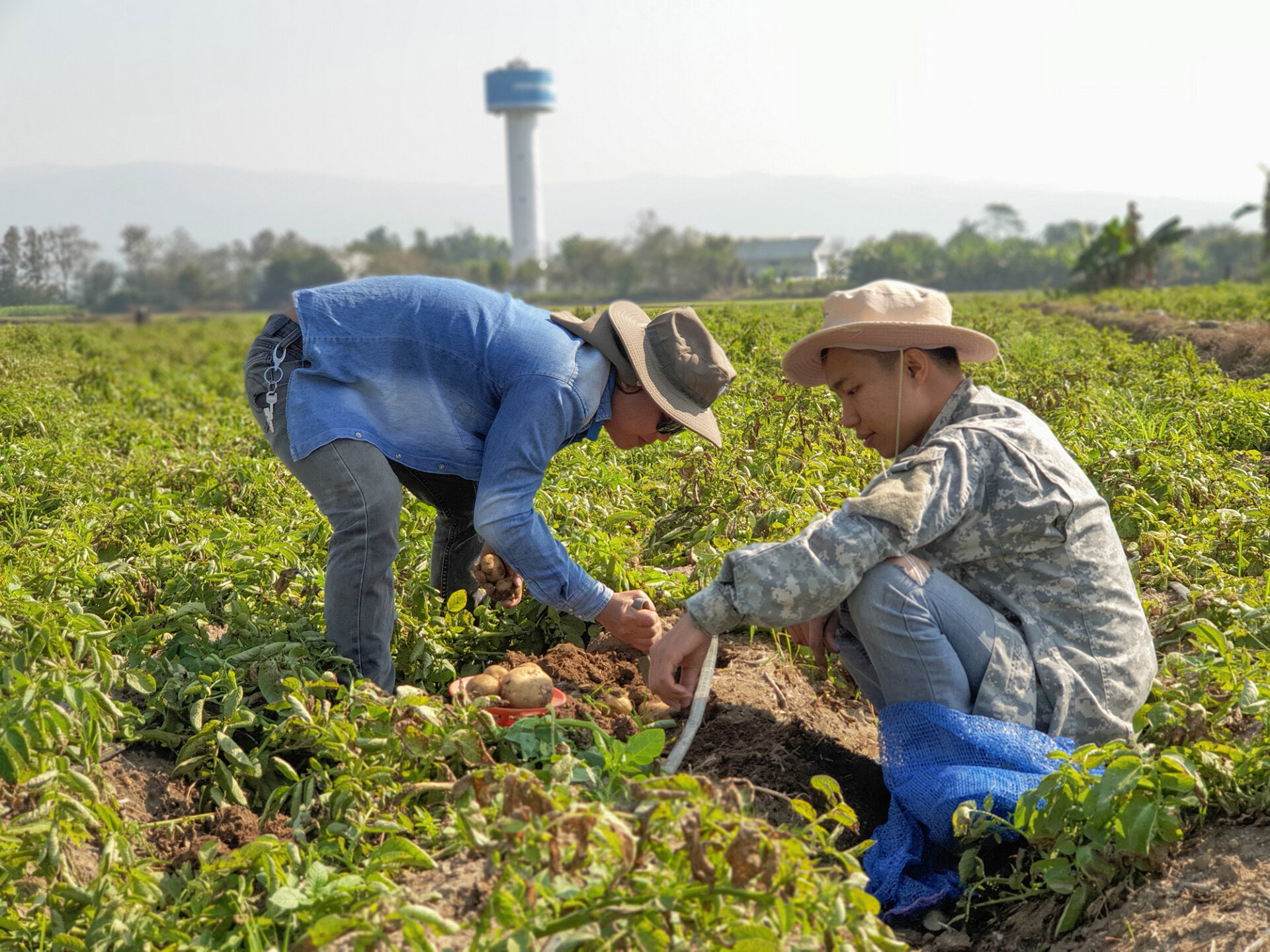
For example, PepsiCo’s Lay’s brand relies on farmers in the Asia-Pacific region (APAC) to source potatoes for its Lay’s brand snacks.
Traditional farming practices in the region rely heavily on seasonal patterns, which climate change is now upending. It’s threatening the monsoon season, which farmers have relied on for literally thousands of years to time crop planting, for instance.
As one farmer working with Lay’s put it, “The only way to farm now is to inspect every single crop every single day.”
Since the bulk of APAC farmers work across fragmented parcels of land spread out over many kilometers, daily inspection of every plant is near impossible without technological assistance.
In response, PepsiCo enlisted Cropin to build Lay’s Smart Farm, a custom AI platform to provide “end-to-end visibility” into potato sourcing and supply chains, says Kumar.
Smart Farm uses satellite imagery and remote sensing as well as years of historical data across farmland.
Combining these things gives farmers—and therefore PepsiCo—a deeper look into the state of the farm and where problems may be occurring.
De-risking Walmart’s fresh produce supply chain
PepsiCo is hardly alone when it comes to agrifood companies battling problems in their supply chain.
Walmart, too, operates a fresh produce supply chain that’s often at risk from climate impacts and geopolitical situations.
As it did for PepsiCo, Cropin built an advanced AI solution to help mitigate risks related to weather, market volatility, and supply chain disruptions.
Doing so enabled Walmart to “further streamline sourcing practices and better predict yields using their real-time Gen-AI technology,” according to Walmart VP of sourcing innovation and surety of supply Kyle Carlyle.
“We are always looking for new ways to innovate and Cropin demonstrates our bold innovation goals in the agriculture space.”
Enabling corporate sustainability
For most corporates, building a resilient supply chain has to strike a balance between meeting quarterly goals and honoring publicly made sustainability commitments.
“This is exactly what an AI-first digital Ag solution can deliver,” says Kumar.
The aforementioned cocoa crisis—which resulted in production losses, reduced yields, pest attacks, and farmers’ inability to reinvest in their farms—is a good example of this.
“This crisis could have been mitigated if industry players had advanced visibility into ground realities, employed early warning models for disease management, and adopted climate-smart practices supported by technology,” notes Kumar.
Companies like those involved in the cocoa crisis could save potentially millions by employing AI-powered agtech tools, he adds.
“The benefits of AI-powered digital solutions in agriculture far outweigh the investments, making them essential for building resilient, profitable, and sustainable agri-food systems.”
Along the sustainability lines, Cropin has also begun work in regenerative agriculture, which can be challenging to adopt thanks to knowledge gaps, possible yield (and income) drops, and a general lack of precise data illustrating its benefits.
This year, the company partnered with EIT Food’s regenerative agriculture program across Europe to scale AI technologies for potato crops.
According to Kumar, the Cropin deployment in potatoes is targeting 5% yield growth, 15% pesticide reduction, 5% water savings, and €410/ha in economic benefit, “proving that sustainability and profitability can go hand-in-hand.”
“By integrating hyper-local climate, soil, and crop intelligence with real-time field data, we give farmers precise, plot-specific advisories; optimizing irrigation, inputs, and residue management while improving soil health and yields.”
To scale regenerative agriculture, technology is not optional, he adds. “It gives investors confidence, farmers security, and the planet a fighting chance.”
How companies can leverage AI/ML
Start at the source. To truly strengthen operations and supply chains with AI and ML, companies must begin by digitizing upstream agriculture, mapping suppliers and farms, standardizing field data, and establishing clean, continuous data flows from satellites, sensors, and scouting apps.
Gain end-to-end visibility across your supply chain. Next, create a living map of sourcing and supplier networks, showing where crops are grown, under what practices, and how factors such as climate variability, soil health, pest pressure, and extreme weather influence production risks.
With this foundation in place, AI can unlock transformative possibilities:
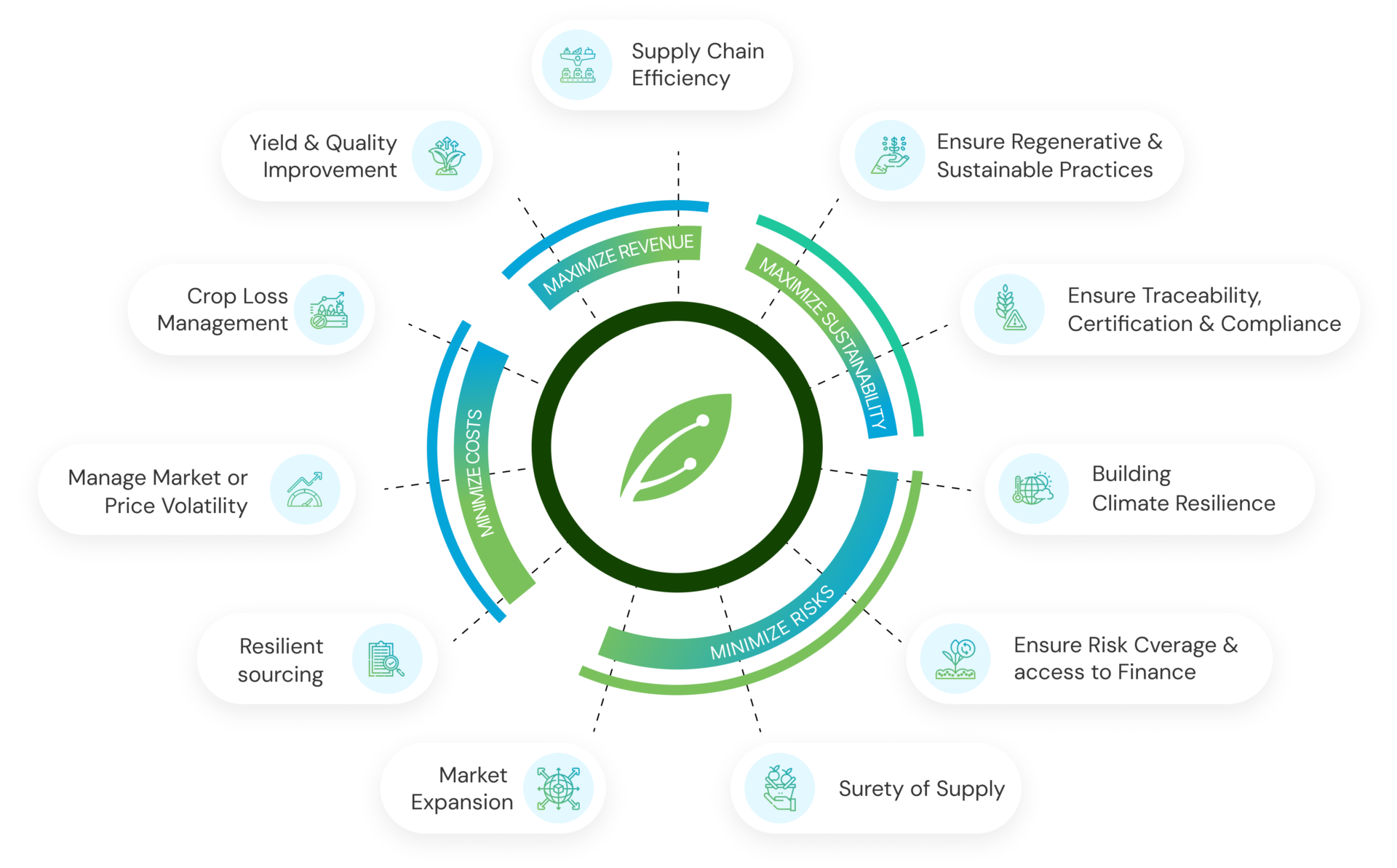
- Deliver real-time advisories to growers and field teams on disease risks, irrigation needs, and harvest windows through mobile notifications, WhatsApp, SMS, and agentic assistants.
- Predict yields: both in-season and for upcoming seasons, to guide contracts, allocations, and capacity planning.
- Manage supply and price volatility proactively with early risk signals and scenario planning across regions and suppliers.
- Optimize resources and sustainability by cutting waste and shrinkage, improving input efficiency (water, fertilizer), and tracking ESG outcomes with precision.
Technology adoption in upstream agriculture has historically been low, making farm-level digitization the primary hurdle,” says Kumar.
“The priority is to digitize the crop value chain and then use the resulting data to inform operational and strategic decisions. This has become much more feasible in recent years with advances in AI/ML platforms.”
This is far more possible today compared to even five years ago, thanks to AI/ML platforms like Cropin’s, he adds.
“By starting with an AI-first digital transformation at the farm and supplier level, companies can build resilient, profitable, and sustainable supply chains, while turning the vast complexity of agriculture into a predictable, data-driven advantage.”