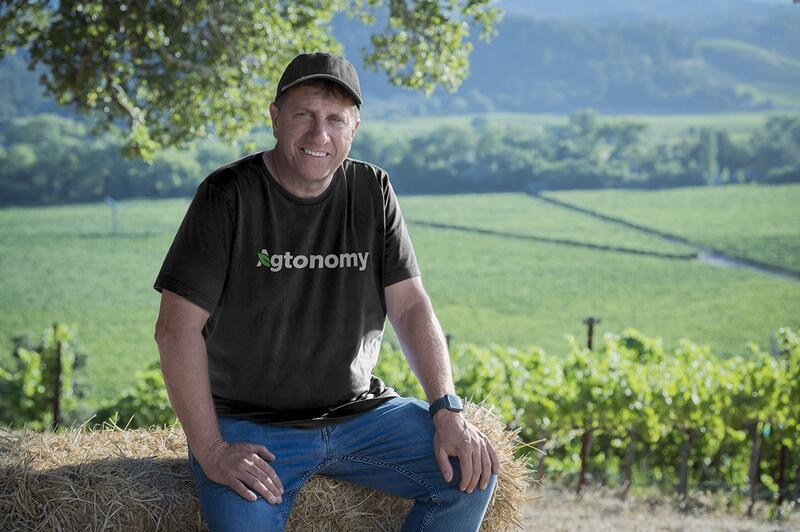
Editor’s note: Tim Bucher is the CEO and co-founder of Agtonomy, a physical AI company that partners with leading equipment manufacturers to embed its technology at the factory level, transforming off-road machines into smart, autonomous solutions for agriculture, land maintenance, and other industrial markets.
Dr. M. Brett McMickell is chief technology officer for Kubota North America, where he leads the company’s technology strategy and innovation portfolio across automation, AI and smart agriculture solutions.
The views expressed in this article are the author’s own and do not necessarily represent those of AgFunderNews.
In American agriculture today, and specifically in specialty crops, AI discussions are not about gadgets and hype. It’s about whether family farms and rural communities can survive. Labor shortages, affordability and the sheer pressure on mid‑ and larger‑scale operations are forcing growers to ask a hard question: “Will this farm support another generation?”
While AI hype in other industries has created fear of job elimination, inside the farm gate, the reality is very different.
Physical AI is one of the few levers that actually gives growers a path forward. It creates a human-led, AI-assisted workforce, helps make operations economical again, and empowers the next generation to build a profitable, sustainable business on the same land. Automation is about keeping these growers in business, not replacing them.
Growers need tools that allow them to redeploy the workforce they do have into safer, higher‑value roles. Physical AI lets a single operator oversee multiple machines and opens doors for:
- Tech‑savvy young operators, often in their 20s, who may not have grown up on tractors but are now running autonomous equipment with a “video game” level of intuitive control.
- Existing employees in the community who can be upskilled into higher‑paid, higher‑quality jobs managing and maintaining these systems.
- The next 4‑H and FFA generation who want to stay in agriculture and apply high‑tech skills to the operations they know and love.
Automation adoption is here
The good news is that adoption is at a tipping point. Technology readiness levels are there, and the cost of key components has come down enough that physical AI is no longer a science project; it is a practical tool for real operations.
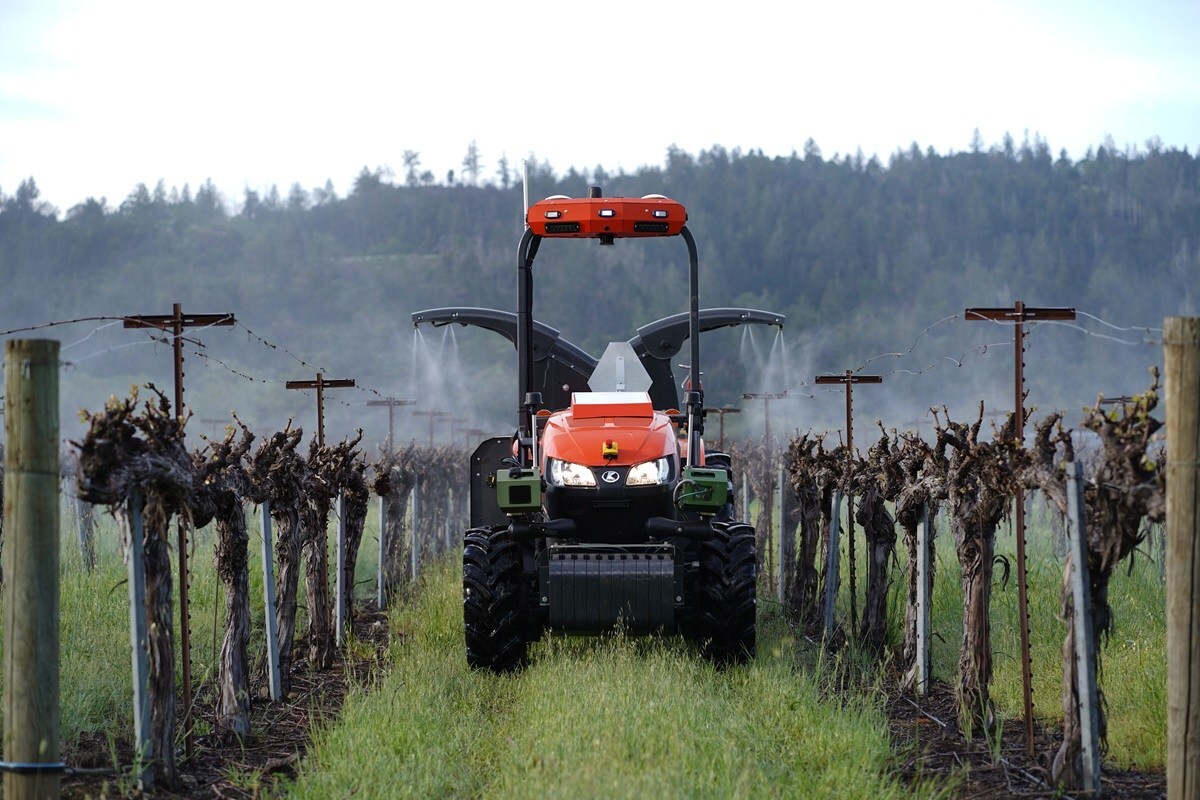
For example, we are focused on layering autonomy onto proven platforms like the Agtonomy-enabled Kubota M5 Narrow diesel specialty tractor, rather than forcing growers into completely new, unproven machines. Growers already know how to run and maintain the M5. Adding Agtonomy’s physical AI stack turns it into an autonomous workhorse without disrupting everything else about the operation.
Just as importantly, we are committed to interfaces that feel like the smartphones growers already use every day, not like engineering consoles. If we expect growers to embrace this technology, we have to meet them where they are and stop making them feel like they need to code up APIs just to get their equipment to work together.
Why dealers are the missing link in ag automation’s systems revolution
Dealers are not just distributors at the end of the pipeline; they are the system integrators and strategic partners who will make or break grower adoption.
The industry has collectively spent years perfecting technology, bringing costs into range and proving out automation in the field. But we have not invested nearly enough in preparing the dealer channel and broader ecosystem that has to sell, finance, support and keep these systems running over the long haul.
The real bottleneck now is not whether autonomy works; it is whether the channel is prepared. When we talk about a “systems” approach to automation, we mean designing for workflows, uptime, support and lifecycle economics. Dealers sit at the center of all of that.
Kubota has done this by investing in programs like the Kubota Tech and Engine Academy, a training program that brings modern, high-quality curriculum into trade schools and dealer networks. OEM-supported programs like these combine online instruction with hands-on experience to strengthen foundational skills in mechanics, electrical systems, diagnostics, and engines.
As equipment continues to evolve—with more sensors, electronics, and software layered onto proven platforms—these strong technical foundations will be essential for supporting the next generation of machines, including more automated and connected systems.
On the grower side, we advocate moving from a single‑technology mindset to a workflow mindset. An autonomous tractor by itself is not that useful. The value comes from end‑to‑end workflows—spraying, mowing, tillage—that integrate autonomy, implements, data and decision‑making. That requires people working together across companies with dealers in the middle as trusted integrators.
Delivering on that system-wide vision takes two things we still lack: true interoperability across OEMs and real‑world education for everyone who must make this work day to day.

Solving interoperability to deliver the full vision of ag automation
This calls for even more open collaboration and real-world education. That means working with partners to combine strengths, rather than trying to build everything in-house. In practice, that means supporting systems and technologies that can work side-by-side on the farm, enabling mixed fleets to function together rather than as disconnected pieces.
We are already seeing how a systems approach comes to life on the ground. Demo days and in-field events show growers, regulators and partners exactly how autonomous and conventional equipment works together in real vineyards, orchards and fields. Dealers and technician training then builds the confidence and capabilities local dealerships need to support these platforms responsibly, while outreach to younger growers, 4-H, FFA, and similar programs—paired with welding, shop, and mechanics training—helps develop the next generation of operators and dealer technicians who will service increasingly advanced equipment over time.
Ultimately, this should not be about selling more robots and AI. It’s a vision to restore vibrant rural communities, multi‑generation family farms, and a strong specialty crop sector in the United States.
Physical AI and automation are critical tools for preserving that future and creating a better life for rural communities. If we, as an industry, lean into open collaboration, invest in dealer and workforce readiness, and meet growers where they are, automation will not be a disruption. It will improve the success of American agriculture and will ensure that the next generation wants to be part of it.