

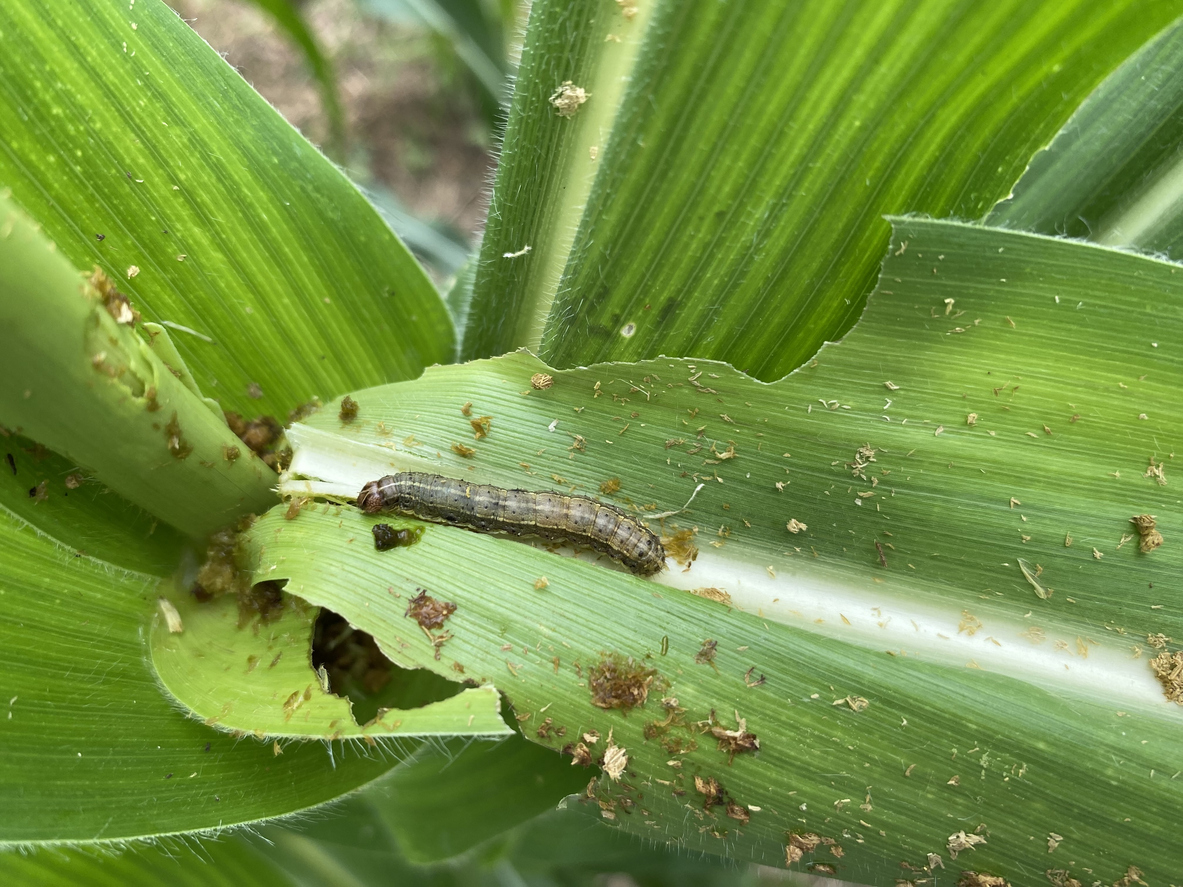
Crop protection company Provivi has struck an exclusive distribution deal with Syngenta to bring its pheromone-based Fall Armyworm (Spodoptera frugiperda) solution to Brazil. The country—one of the largest crop protection markets in the world—spends hundreds of millions annually fighting the destructive Fall Armyworm, also known as FAW. The size of the problem represents a massive opportunity for California-based Provivi.
“Brazil is the single biggest market for our technology,” Provivi cofounder Pedro S.L. Coelho tells AgFunderNews. “It is also a market where Syngenta has over 30% market share. For Provivi, it’s a big deal, because we are going to market with the partner that has the biggest slice of that pie.”
A viable option for row crops
FAW remains one of Brazil’s most economically significant pests. Its rapid life cycle and high fertility rate combined with Brazil’s year-round farming creates conditions that favor the development of rapid resistance in these pests, says Coelho.
“With the current insecticides, all the traits are the same, so FAW has already developed resistance to basically all of those modes of actions.”
Agronomists and crop protection companies alike are increasingly calling for alternative modes of action that can be integrated into resistance-management programs, not only in South America but around the world.
Enter Provivi’s unique mode of action based on pheromones that causes “mating disruption” in pests including FAW, and subsequently diminishes crop damage.
The technology is based on work by Nobel Laureate and Provivi cofounder Frances Arnold, and even received a vote of confidence from primatologist, ethologist, and anthropologist Jane Goodall in 2016.
Provivi says it has brought costs of its pheromone-based solution down enough to make it a viable option for broad-acre row crops—of which Brazil is a leading global producer.
Multi-year partnership
The partnership gives Syngenta exclusive rights to distribute a new generation of Provivi’s sprayable pheromone formulation for FAW control in row crop farms in Brazil.
The solution combines three separate pheromones that work together to cause the aforementioned mating disruption.
Syngenta will handle commercial distribution and technical support in Brazil, while Provivi will continue producing pheromone actives at industrial scale. The companies submitted the product for regulatory approval earlier this year and expect further market development activities to begin once registration is granted.
Coelho emphasizes that this is a multi-year partnership. Provivi first teamed up with Syngenta to combat rice pests in Indonesia back in 2018. The two companies have since expanded the agreement and moved into other countries in Asia, India and Thailand among them.
Nor is this latest partnership trialing out a brand-new product, says Provivi CEO Corey Huck. “Provivi’s been testing it for some time for efficacy and also yield increase. We get a really positive increase in yields, up to 5% on average across all of our trials. More importantly, Syngenta has now done the trials themselves and are convinced about the product.”
Beyond Brazil
Seen from an even higher level, the Brazil partnership could form the blueprint for other countries in time.
While FAW is native to the Americas, rising global temperatures mean the pest has reached parts of Africa, China, and more places in the US.
“Fall Armyworms are getting more and more difficult to control,” explains Huck. “The effectiveness of both biotech traits and insecticides continue to dwindle, and FAW continues to be a bigger problem for growers.”
He says Provivi’s unique mode of action fits “really well” into integrated pest management programs, and ultimately benefit the growers.
“That unique mode of action is what allows us to get access to the biggest player [Syngenta] and to the growers.”