Ingredients giant Döhler has started commercial production in Europe of “SB1,” a high-protein postbiotic ingredient from biomass fermentation startup Superbrewed Food that will support product launches in the US this year.
Döhler Ventures has also invested an undisclosed sum into Superbrewed and will work with the startup to expand production capacity and advance broader commercialization in 2027.
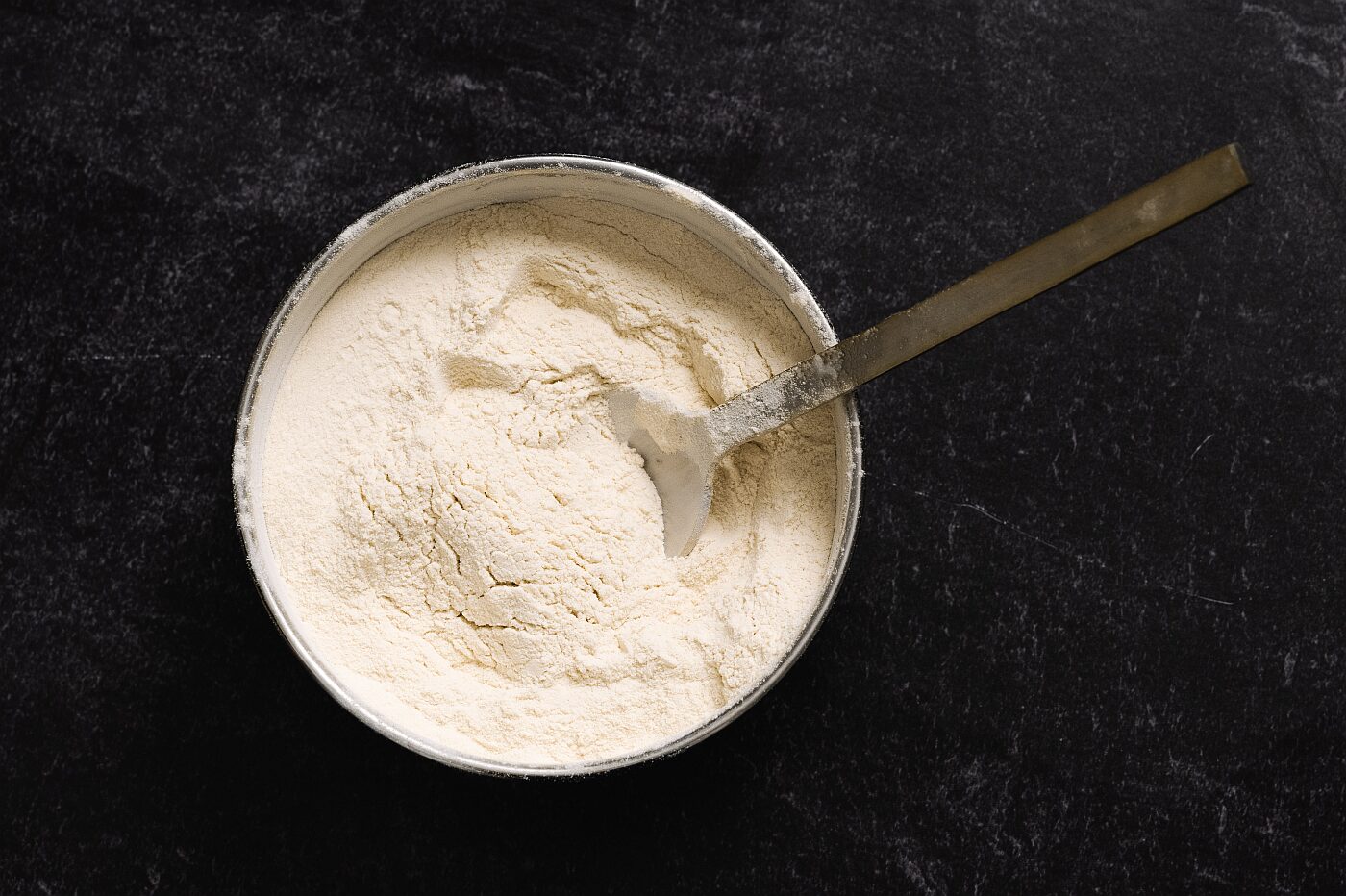
With a neutral taste and color, strong pH and heat stability, and good emulsification properties, SB1—labeled ‘postbiotic cultured protein’ in the US—is a non-GMO bacterium containing 88%+ protein, with a high digestibility score and meaningful levels of B vitamins, iron, and zinc.
The ingredient received a GRAS “no questions” letter from the FDA in 2024 and is attracting interest across applications from protein beverages and snacks to yogurts, says the firm, which has worked closely with Fonterra and Bel Brands (owner of Babybel and GoGo Squeez).
SB1 is “a differentiated innovation in the evolving protein landscape,” said Rodrigo Hortega de Velasco, managing partner at Döhler Ventures. “Through commercial manufacturing and strategic investment, we are committed to supporting SB1 as it scales globally.”
To meet longer-term targets, Superbrewed is assembling financing to repurpose a larger anaerobic fermentation facility in the US.
Protein without tradeoffs
“Given the contraction across fermentation and foodtech more broadly,” achieving commercial-scale production “feels like a meaningful signal—even a beacon of hope, dare I say,” founder and CEO Dr. Bryan Tracy told AgFunderNews.
“This is a truly novel ingredient that has crossed into industrial production through a partner-led, capital-efficient model rather than asset-heavy scale-up.
“We also have third-party academic validation across allergenicity, nutritional quality vs. whey protein isolate for muscle protein synthesis via human clinical trials, and functionality, from studies at Maastricht, Utrecht, and Wageningen universities.”
Asked about pricing, he said: “Highly functional dairy protein ingredients are only increasing in price, and we’re already at a pretty competitive price point with similar functionality and nutritional density.”
Notably, as brands seek to add ever higher levels of protein into beverages and shots without negatively impacting taste or texture, Superbrewed’s product can deliver, he claimed.
“Let’s say you wanted to get as much as 35g of fully digestible protein into a beverage, even with dairy products, you’re going to need 12oz [of liquid]. In the plant-based world, you’re going to need 16oz, because it gets really viscous. With SB1, you could put 35g of protein in five ounces of water and the texture would still be very nice.”
The scaling reality
While many startups in the fermentation space have done “paper deals” with CMOs that don’t have experience in producing the ingredients in question, he added, “We have done the full tech transfer into Döhler’s facility [in the Netherlands, followed by spray drying in Germany] and now produce reliable, reproducible, high quality, hygienic products.”
He added: “You’re seeing CMO deals being signed everywhere right now that are giving investors the impression that people don’t need to invest capital to expand their production with all the risk going to the CMO, and that’s not realistic. Some of these facilities don’t have drying capacity on site, so you have to take it off site to get it dried. Have they ever dealt with the hygiene challenges associated with that in a real industrial setting?
“All these startups are very different from each other with bespoke needs that may require a substantial capex investment into your contract manufacturing partner. There’s a project time associated with that, and there’s complexity in shoehorning it into somebody else’s facility that’s trying to do three other things.”
In reality, he said, “You’re not going to find a facility that has every last piece of equipment that you need. Maybe they have microfiltration capabilities, but not the exact type you’ll need.”
A whole food ingredient
Unlike many precision fermentation companies that are left with large amounts of microbial biomass at the end of each batch that is either thrown away or sent to the animal feed market, Superbrewed Food is harvesting the whole biomass to make a whole food ingredient. It has a co-product—butyric acid—for which there is an established market.
Rather than using genetic engineering to ‘program’ microbes to produce target proteins, Superbrewed Food is working with a bacterium that naturally produces high levels of protein when grown in an anaerobic [without oxygen] environment using sugars from a variety of feedstocks.
While protein-packed microbes may not sound very consumer-friendly, the notion of consuming bacteria has become well established thanks to probiotics, although in the case of Superbrewed Food, the bacteria are not ‘live,’ but are fully deactivated, he explained.
According to Tracy, Superbrewed’s bacterium meets the definition of ‘postbiotic’ laid out in a recent ISAPP (International Scientific Association for Probiotics and Prebiotics) consensus paper (‘a preparation of inanimate microorganisms and/or their components that confers a health benefit on the host’).