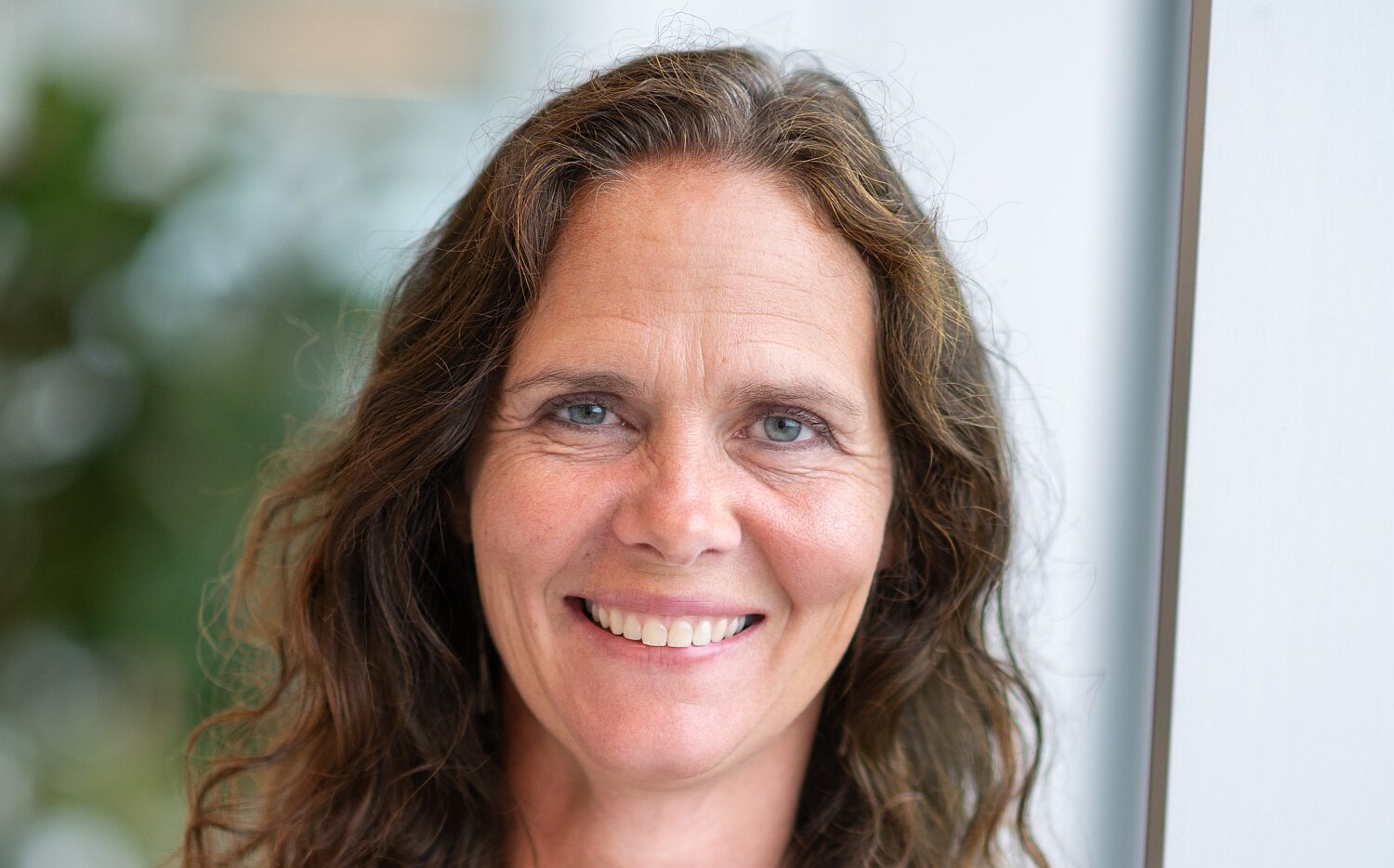
Europe may be on a mission to become a global biomanufacturing powerhouse, but right now, the environment for early-stage biotech founders—and many investors—is “horrible,” says Annick Verween, head of Biotope, an early-stage investor born out of Belgian research institute VIB.
Timelines are long, capital is scarce, and regulatory pathways are frustratingly slow. Meanwhile, “Biology doesn’t multiply like an Excel sheet,” she notes. “And if you’re in ag, the timelines are awful.”
As for the overall funding landscape, she says, “I’m a little bit afraid that we haven’t hit rock bottom yet.”
At the same time, Verween sees encouraging signs: more joint assessment agreements with corporates in place of “meaningless” letters of intent (LOIs); more patient family-fund money entering the sector; and greater clarity from CVCs about the performance indicators that matter.
AgFunderNews (AFN) caught up with Verween (AW) to discuss what makes a great founder (long term vision and a short term “get things done attitude”), why building a capital stack is critical, and what makes a good pitch deck.
“Startups spend too much time framing the bigger problem,” she observes. “But the fact that all of us want to have a better world does not need three slides. What we want to know is what is the pain that you are solving for your customers and who is willing to pay for your solution?”
AFN: Give us the basics on Biotope
AW: Biotope is born out of [Belgian research institute] VIB. What [Dutch university and research institute] Wageningen is for food & ag, VIB is for biotech; it’s really good at spinning out successful companies that make it to growth stage and beyond. I joined three years ago because VIB also wanted to look at [supporting startups with] great IP from outside of our institute as well.
Biotope started as an incubator, trying to put the pieces of the puzzle together that early-stage biotech companies don’t get in a lot of the more general programs. But we are now also an early-stage investor in biotech startups in planetary health internationally except the US and Canada. We look at food & ag but also other sectors such as cosmetics and chemicals.
We started with just €4.5 million ($5.2 million) to test the model and we recently announced the first €5 million ($5.8 million) close of our second fund out of €9 million ($10.4 million). We aim for five investments a year with small amounts.
AFN: Why is starting out in biotech so hard?
AW: The biggest challenge biotech startups have is what they’re doing takes more time and money. And if you’re in ag, the timelines are awful, you need data over different seasons, and when you’re in food or ag, regulatory [approvals] can take years.
A lot of startups have had to become more creative and try to find lower capex models, but even if you do, biology doesn’t multiply [in a predictable way] like an Excel sheet; when it comes to scaling, it’s a totally different story.
It’s horrible for startups to raise at this moment, it’s horrible for funds as well because of the lack of clear exit stories.
AFN: Where are we in the current cycle?
AW: I’m a little bit afraid that we haven’t hit rock bottom yet. I think it might get a little bit worse before it gets better.
AFN: How long does it take for startups to raise early rounds now?
AW: It takes at least a year just to raise a couple of million, so you should start very early.
AFN: You’ve said in the past that investors “should avoid leading on startups” and that “keeping the door open” is “not neutral but harmful and, in fact, unethical?”
AW: If a startup does not hear no, they think there’s still an opening, which is not always the case. I think as an investor, you should be very transparent. Is there still an option? Yes or no. And if there is, clearly communicate what you’re looking for.
It’s very common to say something like, “Come back when you have more,” but as a startup, how do you know when to come back? Raising money is a full-time job, and if you’re a small company with three full-time employees and one person is only doing fundraising, it slows down everything else.
It’s difficult for startups to raise. It’s difficult for funds to raise. So we feel that there are also a lot of funds who to convince their potential LPs, feel that they need to show a lot of deal flow. But they will only be able to invest once their LPs say yes, and then you get this eternal waterfall of everybody waiting on each other. And who dies at the end? The startups, because they have no cash anymore.
AFN: You’ve also said that “misalignment between startups and investors is creating a self-perpetuating cycle of frustration?”
AW: It goes back to what I said before. If you say to a startup you’re too early, what is too early? Well, you need to have more traction. But what does that look like? If an LOI means nothing, what do investors need? This misalignment and miscommunication just makes things more difficult.
AFN: If VC funding is harder to come by, who else can biomanufacturing startups tap for cash?
AW: In Europe, angel investors in biotech rarely work. The tickets are too big and biotech is not the easiest tech to understand. However, we do see more interest from family funds, which can offer more patient capital. We also see more and more CVCs who might be a good source of money.
AFN: You mentioned CVCs… what role are they playing now?
AW: Corporates can help the sector a lot by openly sharing what performance indicators they are looking for. They know how these components work, they know how to scale and they definitely know what they are willing to pay.
This is very concrete hands-on information that is so useful for a startup who early on can still pivot. Corporates are also of course, the first customer, so they are key players in this early-stage ecosystem.
The challenge is sometimes that what’s fast for the corporate is not at all fast for the startup, and there you have this miscommunication.
AFN: How do pre-revenue startups in this space show ‘traction’ to an investor or corporate?
AW: Investors say, I want to see traction: prove to me that a corporate can do something with your product. But as a startup, it’s a case of first I need your money [in order to make enough headway] to convince the corporates [that there’s something of value there]. It’s a chicken and egg situation.
What we very often see in biomanufacturing is you have an LOI [letter of intent from a potential customer] whereby a corporate says if you can produce 10 tons at a price below what I’m paying now, then I will take it all, which doesn’t mean anything.
So we try to find allies on the corporate side who can test what the startup is producing, so we have now more joint assessment agreements whereby the corporate agrees that I will test your sample and give you the results back, so you can improve, which means much more than an LOI.
The important thing is to keep checking in with potential customers. Is this still what you’re looking for? There’s nothing as bad as an early stage startup that spends 10 years on research on tomatoes and it turns out that the market [opportunity] is in wheat.
Are you moving in a direction where somebody will want to buy your product at the price that you can produce it for?
AFN: You’ve talked about the importance of building a capital stack early on…
AW: We invest when most other investors say this is way too early. If nobody invests at the start of the pipeline, there will be no scale-ups to fund anymore, but we force our portfolio companies to make a capital stack from day one.
If you have companies who only bet on grants they can kind of become service companies doing a bit of this and a bit or that. Likewise, if you have companies that only bet on VCs, that is a model which definitely does not work anymore.
So you need a co-funding mechanism to unlock more grant funding, which allows you to scale up, which might even give you access to debt funding.
The [proposed] Biotech Act in Europe puts a lot of focus and emphasis on biotechnology and biomanufacturing, so we hope that will unlock some earlier stage funding.
AFN: Is it becoming easier for startups to access biomanufacturing capacity?
AW: Two, three, four years ago, getting access to a CMO was difficult and expensive, and you were put in a very long line of people. This is no longer the case.
AFN: What do you look for in a founder?
AW: A get things done attitude. As a scientist, in the beginning, I thought, if the science is good, we can fix everything. We can build everything around it. That’s not true.
You need to find the people who drive things forward. For me, the ideal founder is this rare combination of somebody who has a long-term vision but also a focus on short term, operational stuff, implementing the steps that need to be taken.
AFN: What puts you off in a pitch?
AW: I’m not a big fan of pictures without concrete data points, or startups that talk as if they are in a blue ocean with no competition, which either means they did not do their homework, or that they are trying to solve a problem that is not a problem.
Startups also spend too much time framing the bigger problem, but the fact that all of us want to have a better world does not need three slides. What we want to know is what is the problem that you are solving for your customers and who is willing to pay for your solution?
I also see some TAM [total addressable market] figures that don’t mean anything.
Also, even if you have a more science-heavy pitch, you still need to be able to explain to somebody who’s not an expert in the field what you are doing. I think that goes for everything in life.
AFN: Can you highlight a couple of portcos not necessarily in biomanufacturing?
AW: Shelfion, which makes AI-powered shelf-life prediction software, has a predictive model, so for example they have all this data on sauces. A product developer could say, I want to develop a certain kind of sauce with less salt; what might that mean for my shelf-life? Will I need to add stuff [other preservatives] or can I keep my clean label, for example?
(Users can input ingredients, storage conditions, and packaging and runs simulations that predict microbial growth and shelf stability, enabling them to optimize formulations before spending money on lab testing.)
Another company, B’ZEOS, makes packaging pellets out of seaweed for the packaging industry.
This is a company that got investment from a CVC [fund], which was the perfect way to get into a bigger pilot with one of their potential customers.
👉Read more in our Investor Q&A series…