
Food formulators now have an array of options to replace synthetic dyes. But when it comes to titanium dioxide—a white pigment now banned in the EU in foods and under threat in some US states—the toolbox is more limited.
Existing solutions range from calcium carbonate, calcium phosphate, and modified starches to new cellulose-based pigments inspired by beetles. But there is no single product that can replace it across every application, and food manufacturers talking to Massachusetts-based Mirra are looking for more effective options, says the startup, which is pitching a novel approach.
What is structural color?
Color is not an intrinsic property of objects but arises from the interaction between a light source, the object’s structure or chemistry, and the observer’s eyes/brain. However, structural colors are different to pigments and dyes currently used to color foods or textiles, Mirra CEO Elizabeth Bridges told AgFunderNews.
Structural color—which is most advanced in paint and coatings but has been demonstrated by Nike in footwear prototypes—arises when micro- or nanostructures interact with light in a way that selectively reflects certain wavelengths.
Butterflies, for example, create structural colors from complex nanostructures on their wing scales that manipulate light through interference and diffraction. Food pigments, in contrast, are seen because their molecules absorb specific wavelengths of light and reflect the rest, she explained.
Plant-based pigments can degrade with changes in light, pH, heat, or physical stress, and often have to be included in high amounts to achieve the vibrancy of synthetic dyes, which can negatively impact flavor or texture. However, structural colors are more stable, she claimed.
How it works
Mirra designs specific colors by adjusting the size, spacing, and orientation of its raw materials (undisclosed vegetable proteins), starting with an alternative to titanium dioxide.
“You’re assembling them in a way to create a specific refraction pattern of light, whereas an azo dye for example, will chemically bonding to a natural fiber to create a color in textiles, for example,” said Bridges.
“If you’ve seen a hummingbird or a butterfly, if you change the position you’re looking from, you’ll see a different color. This is an effect you can cultivate with structural color, but you can also create a less directive pattern enabling you to have a single color.”
The tech was developed by Mirra’s chief scientific advisor Dr. Leila Deravi, associate professor in the Department of Chemistry and Chemical Biology at Northeastern University in Boston, and Mirra has the exclusive option to license it, she added.
Published literature describes new “solution-processed” methods that create structural color by letting particles self-assemble from a liquid (solution) into light-scattering micro- or nanostructures as the solvent evaporates or conditions change. Other methods rely on top-down fabrication techniques to physically create target structures.
Bridges did not say how Mirra is making its structural colors, but added: “We have a patent pending, so I have to be a little bit sensitive about what I share. We’re taking the process we’ve developed in the lab and trying to understand what that would look like at full scale but it’s not an expensive and complicated process.
“There is a kind of stigma attached to structural color in that it’s expensive to make, but one of the breakthroughs of the process that Dr. Deravi has developed is that we believe we’re able to meet price parity rate at scale.”
Working with industry
Mirra—which emerged out of the Massachusetts Clean Energy Center Climate Tech Studio, was incorporated in July 2025. It has since conducted scores of interviews with food companies to understand how and when in their processes they are incorporating colors such as titanium dioxide in food applications to ensure it is able to fit in with existing protocols, said Bridges.
“It’s not feasible to expect companies to purchase new manufacturing equipment or change the ways that they’re doing business at a fundamental level just to accommodate a new material. All of the testing we’ve been doing has been using standard practices and equipment.”
To ensure low cost-in-use, “We have to keep the material itself highly potent so that small amounts result in a large amount of color without negatively impacting flavor and texture,” she added.
Mirra has thus far relied on non-dilutive grants and is now trying to secure pre-seed funding. Investors recognize there’s demand for more effective alternatives to synthetic dyes, said Bridges, but want to see evidence that Mirra has a cost-effective solution.
“We’ve conducted about 200 customer discovery calls thus far and there’s a real white space in the market. We wanted to make sure we know exactly what they’re looking for from a technical performance perspective, so we’re testing our ingredient in different food matrices to benchmark performance against titanium dioxide.
“And from here, we’re producing samples for potential customers to validate,” said Bridges, who is looking to work with color houses and food ingredient manufacturers with internal R&D capabilities and an established customer base rather than trying to go directly to large CPG companies as an ingredients supplier.
What is titanium dioxide?
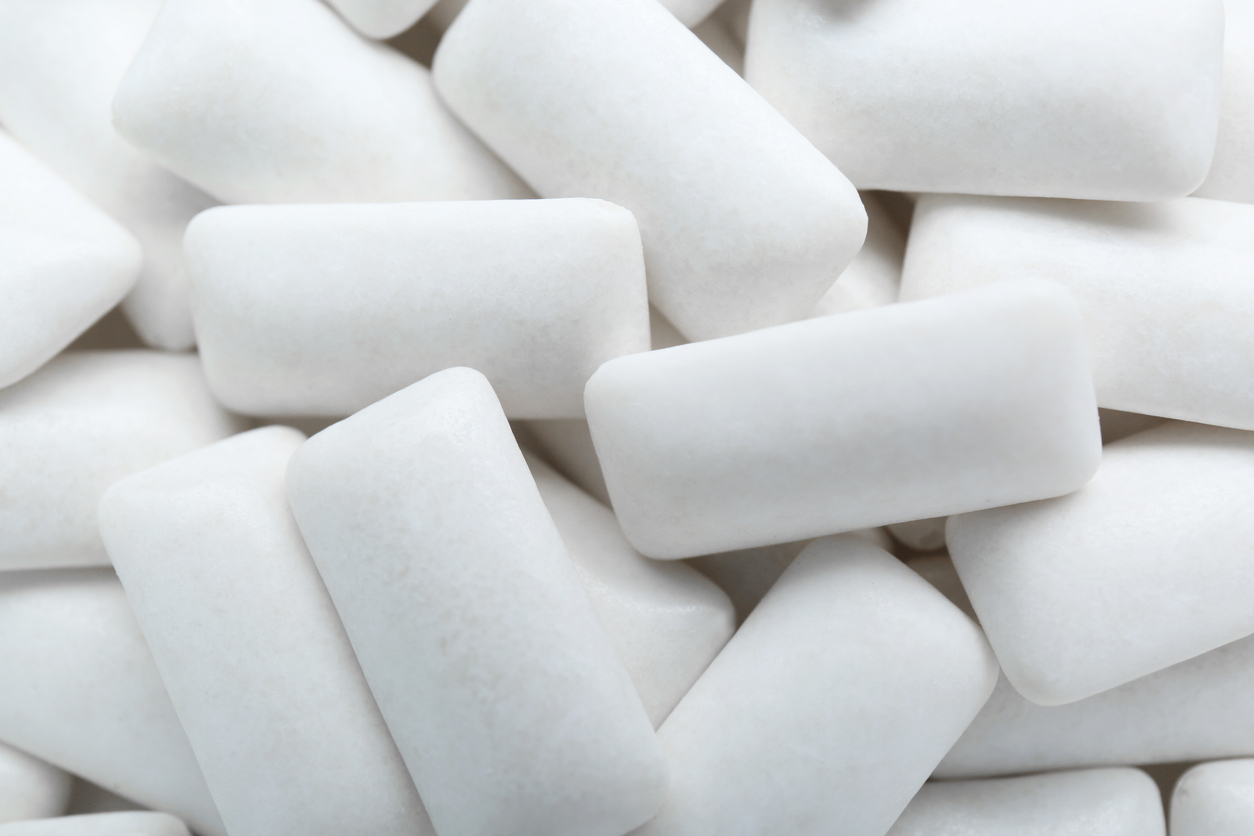
👉 Titanium dioxide (TiO2)—a whitening and brightening pigment used in everything from gum to some coffee creamers—is a naturally occurring mineral that is mined from the earth then further processed and purified into a fine white powder for use in consumer products.
👉 TiO2 has been banned in food products sold in the EU since August 2022 after the European Food Safety Authority (EFSA) determined that it “can no longer be considered safe as a food additive.”
👉 While it is approved as a color additive exempt from certification in the US and considered safe by Health Canada, many US manufacturers are trying to phase it out as part of clean label commitments, while several states have also proposed bans in the past couple of years.
👉 The 2025 MAHA Commission report listed it as an additive of “potential concern” along with selected artificial colors, sweeteners, and preservatives.
Further reading:
Impossible Materials raises $3.8m to develop titanium dioxide alternative ‘bio-inspired’ by beetles
Fermentation will power next wave of natural colors say startups as FDA targets synthetic food dyes
Are natural alternatives to synthetic food dyes getting better? In conversation with ADM