
UK startup Biographica and Dutch genome editing specialist Hudson River Biotechnology are partnering to take crop trait development from target discovery through to edited commercial varieties.
The collaboration combines Biographica’s computational platform for identifying high-value gene targets associated with traits from disease resistance to drought tolerance, with Hudson River’s genome-editing, transformation and regeneration capabilities.
The partners will initially focus on tomatoes before expanding into other crops.
“Hudson River has deep expertise in genome editing, and to serve a wider variety of customers, they can leverage our predictive capabilities such that a customer can say ‘I have this trait problem, give me an edited variety to solve that,” Biographica cofounder Dominic Hall, PhD, told AgFunderNews.
Through the new model, he said, “We anticipate customers would approach Hudson River, which would then leverage Biographica’s predictive capabilities to nominate priority genes to generate edits for.”
How it works
Biographica uses its platform to identify the genes associated with a desired trait, ranks them according to their likelihood of working in a particular crop, and designs the edits. Hudson River would then deploy those changes using its BioMaas editing and single-cell regeneration workflow.
The model is particularly useful where obvious genetic targets have already been exhausted, where there is insufficient data to identify a good target, or where companies need to work around existing intellectual property, said Hall, who cofounded Biographica in 2022 with Cecily Price.
The partnership does not necessarily target companies that lack their own discovery or transformation capabilities but gives breeders additional capacity to pursue projects outside their core programs.
“It’s a case of bring us your most difficult trait problems,” said Hall. These could include “a trait problem where they don’t really have the data to solve it that well right now” or cases where a company is “blocked by existing patents and they need to find a way to generate traits that go around that.”
Under the commercial arrangement, a customer coming through Hudson River would remain Hudson River’s customer, while Hudson and Biographica would share costs behind the scenes and any upside generated by a project, said Hall.
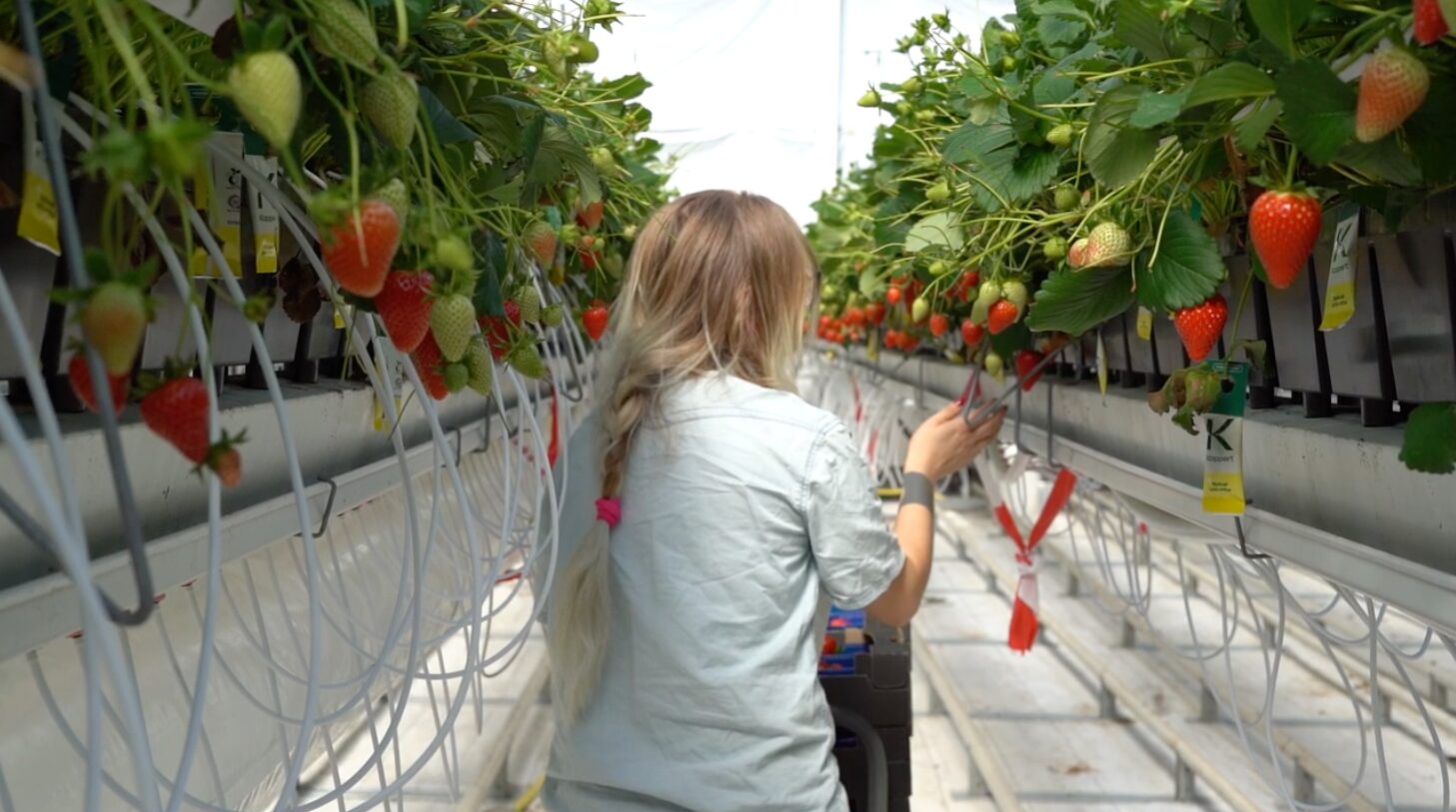
“Hudson River is one of very few companies that can edit crops as difficult as strawberry, transgene-free and at a scale our clients depend on. Put those together and a customer can bring us a trait problem and get the whole way to a plant, which is not something either of us could offer alone.”
“By bringing our capabilities together, we want to move genome editing beyond the obvious targets and unlock traits that breeding has not yet been able to crack.” Lotte Westerhof, CSO, Hudson River Biotechnology
The discovery bottleneck
To identify targets for edits, said Hall, many firms still rely on Genome-Wide Association Studies (GWAS) that scan the genomes of many plants and statistically link DNA variants to traits by analyzing which variants show up most often in plants with the trait.
Quantitative Trait Loci (QTL) mapping, in turn, crosses plants with different traits and tracks how DNA regions and the trait are inherited together in offspring, which narrows down regions of the genome likely influencing the trait.
The challenge, said Hall, is that these approaches prove correlation, not causation, and do not prioritize or rank genetic targets or “hits.”
Biographica’s platform, by contrast, deploys multi-modal machine learning to predict which genes are most influential, how they interact with others, and which are likely to be the best targets for gene editing with fewer unwanted side effects.
At the root of this are foundation models trained on multi-modal genomic datasets that capture both gene/gene and gene/trait interactions. The models then predict genes most likely to causally impact a trait and then design edits accordingly. Experimental results are then fed back into the models, delivering continuous improvement.
Susceptibility genes
In addition to identifying novel genetic targets, Biographica is also pursuing complex edit design approaches. Rather than simply switching genes on or off through knockouts, for example, it is developing models designed to predict how genetic edits could alter gene expression in different tissues, contexts or in response to different stimuli.
This is enabling more nuanced engineering of so-called susceptibility genes that pathogens exploit to infect plants, but which can also play an important role in normal plant development, so knocking them out impose yield or developmental penalties.
Instead, said Hall, “We ask can we modulate expression of these genes in specific contexts so we can reduce the susceptibility of the plant without having yield a penalty? That’s a core focus area for us at the moment.”
While for many customers, a straightforward knockout may still be the most appropriate approach, Biographica and Hudson River are exploring this more advanced form of editing, including changes to regulatory DNA that controls when and where a gene is active, he added.
Focusing on susceptibility genes (as opposed to resistance genes) could also provide more durable forms of disease resistance, said Hall, although he was careful not to make sweeping claims.
‘Guided by market pull’
In addition to its partnership work with large clients such as BASF, Biographica is also working on trait development in-house, said Hall, who recently raised a £7 million ($9.5 million) seed round led by Faber VC.
“In all cases, these bets will be guided by market pull. For these deep trait bets, as well as considering simple gene knock-outs, Biographica is also pursuing more complex and subtle edit design approaches. Given Hudson River’s established expertise in genome editing, as well as pursuing some transformation and editing work in-house, Biographica and HRB will be exploring these complex edit design approaches to bring the most promising and valuable traits to market.
Right now, disease resistance is the strongest signal from breeders and other potential customers, he said. But there are also opportunities in crop quality and nutrition.
Further reading:
Exclusive: Spearhead Bio lands oversubscribed seed round for faster, more precise gene editing tech
Rainbow Crops raises $11.25m to scale AI-guided multiplex gene editing
Pairwise sees ‘dramatic uptick’ in CRISPR licensing as gene editing moves beyond row crops
Upstream Biotechnology raises seed funding for ‘on-demand’ crop defense tech
🎥 Can editing the ‘dark genome’ make crops more heat tolerant?