A failure to address water pollution is creating “growing financial liabilities” for major pork, poultry, and fertilizer companies, according to a new report from investor network FAIRR.
These industries are “at the core of the nutrient pollution problem,” that impacts biodiversity and waterways around the world, says the report.
The FAIRR investor network conducted a three-year engagement starting in 2022 with 10 of the world’s largest pork and poultry producers and two fertilizer companies to analyze pollution risks in their operations.
The resulting report is relevant to investors with direct holdings in these industries as well as those investing “thematically in food system sustainability” and those with exposure to food, bev, and chemicals, says FAIRR.
Big Meat’s Big Poo problem
To give a sense of the size of Big Meat’s poo problem, FAIRR estimates that animal manure produced by pork and poultry companies (excluding Hormel) is equivalent to the human fecal waste of 2.5 billion people.
JBS is “the biggest poo producer,” according to the report, creating as much feces per year as 1.2 billion people, or roughly the population of China. Tyson Foods and BRF produce manure on par with the US and Brazil, respectively.
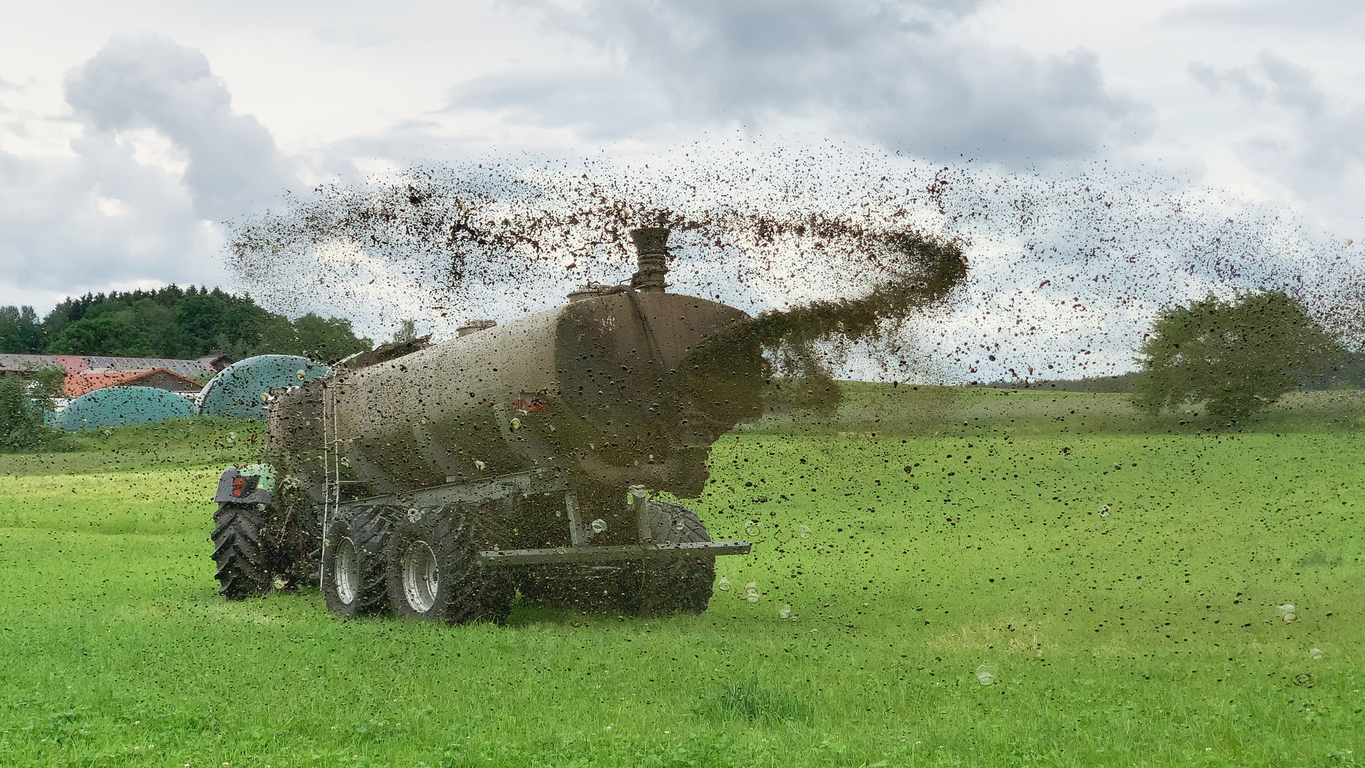
Manure has uses as fertilizer, but excessive use can lead to nutrient loss from the soil via leaching. Fertilizers and other chemicals then put aquatic life and biodiversity at risk, as illustrated by examples like the Gulf of Mexico Dead Zone.
Intensive animal agriculture also frequently includes use of antibiotics, traces of which end up in manure, causing further harm.
“These risks are amplified in regions with weak enforcement of pollution regulations, which are largely where the companies in the analysis operate,” notes FAIRR.
All said and done, this poo problem—left unmitigated—brings operational, reputational, and regulatory risks to companies and their investors.
Visibility gaps into supply chain remain, despite progress
FAIRR’s Waste and Pollution Engagement worked with 10 pork and poultry producers and two fertilizer companies to conduct risk assessments on animal waste management and downstream fertilizer use in their supply chains.
Companies include: BRF, CP Foods, Cranswick, Darling Ingredients, Hormel Foods, JBS, Maple Leaf Foods, Muyuan Foods, Seaboard Corporation, Tyson Foods, WH Group and Yara International.
Of these companies, 83%—up from 60% in 2022, when the engagement started—have now assessed water-quality risks of their own operations.
However, just three of these companies—BRF, JBS, and Tyson—”clearly disclose” geographic regions with a high exposure to water-quality risks in their operations.
As well, pork and poultry producers in the engagement lack full visibility into their risk exposure, according to FAIRR. Most of these companies (70%) now include livestock supply chains in their risk assessments “to some extent,” but only 40% include all of their suppliers.
Just one company, Tyson, has disclosed targets to mitigate pollution at high-risk sites.
“This suggests that the overall rise in risk assessments has not translated into companies implementing mitigation strategies,” notes FAIRR.
Fertilizer companies, meanwhile, “have not made progress evaluating the risks associated with their products. Neither company has set or implemented tangible strategies, despite being in a position to enable a circular economy for organic fertilizers.”
Investors should push for more circularity solutions for industrial meat and fertilizer production, says FAIRR, arguing that a move towards a circular system could create economic value.
Currently, circularity solutions—such as composting manure, capturing biogas, and turning animal waste into fertilizer—remain unpopular amongst these large companies, says the report.
“For most pork and poultry producers, circularity remains unattractive, unless they can access subsidies that promote the upgrade of the manure treatment to achieve a high-end quality product. The risk of being fined as more governments take action against pollution may drive more companies to consider circular models in future.”