
The U.S. patent is another validation for Ancient Organics Bioscience‘s mission to clean up glyphosate-contaminated soils through bioremediation.
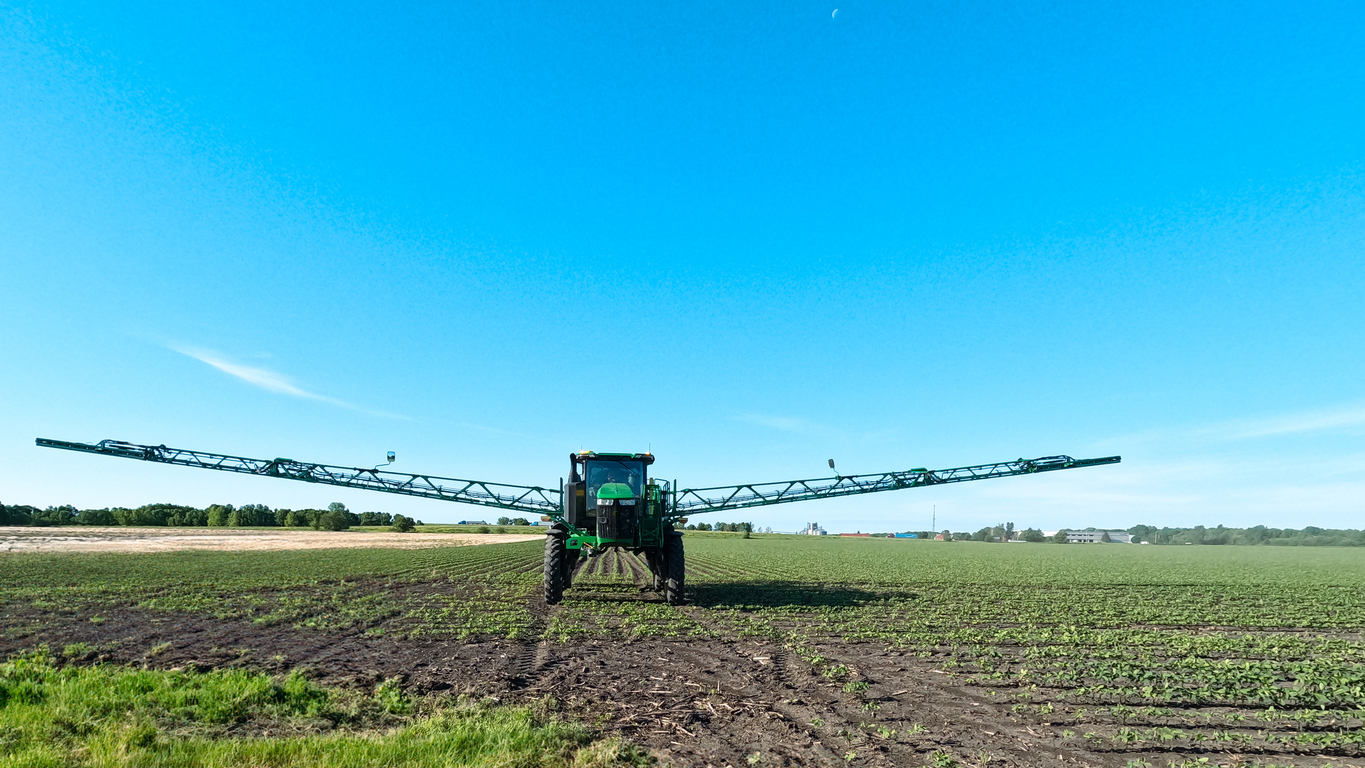
At the same time, it highlights another option for broad-acre row-crop farmers still relying on glyphosate-based herbicides, which remain the most cost-effective option for weed control.
Why it matters:
Nothing kills weeds quite like glyphosate, but the herbicide and its byproducts also adversely impact soil health, according to Ancient Organics.
- About 55% of the native beneficial microorganisms in soils contain the gene glyphosate targets.
- Glyphosate suppresses beneficial bacteria and fungi in the native soil microbiome.
- It binds to (chelates) key soil nutrients, making them unavailable to plants.
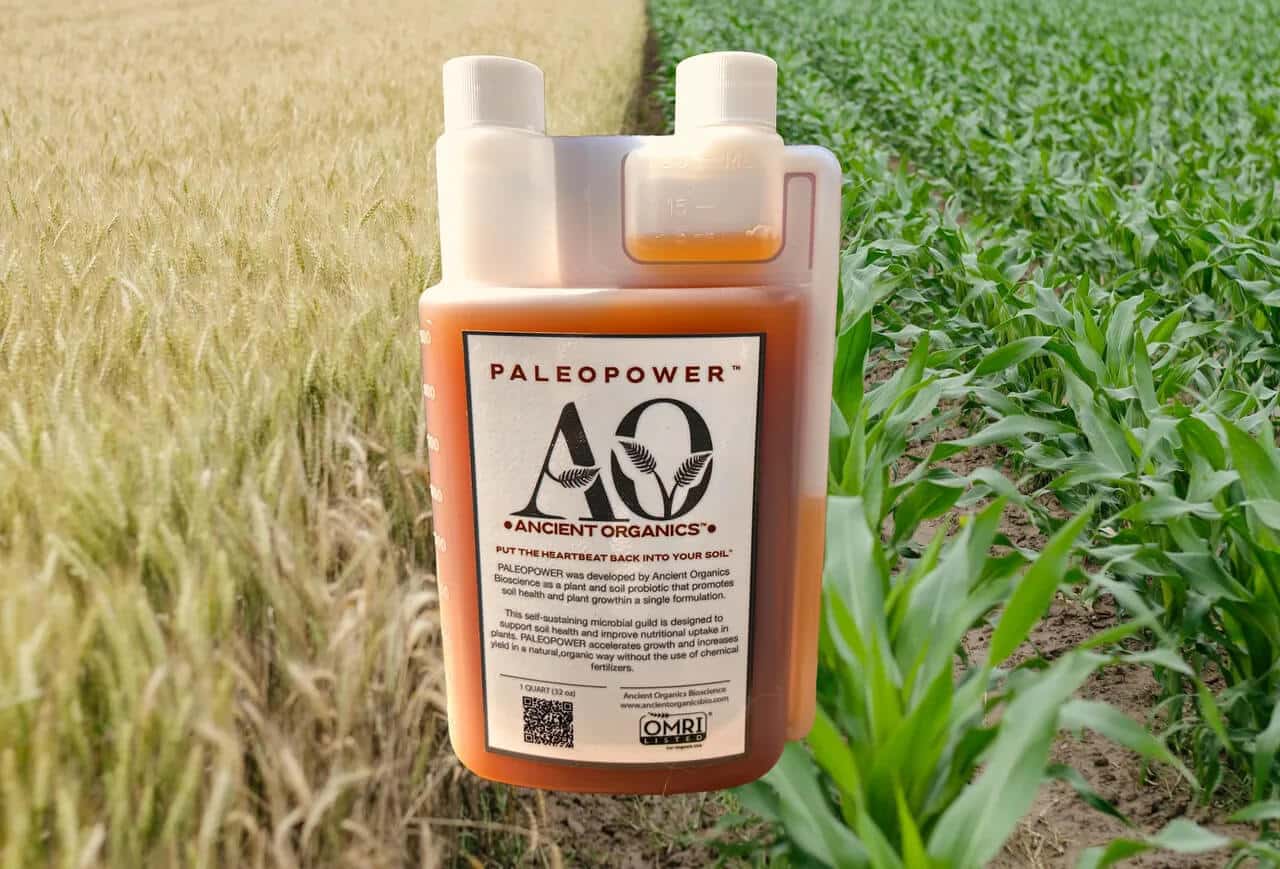
Ancient Organics’ product PaleoPower is designed to degrade chemical residues from those glyphosate-based herbicides.
Robin Steele, cofounder and director at Ancient Organics, says this emphasis on soil health and degrading environmental contaminants is a unique strength.
“Most of the biologic companies are focusing on plant health, nitrogen fixation, nitrogen-use efficiency. But without healthy soil you are not going to have healthy crops or healthy food,” she tells AgFunderNews.
“Our objective is to provide farmers with organic biological solutions that enable them to produce cleaner foods, with reduced levels of environmental toxins, and healthier foods, with higher nutrient content,” notes Steele.
How it works:
A consortium of microbes within PaleoPower produces enzymes that can degrade the chemical bonds of glyphosate, accelerating the herbicide’s destruction and setting soil macronutrients free, notes Ancient Organics founder and CEO Raul Cano.
- After application of PaleoPower, the glyphosate breaks down, while nutrients it previously bound are released.
- The native soil bacterial community can then recover and re-establish itself.
- Ancient Organics estimates glyphosate degradation of between 75% and 90% in 90-120 days on average.
- Typical application of PaleoPower is once during pre planting and once more after harvest.
Ancient Organics has done a limited commercial release of the PaleoPower in the United States and has registration pending in Canada (expected to go through in 2026).
PaleoPower by the numbers:
Across multi-state field trials, PaleoPower “delivered consistent and dramatic reductions in glyphosate residues,” says the company.
- 87% of residues in a Wisconsin corn field
- 75% in Alabama cotton
- 50% in Illinois soybeans
- Almost 96% in a California vineyard
Because PaleoPower increases soil microbial diversity, trials also saw yield increases in some crops:
- 28.6% in corn
- 38% in carrots
- 48% in onions
- Average boosts of 25% to 36% in organic vegetable crops

Zoom out:
The new patent arrives as glyphosate once again takes over the headlines:
- The U.S. federal government recently backed Bayer’s efforts to limit litigation claiming the weedkiller Roundup (inherited by Bayer after it acquired Monsanto) causes cancer.
- A favorable ruling from the Supreme Court of the United States would diminish or eradicate many of the 67,000-plus lawsuits Bayer currently faces.
- This month also saw the retraction of a landmark study on glyphosate safety, published in 2000 and widely cited, due to “serious ethical concerns.”
- Last month, Europe’s General Court found EU regulators had “bent pesticide rules” over the years to keep glyphosate (and other chemicals) available in the market longer than allowed by law.
Politics and regulation aside, Ancient Organics says it’s hyper-focused on what farmers need—and what they’ll realistically buy when it comes to crop-protection products.
“Farmers are somewhat reluctant to give up their chemical crutches, because they work,” explains Steele.
“We have started to embrace that, suggesting, ‘If you are going to use glyphosate, you may want to use our product as a companion product to help at least mitigate perhaps some of the damage to the soil.’
That message seems to be resonating with those that are not pure regenerative or organic farmers, that are still embracing their chemicals.”

Sign up for our weekly newsletter.