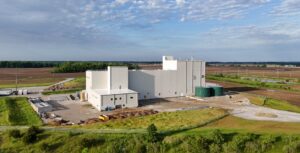
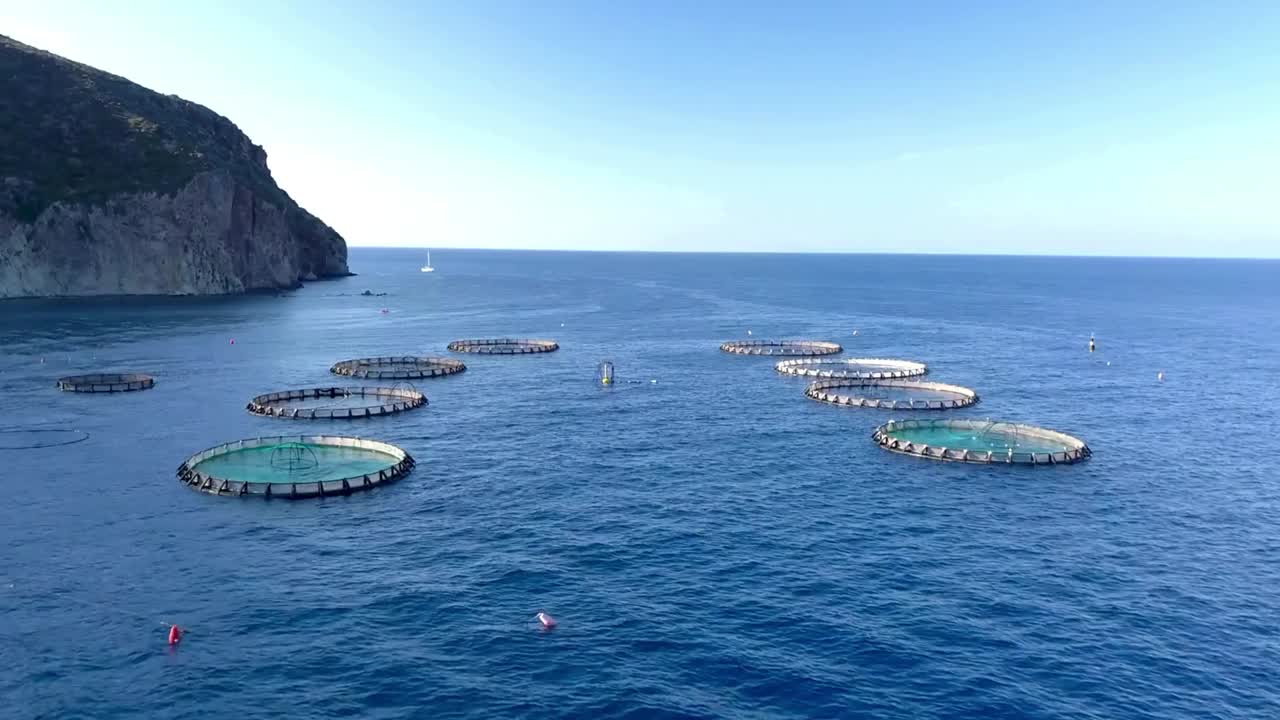
Despite holding “many of the ingredients” to make a strong aquaculture sector, the United States “remains relatively small and attracts limited investment” according to a new report from investment firm Hatch Blue.
The US still leads the world in agrifoodtech investment, but aquaculture garners just a small portion of that capital. The report notes that growing the sector isn’t simply a matter of companies getting access to capital.
“The problem is not necessarily a shortage of capital, but the difficulty of presenting investors with opportunities that can deliver the required returns within an acceptable time frame while navigating a complex regulatory environment,” noted one industry expert interviewed for the report.
Circling through murky water
The lack of aquaculture investment is something of a chicken-versus-egg scenario. Multiple high-profile aquaculture operations in the US have shuttered in recent years, marring the sector’s reputation. This in turn “can make it harder to build public acceptance and support for new projects and regulatory reform,” noted one policy expert for the report.
Without this support, commercial-scale projects become harder to build, aquaculture’s reputation stays in muddy waters, and investment dollars are hard to come by.
“Investment opportunities must show credible demand, workable economics, and a realistic path to scale. A promising technology or farming concept may be a strong starting point, but commercial viability also depends on a workable permitting pathway, customer access, and a return profile that justifies the risk and time needed to grow,” notes the report.
Underpinning all of this is a complex regulatory environment in the US. There is currently no clear federal framework for offshore aquaculture in the US. Efforts to designate a lead federal agency remain in “legislative gridlock,” leaving projects to contend with a state-by-state mix of permitting requirements.
Hatch Blue noted this lack of clear regulatory paths was “the most consistently cited barrier to developing aquaculture in the United States and, consequently, to investment in the sector.”
Murky regulatory frameworks can lead to longer timelines and uncertainties around whether a project will even get approval, making it challenging to take something from pilot to commercial scale.
Match the capital to the business
Consensus is gelling around the idea that in aquaculture — and most of agrifoodtech — different types of businesses require different types of capital, and the more complex the technology, the more patient that money should be.
Hatch Blue’s report notes that software and “other enabling technologies” are often a good fit for venture money “especially where they can serve a broad customer base or address markets beyond aquaculture.”
Venture investors interviewed for the report spoke of the importance of large addressable markets, fast growth, and potential for significant returns, in addition to businesses that can scale without large investments into physical infrastructure.
Aquaculture production, on the other hand, relies on physical infrastructure and typically takes longer to reach commercial scale than venture returns allow for.
“These characteristics do not make production unattractive, but several investors described them as a difficult fit for conventional venture capital, particularly where returns depend on building and operating capital-intensive infrastructure over a longer time horizon.”
On top of that, investment needs and risks differ from one aquaculture category to the next: “An offshore finfish farm, a land-based recirculating aquaculture system (RAS) facility, a shellfish operation, and a seaweed farm each face different development pathways, cost structures, risks, and markets,” notes the report.
Among other recommendations, interviewees suggest “a more structured financing path” beginning with grants and catalytic capital for early-stage concepts and companies that are as-yet unproven. Venture or growth equity “may become relevant” where a real path to scale emerges, while debt “generally becomes more realistic with sufficient operating history, revenues or assets.”
Capital-intensive projects may require loan guarantees, concessional debt, and other ways of risk-sharing that can assist companies with “the messy middle” between a successful demonstration and conventional project finance.
As Hatch Blue notes, “The objective is not to subsidize every stage, but to use more patient or risk-tolerant capital where it can help a business reach a milestone that allows the next source of capital to participate.”