Could the ubiquitous Cavendish banana go the same way as the Gros Michel, which dominated international markets until the 1950s before being wiped out by a different strain of the deadly fungal disease now threatening to devastate today’s crop?
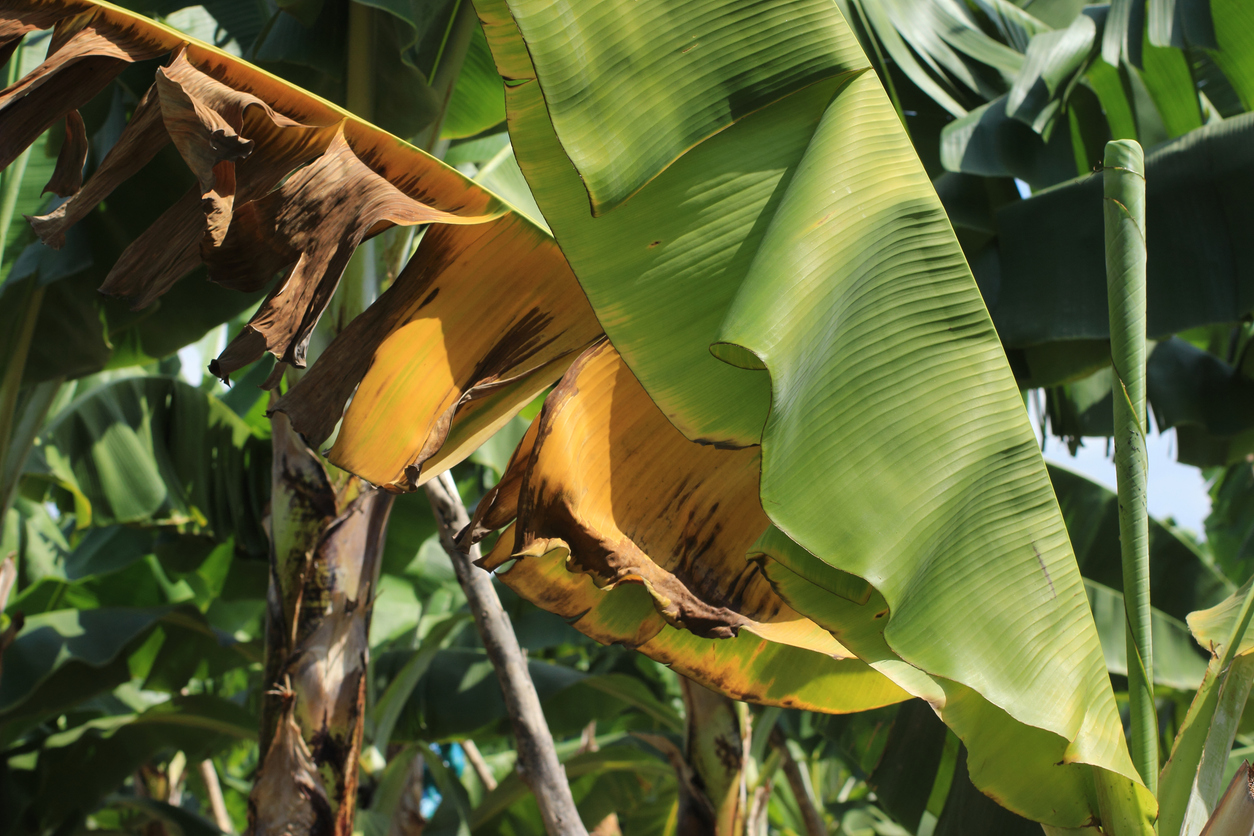
Fresh Del Monte CEO Mohammad Abu-Ghazaleh did not mince words on the firm’s Q3 earnings call this week, where he again sounded the alarm over the industry’s “losing battle” against Fusarium Tropical Race 4 (TR4) and Black Sigatoka in key banana growing regions.
“[People] really don’t understand how serious this issue is,” not just for Fresh Del Monte—which grows bananas on its own farms in Costa Rica, Guatemala, and the Philippines and purchases bananas from growers all over the world—but for the wider industry, said Abu-Ghazaleh.
“There will come a time that people realize that there are not enough bananas… and prices will shoot up in a way that will be a shock to the market.”
TR4 in Ecuador a ‘serious escalation’ in Latam
TR4—which was first detected in bananas in Southeast Asia—has gradually spread through Asia Pacific, Africa, and South America, hitting growers in Colombia, Peru, and Venezuela, and most recently Ecuadaor, one of the world’s largest banana producers, said Abu-Ghazaleh.
This is “a serious escalation in Latin America,” he said. “It is a highly contagious soil-borne disease with no cure, and it’s already destabilizing the region.”
In Peru, where TR4 was first detected in 2021, the disease is having a significant impact in the Piura region, the country’s leading producer of organic bananas, he noted. “A recent study found that 45% of farms are already infected and about 10% have been completely eradicated.”
While TR4 has not yet spread to Central America, he said, “It’s just a matter of time.”
He added: “You can replant and then three years later, four years later, you lose a tree again. I see that in The Philippines. I saw that in Africa. This is going to happen. I see that as we speak right now in Ecuador.”
Fresh Del Monte is advancing work on TR4-resistant banana varieties, while growers are adopting stringent biosecurity measures to try and ward off disease, he said. “But each year, these efforts are becoming more demanding as the situation further deteriorates, placing new financial strains on growers across the industry.”
“The farmer can no longer absorb these rising costs. And if we don’t act collectively to support growers and stabilize this supply chain, we risk seeing this fruit and the livelihoods behind it disappear before our eyes. Costs are going up and prices are not moving in the same direction… and the diseases are not going away.” Mohammad Abu-Ghazaleh, CEO, Fresh Del Monte
‘A vicious cycle’
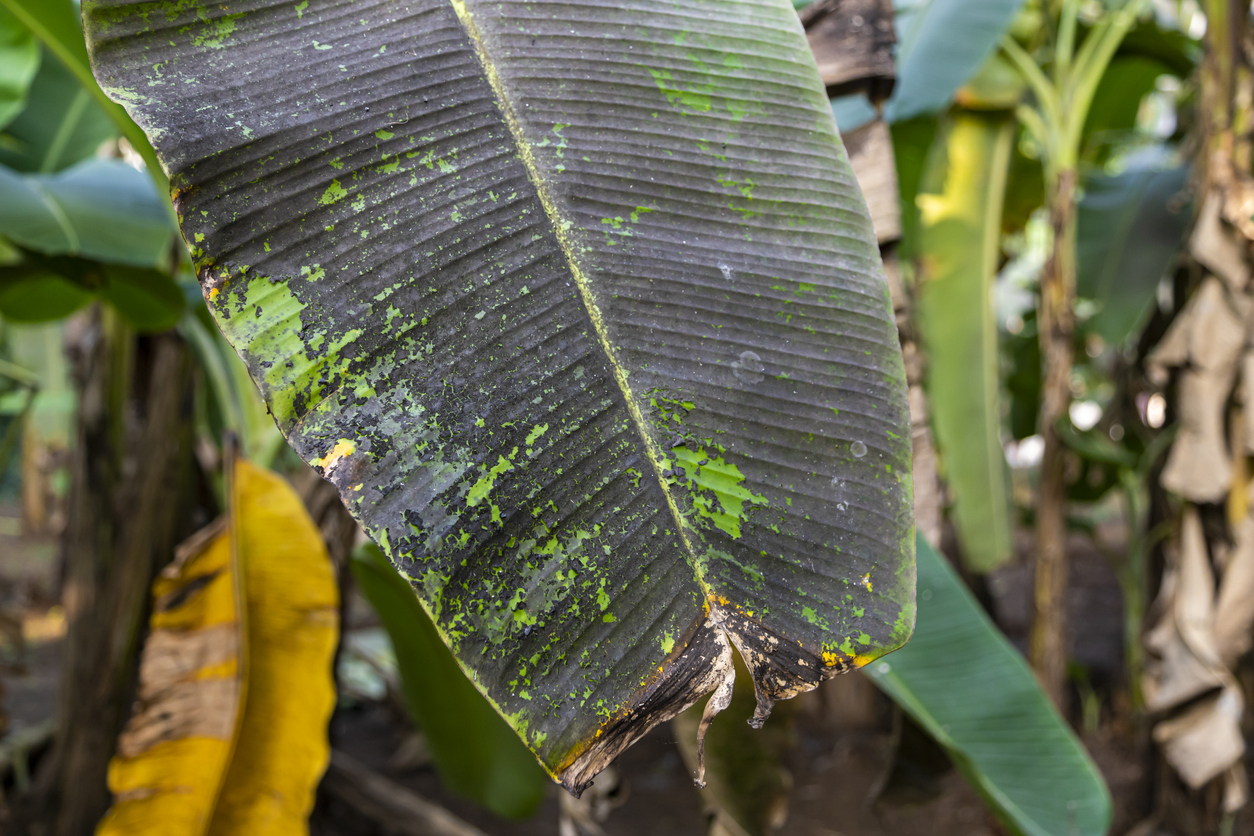
In Costa Rica, which has been hit hard by Black Sigatoka, banana production has declined 22% year over year, “which is roughly 18 million boxes lost,” observed Abu-Ghazaleh.
And short-term fixes are not the answer, he said, noting that the price of the fungicide currently used to tackle Black Sigatoka has increased by 40-50% over the past two years “and is still going up and you have no choice [but to use it]. And the problem is that the disease is adapting to that chemical so you need to [keep] applying more. It’s a vicious cycle.”
While Fresh Del Monte’s net sales of bananas rose 3.7% to $358 million in Q3 primarily driven by higher prices, margins are taking a hit, he said.
“In our banana segment, gross margin is expected to compress below the historical 5% to 7% range, approaching 4%, due to lower industry-wide supply and cost pressures from disease treatments, as well as weather-related disruptions, which continue to cause shipping delays and port congestions. Both factors have significantly increased our costs.”
Fresh Del Monte Central America SVP Jorge Pelaez Reyes told AgFunderNews: “Ecuador produces approximately 285 million 40-lb boxes of bananas for export, making it the largest producer in Latin America—far surpassing the combined output of Costa Rica and Guatemala. For Fresh Del Monte, Ecuador represents a relatively small production area. However, it is extremely important because it supplies fruit during periods when Central America cannot, due to adverse weather conditions. This makes Ecuador a critical region for ensuring a consistent and reliable supply of bananas to our customers.”
Meanwhile, the “continued movement of people, transportation, etc., can facilitate the cross-border spread of the disease,” he noted. “This interconnectedness means that even smaller producers contribute to the risk of regional contamination, which could disrupt supply chains and destabilize global banana markets.”
Biosecurity measures to stop the spread
In Central America, which has been hit by Black Sigatoka but not yet by TR4, Fresh Del Monte is in the “proactive prevention phase” with biosecurity protocols across farms. If and when TR4 arrives, it has gained valuable experience in Asia in early detection and containment strategies, cost-effective disease management practices, and long-term planning for affected areas.
“Following the arrival of the TR4 fungus, the disease typically enters a phase of slow progression, characterized by a nearly flat incidence curve,” explained Reyes. “Over time, however, this curve can shift into exponential growth. The rate at which this escalation occurs varies widely and is influenced by environmental conditions, but most critically by the implementation and effectiveness of biosecurity measures adopted by farms.”
He added: “Unfortunately, visible symptoms of TR4 may not appear until some period after the fungus has already established itself in the soil. If preventive measures are not in place before symptoms emerge, they are likely to be ineffective and eventually overwhelmed due to the movement of people, tools, planting materials, and even flooding during the fungus’s latency period.”
Longer term, however, disease-resistant varieties will be critical, says the firm, which has been collaborating with Queensland University of Technology and UK-based startup Tropic, which is redirecting non-coding RNA in bananas to attack a gene within the fusarium strain causing the disease. [Disclosure: AgFunderNews’ parent co AgFunder is an investor in Tropic.]
If the infestation worsens and truly resistant banana varieties are not available, said Reyes, “The only viable option for continued production may be the use of tolerant cultivars within annual or semi-annual production cycles that require more frequent crop renewals. While this strategy may help sustain production, it will inevitably lead to increased costs and could result in fluctuations in banana supply over the short to medium term.”
New growing regions include Somalia
Crucially, said Reyes, “We are also strategically expanding into new, geographically diverse territories.
“We are currently unable to disclose all the exact project locations. However, we can share that one of our active developments is in Somalia. The areas identified for banana cultivation span a wide geographic range—from the Equator up to slightly beyond 15 degrees latitude. We are conducting intensive research across these regions to identify suitable soils and optimal conditions for banana planting.”
In general, he said, banana growers will have to adapt agricultural practices to address challenges posed by climate change and disease pressure. “The changing climate has intensified pest and disease activity, requiring a shift from traditional chemical-based approaches to more integrated and sustainable solutions.”
“We are actively preparing for the future by partnering with organizations that develop agricultural technologies and by adapting our farming practices based on evaluations conducted by our own multidisciplinary research departments. Additionally, having production operations spread across multiple countries and continents allows us to mitigate the impact of climate change and plant diseases in any single location. This geographic diversification helps us manage risk and maintain a consistent supply of fruit to our customers.”
Looking ahead, he added, “It’s clear that only companies investing in their farming operations—particularly in research, development, and technology—will be able to sustain adequate production volumes and meet market demands reliably over time.”
As for price, he said, “Some adjustments have been made, but due to various factors, disease pressure remains high. It is essential that markets respond with price increases to help offset the additional costs associated with managing these challenges.”
Further reading:
Fresh Del Monte ramps up defenses as disease threatens world banana crops
Tropic to launch non-browning bananas in March, extended shelf-life bananas by year-end
Elo Life Systems raises $24.5m to support new sweetener, disease-resistant Cavendish banana