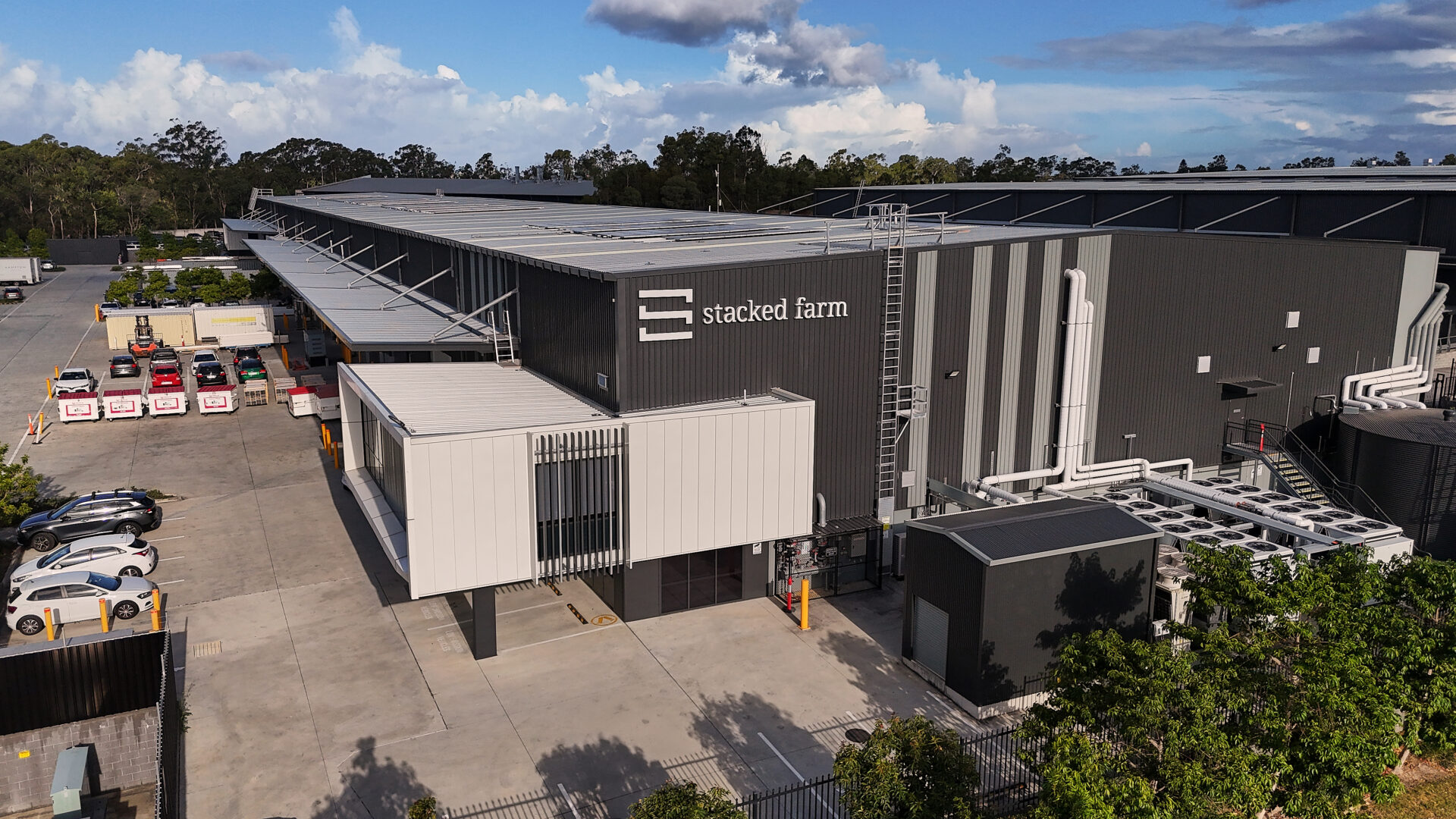
Australia’s Stacked Farm will expand its vertical farming business to the US, bringing what the company claims is “a technology platform and operating model that has already been proven at commercial scale.”
The expansion includes plans for a large-scale vertical farming facility in Southern California and a research and customer experience center in Las Vegas, Nevada.
Stacked Farm’s expansion comes after years of ongoing correction in the vertical farming sector that’s ended or drastically reduced the presence of many vertical farms in the US. Founder and CEO Daniel Tzvetkoff says his company, founded in 2016, has taken a different approach to many others.
“We took a very slow approach over the last 10 years,” he tells AgFunderNews. “What you saw in the US with a lot of the big operators was they took a lot of VC money. It was all about ‘let’s scale as big as we can and let’s solve the problems later.'”
He adds that the Stacked Farm team knew from the get-go that it could not take that approach.
“You’ve got to scale up in steps, and you’ve got to make sure everything works before you start to build these large-scale facilities. That’s the key difference for us.”
Under one roof
Australia has some of the highest labor and energy costs in the world, says Tzvetkoff. These things inevitably drive up the cost of farming.
“Our MO from the start was to prove it out in Australia, show [we could] do it there in the most expensive market, and then roll out globally.”
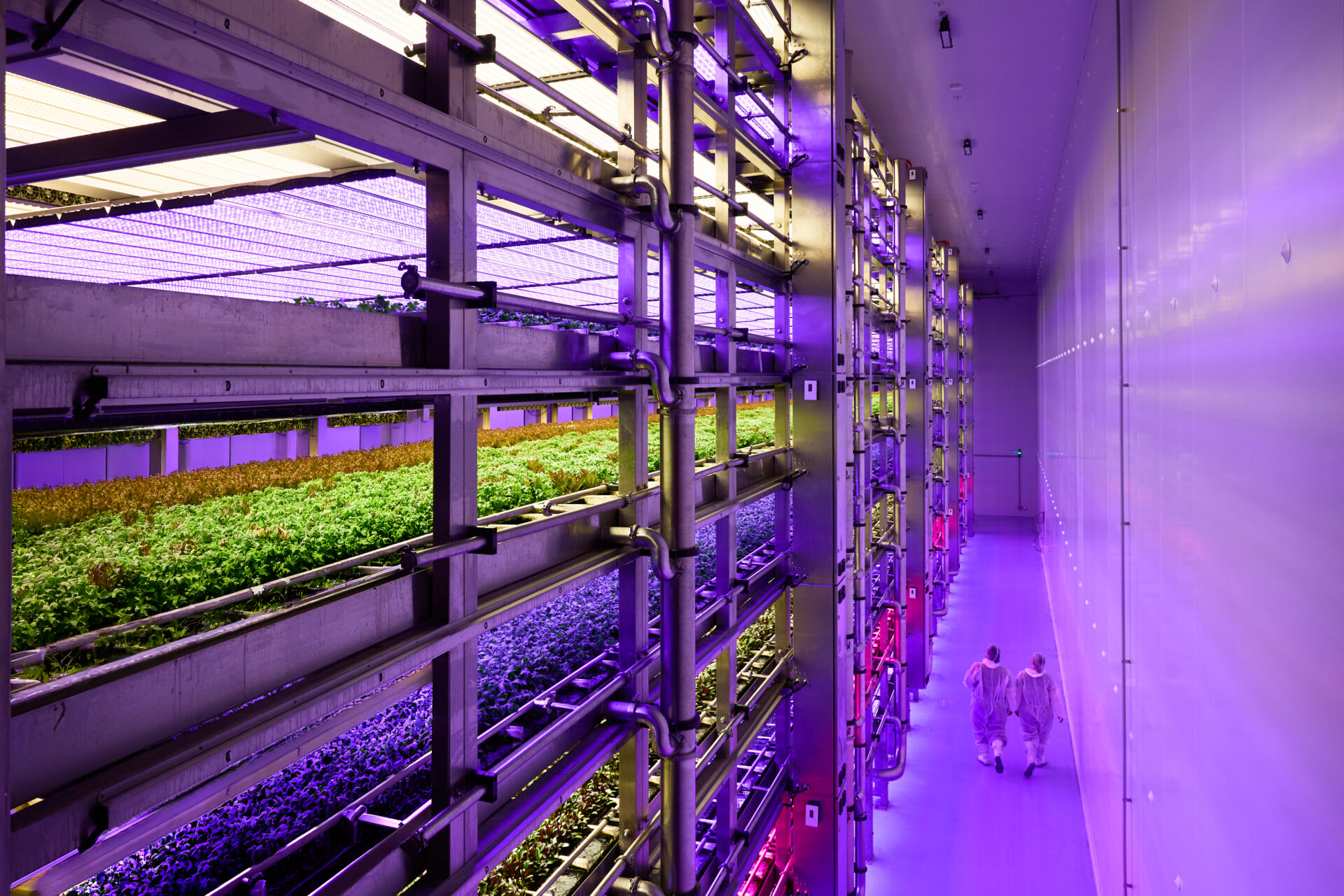
The California farm will replicate the company’s existing facility in Australia, from the crop recipes used to the operating systems, production processes, and automation elements.
Stacked Farms develops all the components of its operation in-house, says Tzvetkoff, who claims this differentiates the company in the world of vertical farming.
“We develop all of the technology ourselves, the lighting to the automation to the growing methods, and we manufacture, assemble, commission, build all the facilities ourselves as well. We don’t build farms for other people. We own and operate them ourselves.”
The biggest advantage is having plant scientists and engineers under one roof, he adds. “We’re able to find the best solutions to the problems that actually solve the issues.”
For energy efficiency—an area that’s plagued vertical farming for years—this could be key. Tzvetkoff says that because Stacked Farm develops its own lighting technology in house, lights in its growing facilities generate less heat than those from off-the-shelf competitors.
“Because they use less heat, it means the HVAC system—the cooling and dehumidification—doesn’t have to be so large. This is what we’ve really spent most of the the 10 years refining and getting right.”
California is a natural start for Stacked Farm’s US presence because of its position as the leading state for lettuce and herb production, he adds.
The California farm is slated to open in 2028. Currently, Stacked Farm plans to open two facilities per year in the US, and is already in the process of securing land in Georgia, Pennsylvania, and Texas.
De-risking before delivery
The Las Vegas R&D facility opened earlier this month, and follows the same model Stacked Farms used in Australia.
At its core, the Las Vegas facility is about de-risking operations before actually opening the large-scale farm.
“You can’t open a large-scale farm and then have customers sign off on the product or optimize the product at that point,” explains Tzvetkoff. “What we saw with a lot of other vertical farms in the US is that they built these things thinking the sales would just come, without understanding that the sales pipeline is quite long.”
Stacked Farm has maintained a sales team on the ground in the US for nearly three years, he adds. Meanwhile, it has long-term supply agreements with Great West Produce in California and Lagudi Fresh Food Group in Nevada, as well as retail distributor Mana Foods.
“You have to first make sure the customers are locked in, happy with the product, before you’ve opened the doors [of the large-scale facility] and customers are ready to take delivery,” says Tzvetkoff. “Now it’s all about product sign off before the facility opens.”

Sign up for our weekly newsletter.