
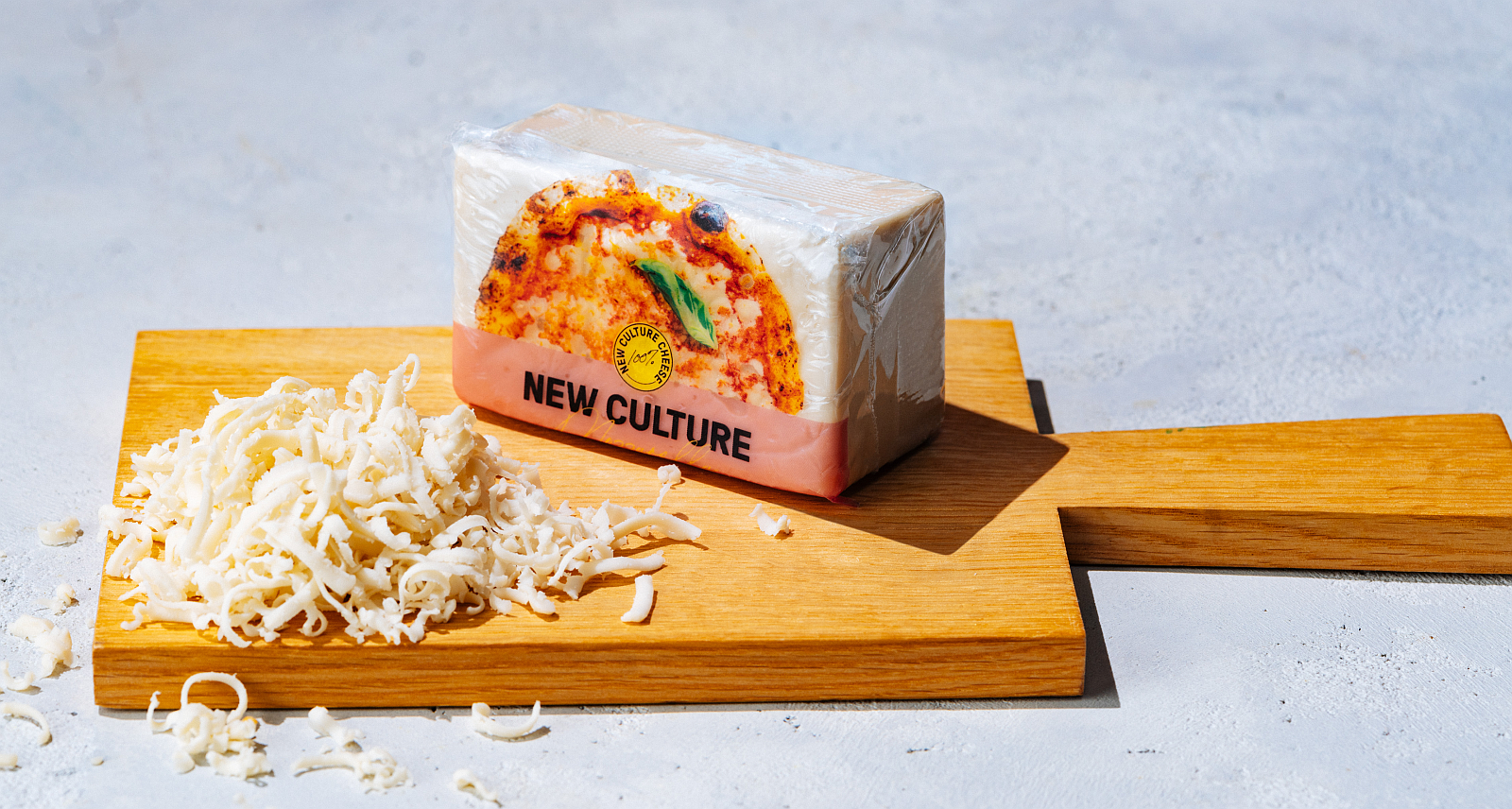
New Culture—a startup making casein proteins via precision fermentation to create ‘animal-free’ mozzarella—has edged closer to commercialization after getting the green light from the California Department of Food and Agriculture (CDFA) to produce its cheese.
“With the necessary CDFA approvals now secured, and a previous self-GRAS designation for its alpha-S1-casein protein, New Culture now turns its sights to the world’s first sale of animal-free dairy mozzarella. This includes efforts to further scale the commercial manufacture of New Culture casein and cheese,” says the firm.
The official product name will be Mozzarella Style Animal-free Dairy Cheese.
“We will be making our casein elsewhere and then will bring it to this Bay Area production facility to turn it into cheese,” VP commercial, Ben Friedman, told AgFunderNews.
New Culture has strategic partnerships with ADM and Korean biomanufacturing giant CJ CheilJedang, and is “in the process of establishing larger scale production partnerships,” he added. “Now that we have the necessary CDFA approvals, we are in the process of ironing out commercialization details.”
“Our business model remains selling New Culture branded cheese to foodservice operators. At this point we have more than $15 million in early demand from pizzerias and foodservice operators of all sorts.”
While New Culture is not currently fundraising, he added, “We have made significant technical and commercial progress and that progress has resonated with the investment community.”
“We now have the necessary product manufacturing, facility and label approvals for our animal-free dairy mozzarella. While there remains work ahead, the most important part of these approvals is that this pushes us one massive step closer to commercialization.” Inja Radman, cofounder and CSO, New Culture
The pitch for animal-free dairy cheese
But what is the pitch for mozzarella made with dairy from microbes, rather than cows? And do the economics of producing casein in fermentation tanks make commercial sense?
According to Friedman, “Scale is now the critical element to our reaching price parity. Our bioprocess metrics are at the levels where they need to be to achieve parity for our casein as an ingredient once we’re producing at large scales.
“However, the beauty of making a finished product is we have more flexibility for hitting price parity for mozzarella. Prior to hitting parity for our cheese, we feel confident that the premium consumers are already paying for options at pizzerias such as plant-based cheese or gluten-free crusts will transfer over to our product, especially given the unparalleled quality we’ll be offering.”
As for the value-add, he said, New Culture’s cheese is free from lactose, cholesterol and trace hormones and antibiotics and can help firms achieve ESG goals, offering an estimated 85%+ reduction in greenhouse gas emissions and a 95%+ reduction in land and water use vs conventional dairy mozzarella.
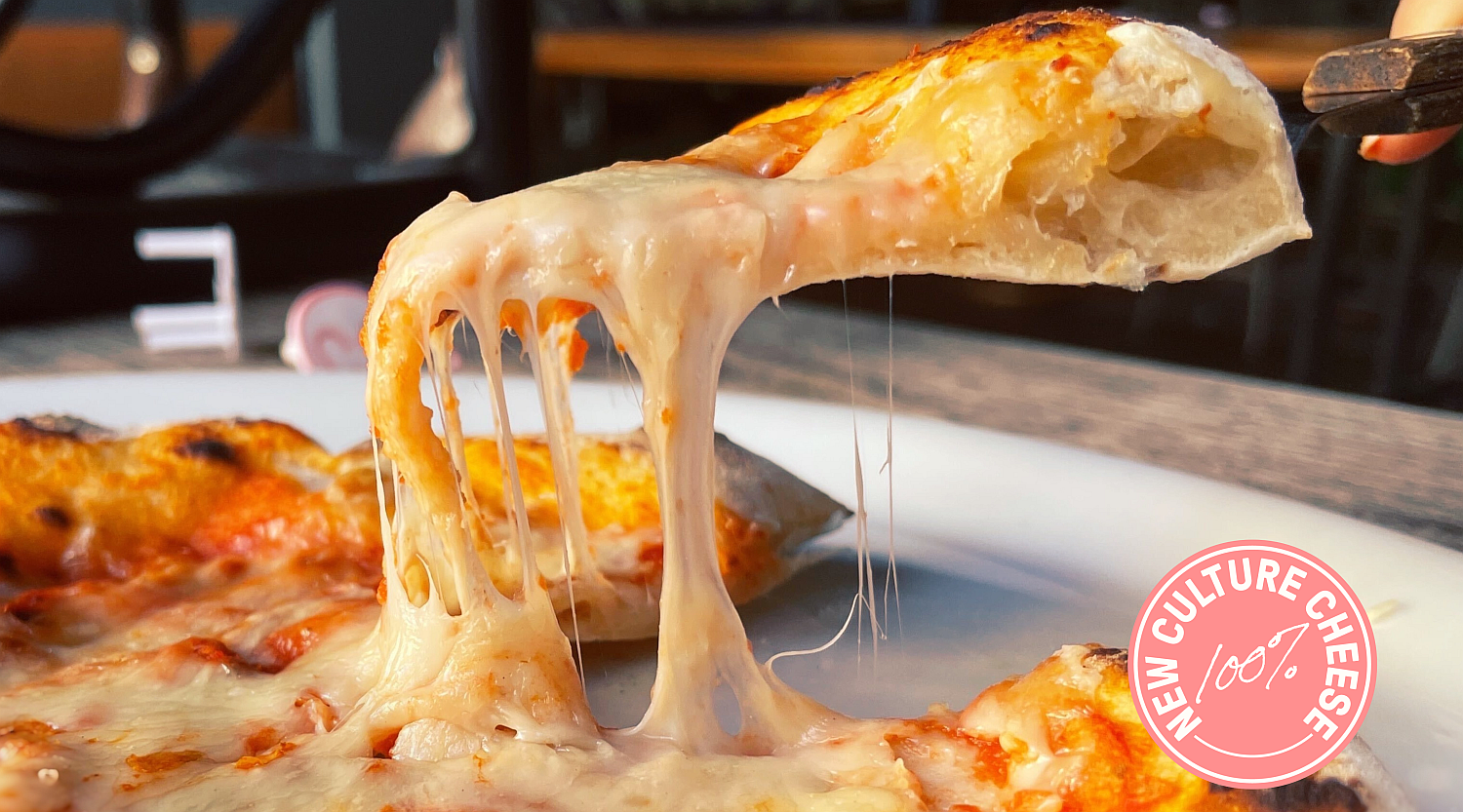
He added: “Mozzarella is the most sold cheese in America and more than a third of US pizzerias offer vegan cheese despite consistent chef and consumer feedback that existing vegan cheeses are falling short due to taste, texture, and performance. And the sales data bear that out: ~0.5% market penetration for plant-based cheese vs ~15% for plant-based milk.
“Everyone is looking for an animal-free mozzarella that finally meets their expectations and that’s what we’re providing.”
The commercial viability of casein without cows
While some commentators have questioned the commercial viability of precision fermentation for some ‘commodity’ dairy and egg proteins, New Culture cofounder Matt Gibson said New Culture had been “able to achieve technical metrics unheard of for animal-free casein and has demonstrated a robust, reproducible and de-risked bioprocess at scale.”
Asked about manufacturing and scale up in a recent call, he said: “The dairy industry is so large though that even if we were to work with both CJ and ADM at their massive commercial scales in parallel, we’d be net margin positive and producing millions of pounds of cheese, but still only scratching the surface of the $9 billion US mozzarella market.”
The decision to start by building a cheese brand rather than supplying casein as a b2b ingredient was made “for a wide range of reasons including margin opportunity, control over go-to-market levers, brand impact on company value, and an ability to focus our team and budget,” said Gibson. “Though we’ll eventually enter retail and casein ingredient sales, to start we’ll be selling our cheese through the foodservice channel.”
CJ CheilJedang, which owns US frozen food giant Schwan’s (maker of Red Baron pizza) has also been helping New Culture refine its go-to-market strategy, he added.
Further reading:
Mozza Foods targets late 2028 launch for soybean-grown casein
Standing Ovation nets $34m, gears up for US launch of casein via precision fermentation
Molecular farming startup Finally Foods announces field trial of potatoes containing casein