
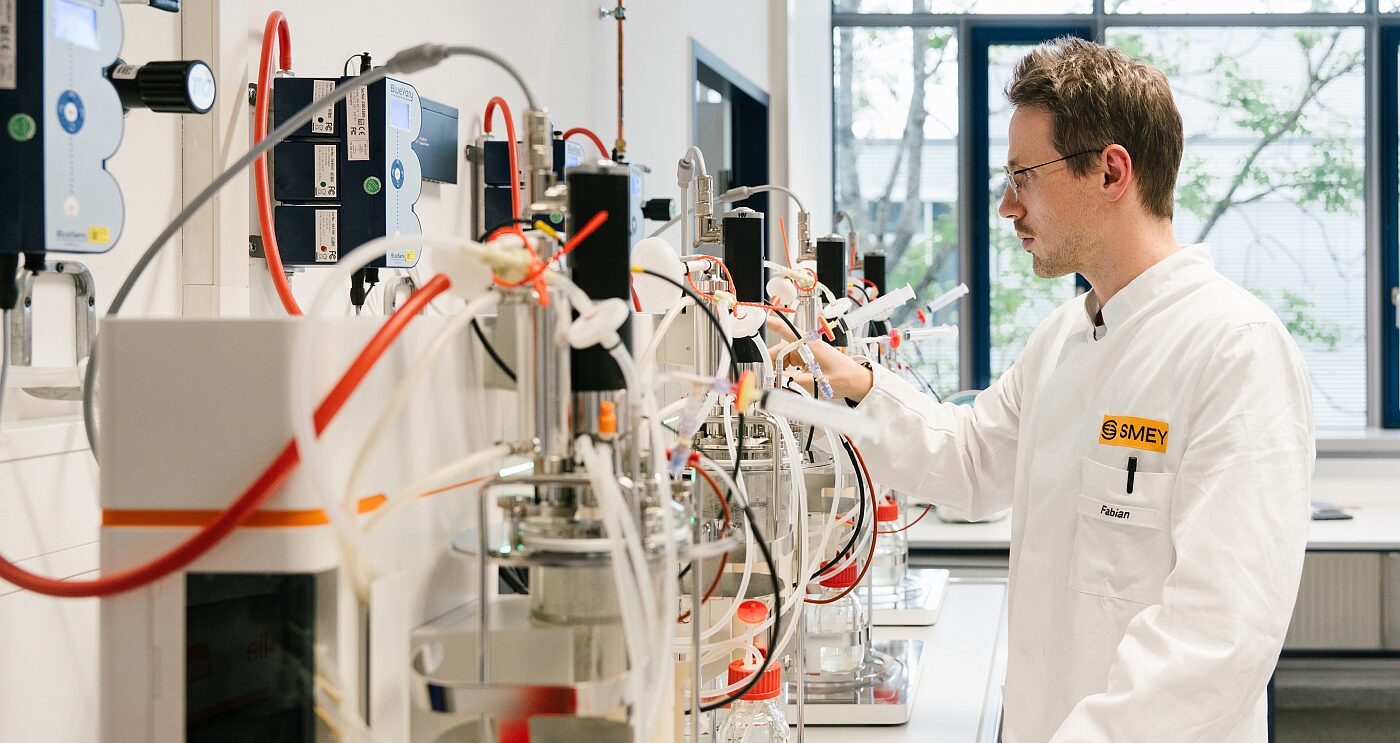
Franco-German fermentation startup SMEY has launched Lipid Atlas—a searchable platform built on its proprietary database of 1,000+ non-GMO yeast strains—enabling customers to find oils with customized fatty acid profiles.
Users in cosmetics, food, and specialty ingredients can search for yeast strains that can produce analogs of existing oils such as cocoa butter or palm oil that many firms are seeking to replace, says the firm. Alternatively, they can search for strains capable of producing novel oils with specific fatty acid profiles or melting behaviors.
AI and machine learning are deployed both to predict whether a yeast strain can produce oil and what the composition of that oil is likely to be, based on genomic data, says CSO Pavel Elizarev, who is also using AI to optimize the fermentation.
The business model combines discovery and scale-up: once a client selects a target profile, SMEY moves from validated strain to lab-scale fermentation (100g samples) to pilot-scale production via CMOs, with the goal of reaching industrial volumes and eventually deploying localized “micro-factories” to support customers.
“By combining the biological diversity of our Neobank of Yeasts with AI-driven discovery, we provide the missing link: the data to identify the lipid profiles industry needs and the biotechnology to produce them ethically, locally, and at scale,” says Elizarev.
“Our first commercial products are Noyl Silk, a high-performance oil for cosmetics and sunscreen, which has a silky feel and penetrates the skin very fast without feeling greasy, and Noyl Cocoa, a cocoa butter analog for cosmetics and food. We are actively working on scaling these two products, but with Lipid Atlas we’re also opening up our huge private library to customers.
“We have 1,000 species, close to 300 of which are oil producing species. Historically it has been our internal platform but we have now built a web interface called Lipid Atlas so potential clients can search for what they want. Maybe they want an oil with high stability, with specific emollient properties, or high levels of certain fatty acids that are not available in plant-based oils.”
Non-GMO yeast strains
While SMEY could genetically engineer microbes to produce tailored oils, finding yeast strains that naturally produce high levels of lipids of all kinds makes more sense, he says.
“It takes so much time and effort to make your GMO organism, which no one likes at the end because it is a GMO, and you might easily spend two years developing a microbe which does what you want just for one product. And then for the next one, you need another two years, and then there’s the regulatory [challenge].
“Instead we’re asking what’s already out there in nature? We could see about 2,400 yeast species but only a couple of dozen that were recognized in the literature as producing oils, so we asked nature, do you have more yeasts which produce oils? And now we have covered about 40% of all known yeast diversity.
“And so just like this, we got them in the lab, cultured them and characterized them to find if they can make oils and if so, what kind of oils can they make? Now we have about 300 oil producers in our database, and some can accumulate up to 80% of their dry weight as oil. You can then further optimize that by altering the media and fermentation conditions.”
Designer oils
While some clients are looking for oils that replicate the functionality of tropical oils, many are looking for something new, he says.
“The oils which are mostly used in food or cosmetics are not used because they’re the best oils for creams or for croissants. They’re used because they exist and they are harvested in huge volumes. But people in these industries understand very well the technical limitations of these oils and they know what they are looking for.
“They don’t want unstable polyunsaturated fatty acids, for example, while in food, they are constantly in search of solid fats, where existing options are expensive or unsustainable, or hydrogenated.
“And sometimes, they want fats to melt a bit earlier or later. Often the way they do this is by blending [palm oil fractions for example], but wouldn’t it be cool if you can have an oil that already has the composition you want?”

Sign up for our weekly newsletter.