[Editor’s Note: Dr. Stasinopoulos will be speaking at the Future Food-Tech event in London, Sept 24-25. Find out more about the event here.]
Gluten-free products have improved significantly, but they can come with a hefty price tag and still don’t quite hit the mark for some consumers on taste and texture. But what if there were a way to have our ‘gluten-safe’ cake and eat it too?
It’s too early to say it has cracked the problem, but the early signs are encouraging, say Edinburgh-based Prozymi Biolabs, a startup founded by Dr. Ioannis Stasinopoulos and Dr. Andreas Andreou to identify enzymes that can degrade gliadins, the proteins in gluten that trigger an immune response in people with celiac disease.
The key is not using a sledgehammer to crack a nut, says Stasinopoulos. Gluten is a complex of proteins called gliadins and glutenins that interact to form a network that traps gas produced by yeast or other leavening agents, giving dough its structure and chewiness. Use too blunt of an enzymatic instrument and gluten loses its critical functionality. Put simply, you might have a celiac-friendly wheat product, but not one that sells.
The competitive landscape
Prozymi Biolabs is not the first to explore enzymatic tools targeting gluten, acknowledges Stasinopoulos, who notes that DSM-Firmenich has already commercialized enzymes (expressed in the fungus Aspergillus Niger) that interfere with gliadins for use in beer (Brewers Clarex) and dietary supplements (Tolerase G).
Tolerase G, which is marketed as a dietary supplement for people with non-celiac gluten sensitivity that want to break down residual gluten in the stomach, has been tested in rye bread but yielded a product with “poor sensory attributes compared to a conventional rye bread.”
According to Stasinopoulos: “The addition of the enzyme decreased the content of gluten, but also affected the texture of the bread, and it came out very dense. So there are other glutenases out there that are very good, but they kind of degrade everything. That’s the innovation with our enzymes. We can specifically target the parts [of the gluten complex] that trigger the immune system but try to retain the rest of the beneficial properties of gluten.”
The aim is not to make gluten-free wheat, barley, or rye products, he stresses, but “gluten-safe” products where the gluten has been “neutralized.”
‘The big question is can you degrade gluten and retain the texture?’
It’s early days, but Prozymi Biolabs has shown that it can cut the gliadins in a particular place that degrades them such that the immune system won’t recognize them, and ELISA R5 testing on bread made with its enzymes has shown that Prozymi’s approach is highly effective, but not quite effective enough yet to say it’s safe for celiacs, says Stasinopoulos.
Prozymi knows that its enzyme cuts the gliadins in a way that it is effective, he says. The key is ensuring that the enzyme can be deployed for the right length of time in the right quantities and the right conditions to be sufficiently effective.
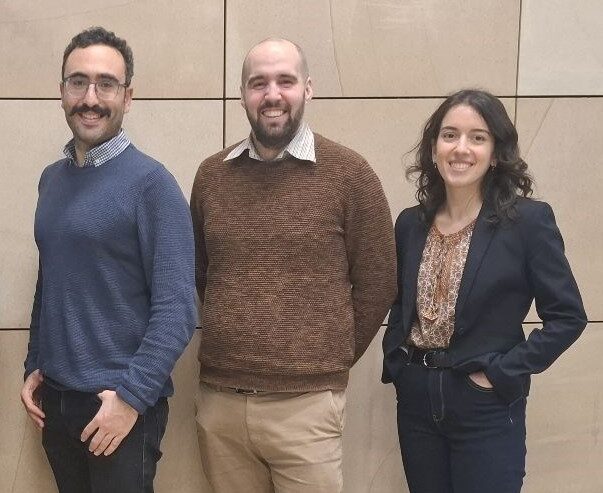
“We’ve been in touch with bread producers, and the aim is to incorporate it at the stage of dough preparation,” says Stasinopoulos. “At the moment, our focus is trying to optimize the activity of the enzyme based on the conditions that they use in the bread industry for regular bread formulations. So that’s our starting point, where you factor in temperatures, pH, humidity.
“The big question is can you degrade gluten and retain the texture? And we’ve seen that in combination with other commercial enzymes that bread producers are using, we can retain the texture. So we’re quite confident that we can, although I’m not saying that we’ve reached the goal yet.”
The discovery process
So how did Prozymi Biolabs identify the enzymes it is working with today?
“[Cofounder] Andreas [Andreou] really started the whole project,” says Stasinopoulos. “We collected varieties of wheat and barley and the idea was, let’s see if this environment contains microorganisms that can potentially degrade gluten and use it as a nitrogen source.
“And by collecting all these data, Andreas started doing some screening, some plate assays, to see which microorganisms might have enzymes that can degrade gluten. So from there we started to analyze their genetic material. But they’re natural enzymes. Mainly bacteria and some fungi, but I cannot give you the names.
“We started from 100-200 different candidates, and we started screening to see which ones are more effective in terms of the specificity [functionality] that we’re looking for, but also in terms of enzymatic activity. We have a couple of prominent candidates now and it may be that we use a combination of enzymes.”
The next step is optimizing the expression system [microbial fermentation] in order to have something that can be viable for large-scale production, he says.
As for IP, “The enzyme itself, as long as we extract it from the organism, can be patented plus we can also patent it in combination with potential product formulations if they’re novel,” he says. “But we’re planning to patent the enzyme for general use because it can be used in other industries [beyond baking].”
Prozymi plans to scale up production with a co-manufacturer and then sell the enzymes to end customers, but could also partner with ingredients suppliers or other industry stakeholders, he says.
From a regulatory perspective, the enzyme would likely be considered as a processing aid, adds Stasinopoulos. “When it’s baked, it is denatured and it’s not present in the final product.”
Funding: A chicken and egg situation
To date, Prozymi has secured several non-dilutive sources of funding, including grants from Innovate UK, Scottish Enterprise and the BBSRC (Biotechnology and Biological Sciences Research Council), says Stasinopoulos, who has also secured a SAFE [Simple Agreement for Future Equity, which allows investors to provide capital in exchange for the right to receive equity at a future date] from Big Idea Ventures.
As many startups will testify, he says, fundraising is something of a “chicken and egg situation, because some investors will say we’re interested but we would like to see more progress before we invest, and we’re like, we need more money to make more progress.”
As for the baking industry, there has been a lot of interest, given that there is consistent demand for gluten-safe products, and that gluten-free products don’t always hit the spot with consumers, especially when it comes to bread, he says.
“Some of the biggest baking companies in the UK have come and visited our labs. They actually have very decent gluten free bread now, and they’re very proud of it, but they are always looking for ways to improve it.”