
In a grim funding climate where some corporate venture arms have pulled back—or vanished altogether— Paulig’s PINC arm is doubling down.
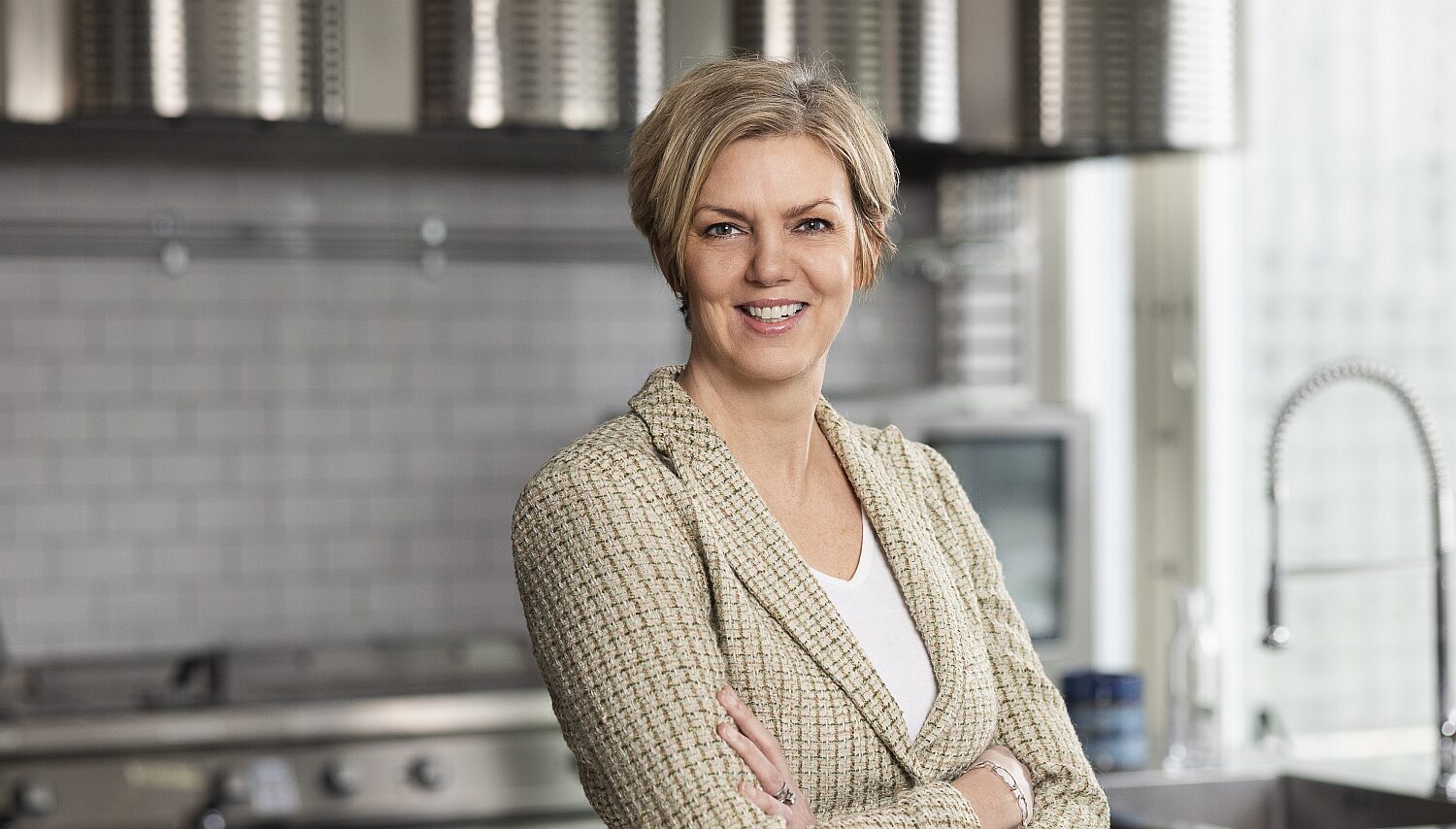
Led by Marika King, the Finnish food company’s investment arm was designed to move fast, operate independently, and back early-stage technologies that deliver both impact and strategic edge.
That structure, says King, can give PINC an unusual advantage: it can pilot tech not only inside Paulig but across its wider supplier base to provide more meaningful feedback to founders and more more robust validation for its investment committee before a check is written.
AgFunderNews (AFN) spoke to King (MK) about the origins of PINC, how it evaluates founders, and why honest feedback matters more than ever.
“We don’t string people along, because it just wastes everyone’s time,” she observes. “Sometimes we don’t have the time to do the perfect analysis of why we are saying ‘No,’ but we try really hard. Is it because they’re too early, or is that just what we’re telling them, when actually it’s something else?”
AFN: How did PINC get started?
MK: There were two driving forces behind PINC. One was that the management at Paulig wanted to speed up innovation in the core business. And the second was that the Paulig family wanted to have a positive impact on the planet and its inhabitants. We’ve refined the strategy over the years, but we’re corporate impact investors that also look for strategic impact.
AFN: What’s the investment thesis and do portcos have to connect to Paulig in some way?
MK: We do agrifoodtech investments in early stages (pre-seed and seed). Sometimes there can be a very clear synergy [with Paulig]. As an example, our first investment in Kaffe Bueno, which upcycles coffee side streams into high value ingredients, is obviously strategic as Paulig is a coffee company.
But then if you take our latest investment in Scindo [which is building an AI-powered enzyme discovery and design platform], the first applications are not relevant for Paulig but the overall area of natural aromas replacing chemical ones is important, and there could be relevant applications in the future. If not, we’re happy to support the transition.
Compared to some other corporate venture arms who are very strategic and only invest if there is close collaboration with the mothership, we’re more like a VC. We’re always looking for strategic synergies though, and if we can help the startup more than the average investor, then we add more value.
AFN: Why build an investment arm? Can’t you just do open innovation?
MK: Paulig doesn’t have a [dedicated open innovation] team so PINC serves as a gateway for other startups that we might not invest in that can still be relevant to the core business.
Also, we find that investing in a startup provides extra incentive for the core business to engage with the startup. But having a venture arm is just one way of doing it, there are many roads to Rome.
AFN: As Paulig is privately owned, can PINC take a longer-term view than venture funds at public companies?
MK: The average lifespan of a CVC is radically short, which is why we are set up a bit differently. We don’t report to the CEO, we report to the board through an investment committee, and we have a longer mandate.
We operate very independently and function more like a VC. We don’t need to have the buy-in of the corporate people, although we want to get their opinions. We also sometimes have the ability to test [a startup’s technology] not just with Paulig, but also Paulig suppliers, which we did before we invested in [AI-powered sustainability performance platform and portfolio company] Improvin’, which was amazing. They came back and said, ‘This is the best system we’ve ever tried.’ And we were like, Okay, let’s invest! So that of course gives us a huge advantage.
We have an investment committee with [Paulig] family representative Edi Paulig as our chair, Paulig CFO Juha Väre and two external VC representatives, so we can actually move super-fast.
AFN: Do you have a longer term view than VC funds?
MK: We can have a longer view since we do not have a fund with a 10-year limit. Having said that, we always co-invest with others, many of which are VCs with a 10-year structure so we need to be aligned on exit expectations. And to be honest, we need exits to create our evergreen [model], it is still early days for us.
AFN: How much money do you have to invest?
MK: We operate from the balance sheet [of Paulig] and we have five-year mandates. I think the difference [between PINC and a typical VC] is that for most funds who have a 10-year limit, in the beginning they can take on quite risky investments with a longer exit horizon, and a few years later, they say, ‘We need an exit in three years.’
We’re not limited by that. We’re an early-stage investor and we can always be an early-stage investor. We have a rough target of around three investments per year, and we have money for follow-ons.
AFN: What’s your geographical remit?
MK: We invest in Europe but could potentially invest [outside the region] if it’s extremely strategic.
AFN: What role do corporates play in the current challenging funding environment?
MK: Corporates understand that the problems we’re all trying to solve aren’t going anywhere, they’re just getting bigger. Corporates can validate that through high ambition levels in the core business, for example science-based targets. But also through engaging with startups in R&D pilots, being early customers, and investing in them.
AFN: Should startups think twice before working with CVC funds?
MK: We decided very early on that we were going to act as an arm’s length professional investor because otherwise you don’t become a trustworthy partner, either for the startup or for other investors. These days, being a CVC is usually seen as a strength because of the value you can bring.
When it comes to managing expectations with regards to Paulig support, we have helped [portfolio companies] with product development, sourcing, sales and marketing or accessing customers or the ecosystem, but we never promise anything except our relentless pursuit of helping out and making a difference. And as an investor, we are very active.
AFN: Should investors give better feedback to startups they pass on?
MK: We don’t string people along because it just wastes everyone’s time. All investors are time constrained, and sometimes we don’t have the time to do the perfect analysis of why we are saying ‘No,’ but we try really hard.
Is it because they’re too early, or is that just what we’re telling them, when actually it’s something else? Maybe it’s the founder, or it’s not unique enough? If you think through what it actually is, and you give that feedback, it’s so much more helpful to everyone.
AFN: But isn’t it hard to say to a founder, ‘It isn’t me, it’s you…?’
MK: Everyone is different. If you talk to some people who know me, they would probably say that I’m a little bit direct. Swedes are often direct, although not quite as direct as the Dutch, and at least from what I hear, people appreciate that!
It’s more a case of talking about founders’ or teams’ strengths and weaknesses. At one point I told an entrepreneur that look, sometimes you come across as quite arrogant, which is not good, because it gives the impression that you’re not coachable, that you know best, and it could put some people off. And then I heard that he took that in and gave a pitch to another investor that was the best pitch he’d ever done. And then that investor came up with a term sheet.
AFN: What raises red flags for you in a pitch?
MK: If the problem statement isn’t clear, if I don’t understand the problem you’re actually solving for someone, that is a red flag. And I don’t mean on a global level, but for a customer willing to pay for the solution.
Also, most pitch decks don’t spend enough time on competitors in a broader sense. How is your solution performing relative to alternatives, whether that’s competitors, the status quo or alternative tech? The customer always has another choice in terms of where they can spend their money.
AFN: What role does sustainability play in your decision making?
MK: Since we are an impact investor, this is what we look at first, whether it is sustainability, health or food security. But when we analyze a potential investment, we always try to find business cases that have a compelling value proposition independent of the green angle.
However, compliance is important, and if things are a ‘must have’ as opposed to a ‘nice to have’, this is good news. In particular in Europe, there is legislation that requires companies to reduce their climate footprint or take care of their end-of-use disposal. Some people say that Europe only exports regulation, but that to me is complete bullshit, because regulation forces us to be more innovative.
My view is that these challenges are going to come, whether we like it or not, so we might as well be on top of it.
AFN: How would you characterize the last few years in agrifoodtech investing?
MK: Money was very cheap for a while and the whole investor community can be quite herd oriented, so there were definitely deals during that time where you sort of raised your eyebrows and thought, okay, yes, this is just, you know, vegan cheese; it’s food more than tech, so that wasn’t sustainable.
I’m sure there’s some AI hype at the moment and there may be a bit of a backlash on that too.
With all the climate skepticism, meanwhile, you do feel a bit like a salmon swimming upstream, but we just keep swimming and try to hold each other’s hands as we go. The problems aren’t going anywhere so neither are we.
AFN: What have you learned about investing over the years?
MK: I’m a humble beginner every day, and that’s why I love it. One of my biggest learnings is probably the importance of having other aligned investors. We need to feel like there’s a really solid consortium of investors.
It’s very important to connect with other investors to share deal flow but also to talk about, what do we all think about, you know, the biocontrol space, for example? When you’re a three-person team, you need to talk to other people just to understand the world, so we’re very collaborative.
AFN: Can you highlight an investment where having aligned investors was key?
MK: I was one of the ones that said we don’t do vertical farming, but if the crop you’re growing is the most expensive spice in the world [saffron], the unit economics look quite different. So we invested in a company called BlueRedGold that uses automation [to grow saffron indoors] to a very high degree.
This is a good example of a case that’s not so typically VC fundable, because everyone thinks the addressable market is too small. Yes, it’s a small market, but it’s a global market, it’s growing fast due to medical and cosmetic applications, and it can be super profitable.
I got frustrated at the start because I was reaching out to all the VC people, and they were saying they can’t do it because of the size of the market, so we joined forces with another CVC and angels, and in the end, the team found a Spanish VC [TheFoodTechLab] who saw it the way we saw it.
Sometimes these angels that come in at the early stages are not respected, but I find loyal angels with deep industry knowledge to be a godsend.
👉Read more in our Investor Q&A series.

Sign up for our weekly newsletter.