
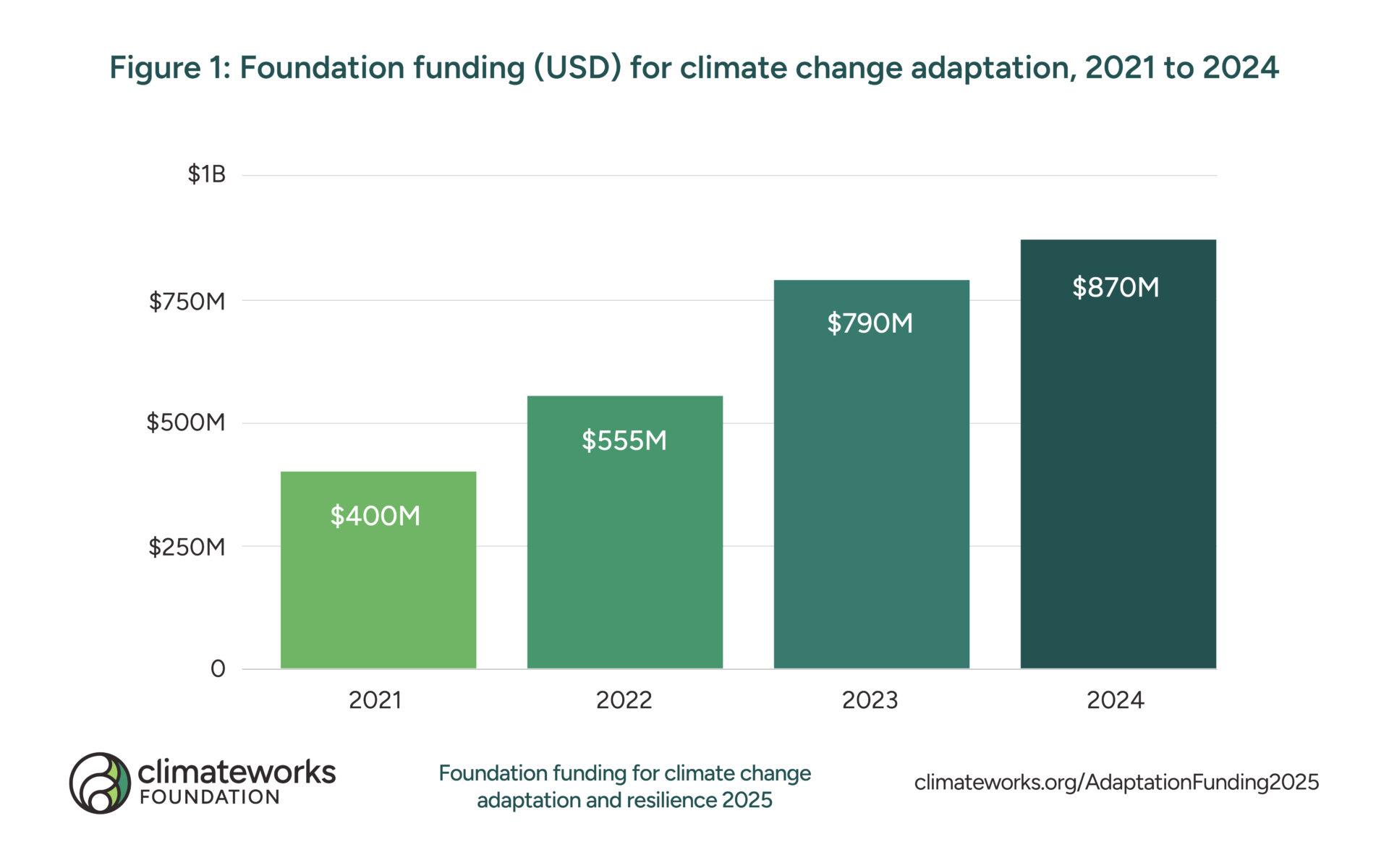
Philanthropic foundation funding for climate adaptation solutions reached $870 million in 2024—a record high and more than twice the amount raised in 2021, according to a new report from ClimateWorks Foundation.
The report is both a celebration and a warning. The record-high numbers for 2024 provide a much-needed shot of optimism in the face of increasing resignation and even denial around the climate crisis.
At the same time, adaptation receives less than 10% of climate finance, and, according to the ClimateWorks report, just “a fraction” of that money reaches the local communities most impacted by climate change.
By the numbers:
📈 120%: the increase in overall funding between 2021 and 2024
💰 55%: the increase in number of foundations making adaptation- and resilience-related grants
🌾 $1.4 billion: the amount Gates Foundation committed between 2022 and 2025 to help smallholder farmers
⛓️💥 $359 billion: the gap between adaptation needs and financing in developing countries
🌍 $900 million: the amount of foundation funding that went to Africa between 2021 and 2024, and the largest share of funding
🌏 Less than 10%: the amount of funding that went to Asia and Oceania between 2021 and 2024, despite these regions “being home to more than half the world’s population”
🌎 Less than 3%: the amount of foundation funding that went to Latin America between 2021 and 2024
The big lesson:
The ClimateWorks report comes at the start of the United Nations’ COP30 summit in Brazil, where notable absentees include the US, China, and India—the world’s biggest polluters.
The numbers in the report underscore just how big the gap is between adaptation needs and available capital. As ClimateWorks notes, “The immense funding needs for adaptation and resilience efforts continue to dwarf the scale and level of philanthropic action. The next several years will bring both greater pressure and opportunity for philanthropic leadership.”
What the foundations say:
“Adaptation is a unifying thread across philanthropy,” noted Maria Netto, executive director of the Instituto Clima e Sociedade. “The report highlights clear opportunities to direct resources to underfunded regions, sectors, and locally led efforts — from families affected by recurrent forest fires in Brazil’s Pantanal to fishing and riverine communities in the drought-stricken North.”
“Philanthropy plays a vital role in accelerating innovations that help communities build resilience,” said Neil Watkins, deputy director at the Gates Foundation. “Momentum for climate adaptation is growing, but funding must move faster and reach farther — to local innovators and communities already facing climate extremes. Investing in locally led solutions can strengthen the food, health, and economic systems people rely on to adapt and thrive. But philanthropy can’t do it alone — progress depends on sustained, aligned investment at every level.”
“The business case for investing in adaptation and resilience efforts is clear,” said Claire Harbron, CEO at Howden Foundation. “A recent report from WRI calculates that every dollar invested in adaptation pays off with a $10 return. It is heartening to see new philanthropic actors step into this space. It’s no longer a debate about whether to invest in adaptation or mitigation — to invest in a prosperous future, it’s both.”