Patagonia‘s nonprofit shareholder Holdfast Collective has announced a $1.55 million commitment to help the Rodale Institute transition Ventura County, California’s agricultural industry to one built primarily on regenerative practices that improve soil health and natural resistance to disease.
The Rodale Institute Regenerate Ventura initiative provides farmers in the county with technical assistance and other support needed to shift production away from conventional methods that rely heavily on chemical pesticides. The idea is to aid farmers through a process that can be seen as risky and, in some cases, cost prohibitive to the average grower.
Agriculture is a major economic driver in Ventura County, where strawberries, citrus fruits, and vegetables grow year-round thanks to the region’s temperate climate.
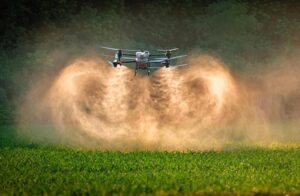
Historically, the bulk of these crops have been produced using conventional methods that include spraying boatloads of pesticides. Paul Lightfoot, general manager at Patagonia Provisions, tells AgFunderNews that Ventura County has some of the highest pesticide-use rates in the US, and that pesticide drifts in the air make their way into nearby schoolyards, residential neighborhoods, and parks.
For example, pesticides were detected in more than 90% of the samples collected at an air monitoring station in Oxnard, according to a recent report from the California Department of Pesticide Regulation.
Lightfoot is quick to point out that for many growers, pesticides are the only conventional tool available to fight citrus greening and other diseases.
But beyond health concerns, pesticides come with limitations, since diseases become resistant to them over time.
On the other hand, certain regenerative agriculture practices, such as cover cropping, have in some cases been known to boost citrus plants’ immunity to disease.
“You can only truly turn [a disease like] citrus greening back with true regenerative-organic practices,” he says.
This is where Rodale Institute’s project comes in.
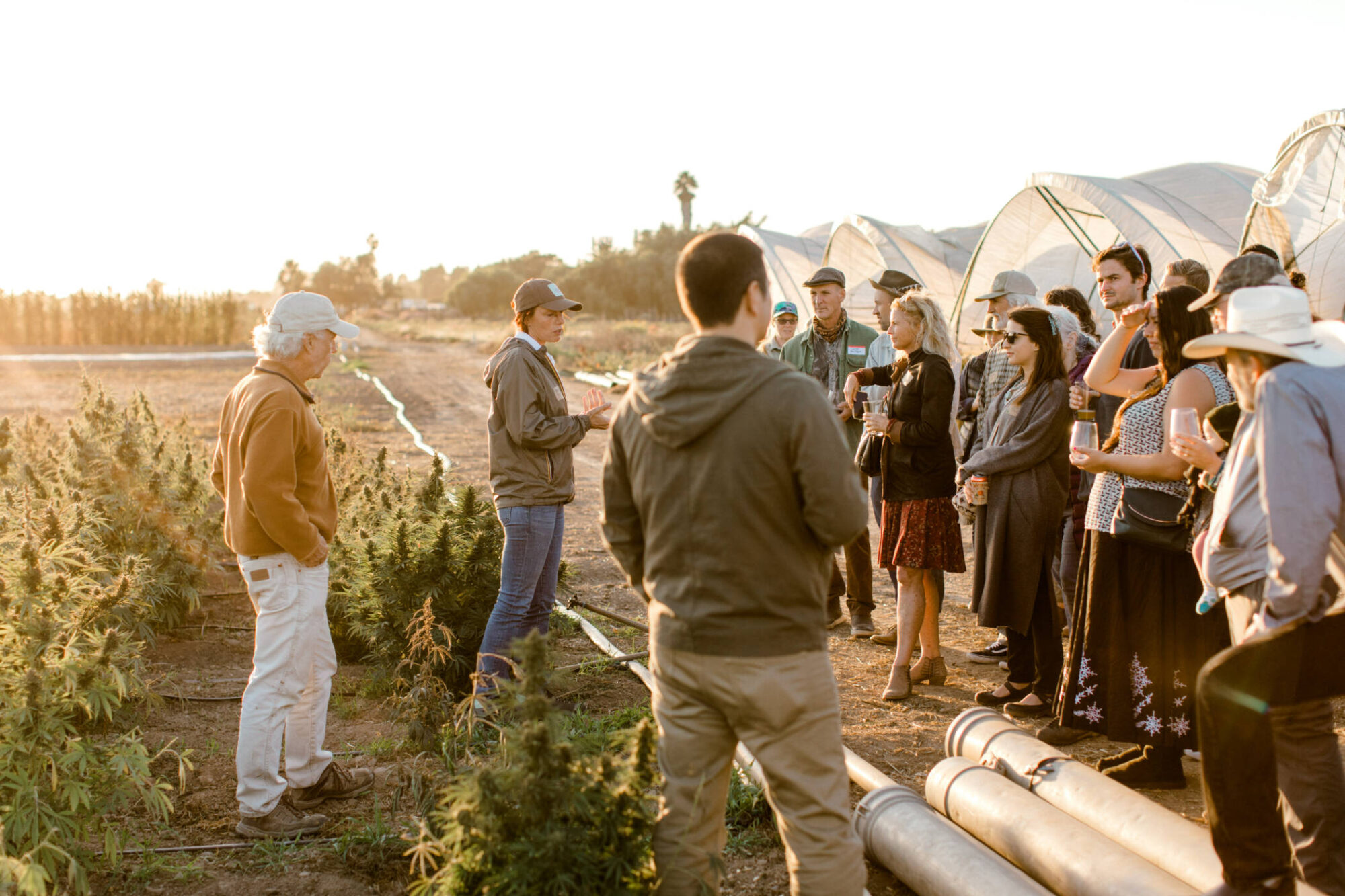
Agronomists from Rodale consult with growers on areas like crop selection, getting organic certification, and marketing products. Additional support addresses areas such as business planning equipment stipends, legal considerations, and market access.
“Rodale has a team of technical assistant consultants who go out into the field and knock on the doors of farms and say ‘We’re here to help if you want to learn about alternatives to pesticides.’ This is truly people who care,” says Lightfoot.
‘A personal project’
Patagonia launched Holdfast Collective in 2022 as a 501(c)(4) nonprofit that supports organizations protecting nature and fighting climate change. Over the last few years it has funded various land conservation and restoration projects around the US.
The new grant, which follows a $1 million contribution to the pilot stage of Regenerate Ventura in 2024, will fund expansion of the project, which aims to transition the whole of Ventura County agriculture to regenerative over the next several years.
Lightfoot says the program’s traction from its first-year pilot alone is unmistakable: 10,000 acres currently in transition, with 57 farms in the pipeline, nearly 40% of which belong to historically underserved communities.
Additionally, 12 of the participating farms are currently in the organic certification process and 40 have committed to transition within 18 months.
Lightfoot says Regenerate Ventura is about much more than numbers, however. Patagonia’s headquarters are in the county, which is home to around 800 employees of the company.
“This is a personal project for Patagonia because it’s where our people are.”
That said, it’s not the first county Rodale has worked to transition to regenerative agriculture. The organization conducts similar projects throughout counties in its home state, Pennsylvania, and will expand to other regions in the US with Patagonia’s support as opportunity arises.