
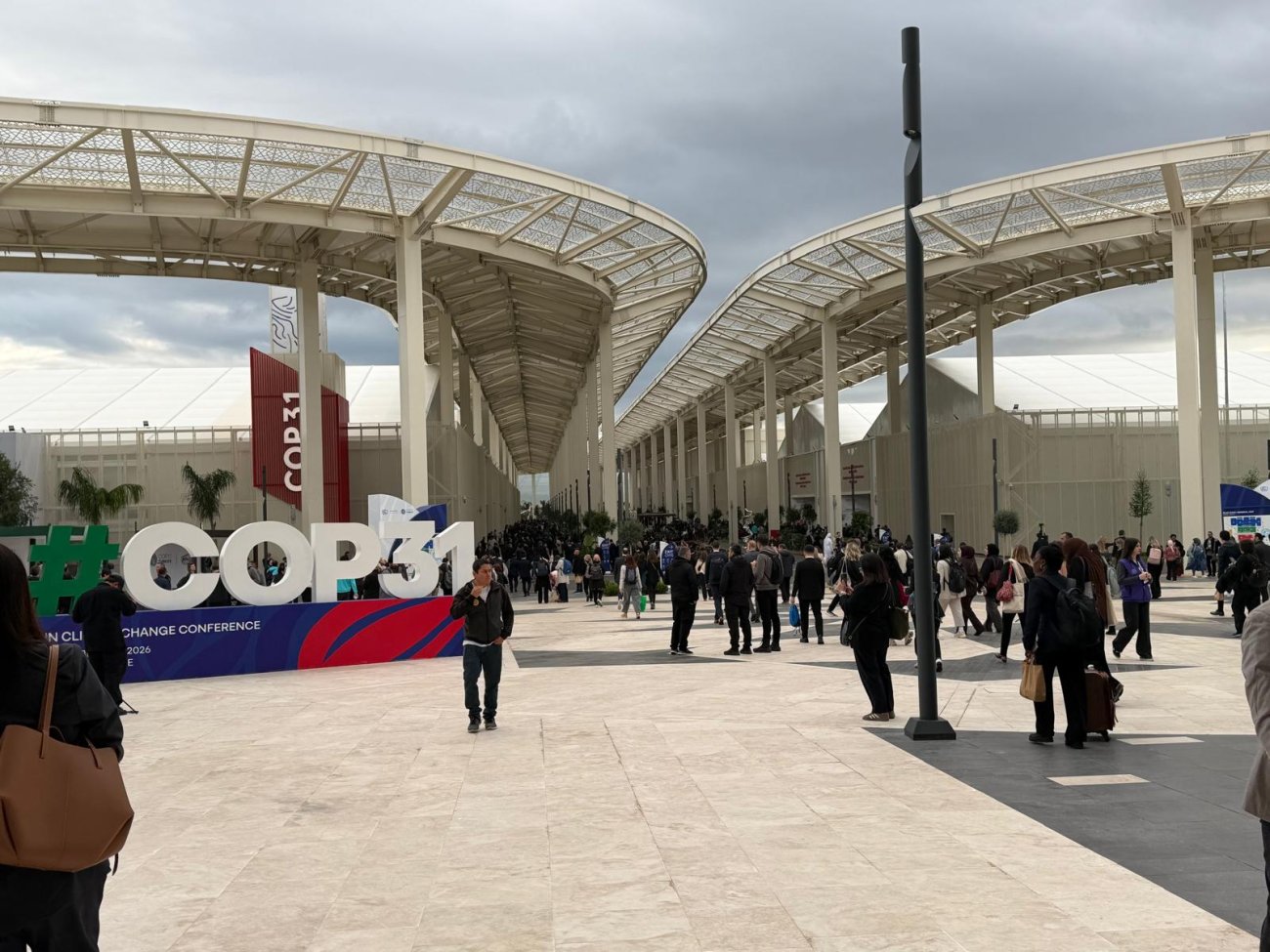
In what some are calling the “worst COP ever,” COP31 in Antalya, Turkey ended with no final consensus for a major pact among the more than 190 participating countries.
The two-week-long United Nations summit ran into two days of overtime, with parties primarily deadlocked over whether any agreement should explicitly urge a transition away from fossil fuels.
Russia and Saudi Arabia were among those opposing language that calls for this transition; the European Union, the UK, and some developing countries formally objected to leaving such language out.
COP31’s President Murat Kurum confirmed on Sunday that a deal had not been reached: “It is clear that there are parties in this hall who oppose this text. We recognize that there is no consensus on this document. Therefore, these decisions have not been adopted.”
‘Deeply dissapointed’
“I’m deeply disappointed that #COP31 has ended without consensus on an overarching outcome,” UN Secretary General António Guterres wrote on X.
He added that “this setback does not change the facts. There may be no consensus in the negotiating room, but there is no ambiguity in the science. The take-home message from COP31 is clear: The world must do much more to confront the climate crisis. And it must do it now.”
While praising “all efforts made by the Turkish and Australian COP31 Presidencies,” the European Commission wrote in a statement that “the EU and its Member States cannot accept a compromise that puts at stake the Paris Agreement and the basic principles that will allow for a livable future in this planet.”
‘Held hostage by the petroleum mafia’
In a press conference, Panama’s environment minister Juan Carlos Navarro minced no words, saying the world is “being held hostage by the petroleum mafia.”
“We are in love with our kidnappers. We love the petroleum guys. We can’t live without them, and they are so smart they have convinced us that they are doing this for our own good. They torture us for our own good, they destroy our planet for our own good. They destroy nature to help us, and they demand our unrequited, endless, unlimited, boundless love. And we are so stupid that we fall for it.”
Some, including Ireland climate minister Darragh O’Brien, suggested some Gulf States had an outsized presence during the two-week event.
“This COP, I believe, was hijacked by some oil states,” he told Reuters on behalf of the European Union when asked about Saudi Arabia.
Others said Riyadh’s hand “was strengthened at Antalya by the absence of active US engagement at COP31 and the lack of close US-China coordination that has helped broker compromises at previous COPs.”
Saudi Arabia itself has argued that the COP text “must not mention fossil fuels,” and “should include language boosting carbon capture technologies that can reduce their emissions,” according to Reuters.
But not everyone in the Gulf agreed.
Ghiwa Nakat, executive director of Greenpeace MENA, said, “The removal of explicit language on transitioning away from fossil fuels in the cover decision is concerning. At a time when the climate crisis demands decisive action, weakening commitments on fossil fuel phase-out risks undermining the progress needed to protect vulnerable countries and communities.”
Others highlighted the human consequences of fossil fuel dependence.
“COP31 failed because it refused to name the issue at the core of climate change: fossil fuels,” stated Edson Krenak, Indigenous leader of Brazil, member of Cultural Survival. “This presidency chose to ignore the urgency the world is already living through, turning a blind eye to the people who have died, been displaced and suffered this year alone because of rising temperatures.”
‘Unwarranted, irresponsible optimism’
“While the final, abortive text acknowledged we’re on the cusp of breaching the Paris Agreement’s ‘safe’ +1.5C limit and notes the impacts of the strongest El Niño on record, it failed to reaffirm or advance the kind of concrete targets needed to bring us back from the brink,” said Clare Shakya, global managing director for climate at The Nature Conservancy.
“References to goals around electrification made the cut – alongside the necessary language around clean energy and grid upgrades – but were largely toothless in this context.
“Worse still, hard-won commitments to phasing-out fossil fuels – the root cause of the climate crisis – and tripling renewables achieved at previous COPs were only referenced vaguely and without firm timescales. More specifics were proposed around largely unproven carbon capture technologies in a case of unwarranted, irresponsible optimism.”
‘A turning point’
On a somewhat more optimistic note, Sylvain Delerce, chief scientist at Carbon Gap, reminded everyone that this was not the first time a COP failed to reach consensus, and suggested COP31 should be viewed as an opportunity for new direction.
“It is time to change gears. More semi vague unambitious cover decisions at COP will not allow the meaningful progress the world desperately needs to avert uncontrollable climate change. Antalya should not be seen as a deception, but at a turning point. The limitations of the COP process are now crystal clear. Let’s use this forum differently, or reform it.”
Towards Addis Ababa
That turning point leads to COP32, slated to take place in Addis Ababa, Ethiopia, in 2027. However, numerous leaders said action can’t wait for next November.
Angela Churie Kallhauge, executive vice president for impact at the Environmental Defense Fund, said action on decisions around electrification, adaptation finance, and other near-term climate issues “does not have to wait.”
“The road to Addis Ababa starts now. Between now and COP32, we need to accelerate action, show what is working and build the case for countries to go further.”
“We cannot afford an outcome that destroys our future. Ethiopia should move us forward, not take us back to square one,” said Rukiya Khamis, East Africa Team Lead at 350.org. “People across Africa and the world have spent this year struggling with rising energy prices and deadly droughts and floods. Yet rich polluting nations have closed their wallets at a time when we urgently need a lifeline.”
Likewise, Ashley Kitisya at the Laudato Si’ Movement said, “The road to COP32 must be defined by concrete action: a credible transition away from fossil fuels, accelerated investment in renewable energy and equitable electrification, and climate finance that reaches the communities who need it most.”
Irene Velez Torres, a former Colombian Minister and the co-chair of the First International Conference on Transitioning Away from Fossil Fuels, perhaps hit the point home hardest in terms of what went wrong at COP31 and what must be addressed in Addis Ababa:
“This COP has failed, not because there are no pathways to advance climate action, but because there has been an attempt to erase from the final decision a reality that science has demonstrated and a growing number of countries already recognize: there is no way to confront the climate crisis without ending our dependence on fossil fuels.”