MOA Foodtech has closed a €3.3 million ($3.8 million) funding round to scale its AI-powered biomass fermentation platform, which grows non-GMO yeast strains that convert agrifood waste streams into high-value ingredients.
The round, backed by the European Innovation Council (EIC) Fund, Swanlaab Innvierte Agri Food Tech and CDTI-Innvierte, will help the Spanish startup boost fermentation scale from 120,000-L to 225,000-L bioreactors and increase production of its first three ingredients:
- MOA Q5: a multifunctional egg replacer and emulsifier for applications including sauces and bakery products.
- MOA Yeast: a yeast-based ingredient designed to improve taste, texture and nutritional value.
- MOA Yeast FeG: a variant of the above dedicated to pet food and animal nutrition.
According to CEO Bosca Emparanza, MOA has pilots underway with several companies, mainly in Europe: “MOA Q5 is being validated in bakery applications, while MOA Yeast and MOA Yeast FeG are being evaluated across food and pet food products.
“MOA Yeast FeG is already used in a commercial pet food product, although we cannot disclose the customer or product name due to confidentiality agreements.”
The above proprietary ingredients are manufactured by a CDMO partner in Spain and sold directly to food and pet food manufacturers through MOA’s in-house sales team. However, it also works with partners looking to monetize waste streams, Emparanza told AgFunderNews.
“We also run co-development projects with companies looking to transform their side streams into new functional ingredients, and we already have customers in this business line. The production and commercial model is defined case by case and may involve external manufacturers, partner facilities or licensing. It does not necessarily require building a fermentation facility on the partner’s site.
“There are a lot of players in the industry that produce over 100,000 tons a year of different byproducts and they are looking for new solutions.”
‘What we are looking for is a balance between carbon and nitrogen in our feedstocks’
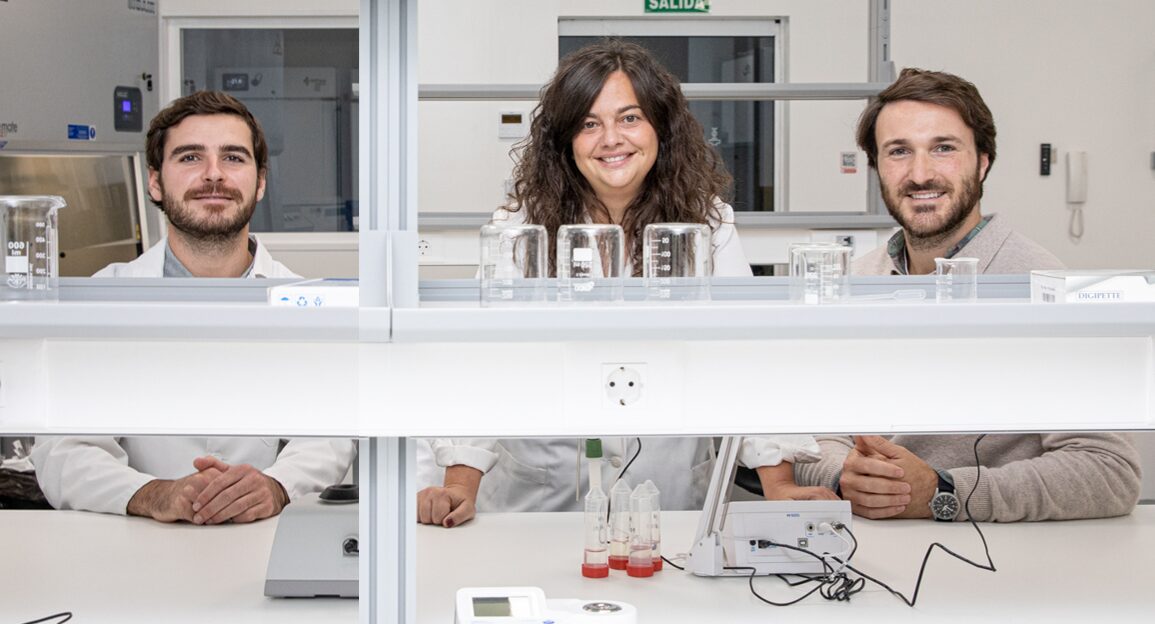
Founded in late 2020 by Bosca Emparanza (CEO), Susana Sánchez, PhD (CSO), and José María Elorza (CFO), MOA Foodtech grows yeast strains that can feed off a variety of side streams from distillers’ grains to crop residues.
“We have over 300 microbes in our library, mainly bacteria and yeast, although today we are only using yeast, which is not considered a novel food [for regulatory purposes] and is OK to use in the US market,” said Emparanza.
Using food and ag byproducts as feedstocks rather than, say, dextrose, is “hard, but we are convinced that this is the way to go in the fermentation space,” he added. “We are building a database of over 150 byproducts that can [serve as] the carbon source, the nitrogen source, and even some salts [to feed the microbes].
“What we are looking for is a balance between carbon and nitrogen in those feedstocks. But it’s not simple. The characteristics of those byproducts can be different from one system to another, and we have built an AI platform that can help us adjust the culture media in real time to get the most optimal conversion rate.”
Albatross AI tool
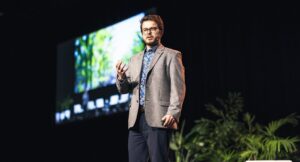
Speaking to us at the biomass fermentation growth hack in San Francisco hosted by food innovation platform MISTA last year, Emparanza explained: “We believe that sustainability is not enough. We have to achieve lower costs in the culture media. Our AI tool Albatross combines the byproducts with microbes to give us the most efficient fermentation process that we need to achieve a specific biomass.
“First we sequence the genomes of our microbes, and build specific metabolic models of the microbes that we have in our library. Then we take the data from our lab and the data we have from the byproducts that we are going to use and we start working with Albatross. As an example, for our first ingredient, it took us six months to develop from the experimental design to the best conditions in the lab. Right now with Albatross, we are able to complete the same process in less than two weeks.”