
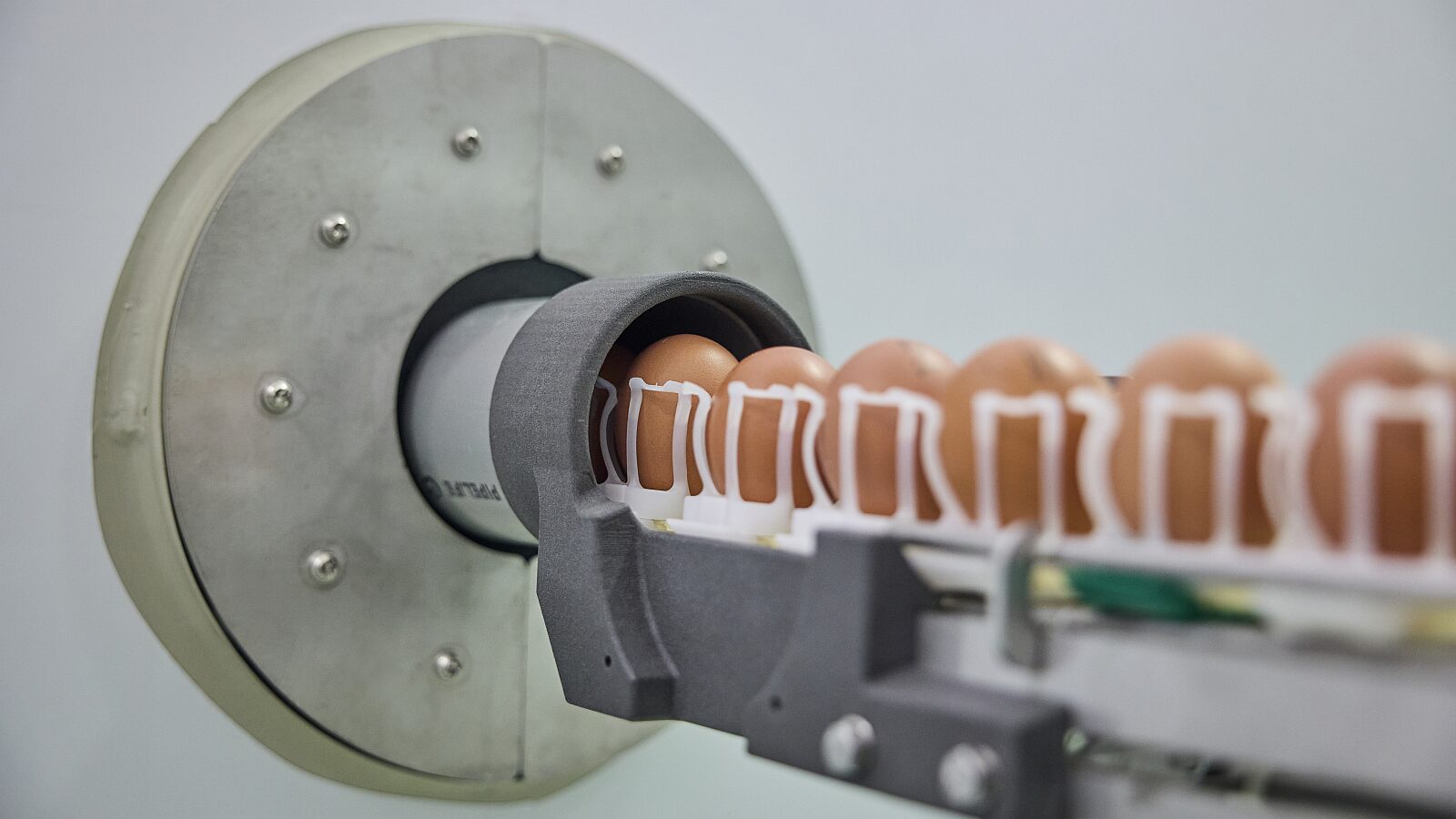
In ovo sexing—technology designed to end male chick culling by determining the sex of chicks before they hatch—has gone from zero to 40% market penetration in the EU in five years. But can it gain traction in the US and other markets where there is no legislative pressure to act?
Despite this rapid adoption in the EU—where several markets have banned or started to phase out male chick culling, many consumers still remain unaware that the egg industry slaughters billions of chicks every year… but not to put meat on the table.
Right now, hatcheries incubate eggs, wait 21 days for them to hatch, hire trained “sexers” to determine their sex, and then cull 50% of their chicks via suffocation or grinding because the males are of no use to the food industry. Male layer chicks cannot lay eggs and are uneconomic to raise for meat because the breeds used for egg and meat production have been optimized for very different traits.
Ethics aside, this is a spectacularly inefficient business model by any standard. But the costs of tech enabling firms to detect male chicks “in ovo” and remove them from incubators before they hatch still outweigh the savings from freeing up incubator capacity. Which means that someone in the supply chain must pay extra if the tech is to be adopted.
At a time when food inflation is top of mind for consumers, that’s a tough sell for any company not in the premium segment of the market, says US egg giant United Egg Producers (UEP), which accounts for 90% of US egg production.
UEP, says a spokesperson, is “fully committed to the future adoption of commercial-scale in-ovo technology when it is economically and operationally feasible.” The implication being that it’s not there yet.
Speaking at a panel debate in April on in ovo sexing at the PEAK Conference, UEP SVP Dr. Larry Sadler said that UEP has developed the Hatch Check certification as a framework to verify in ovo sexing tech. However, getting consumers to pay more to solve a problem most of them don’t even know exists is a challenge, he said.
“Producers certainly want to see this move forward and we’re all moving in the same direction. But are consumers willing to pay more? That is far from proven out at this point. One of the things I hear from retailers is that the egg space is already full, and there are already several different kinds of claims on the carton that they’re trying to make space for.”
Rapid adoption in Europe, premium segment interest in the US, Brazil, Australia
In European markets, regulatory interventions have spurred the industry into action, with Germany and France banning male chick culling, Austria introducing new restrictions, and Italy planning to phase it out by 2027. At the EU level, the European Commission has pledged to propose revised poultry welfare rules by the end of 2026 with a focus on “ending the systematic killing of male chicks.”
According to nonprofit Innovate Animal Ag, in-ovo sexing now covers more than 85% of the layer flock in Switzerland and 52% in Norway, two markets which do not have any legal prohibitions on male chick culling, while the Netherlands has pursued a phase-out developed jointly by the poultry industry, animal-welfare groups and government.
The tech is also gaining traction in Brazil following a partnership between German equipment manufacturer AAT, egg producer Raiar Orgânicos, and the Hy-Line do Brasil hatchery. Australia’s main layer hatchery, Specialized Breeders Australia, installed a Cheggy machine from AAT in May, with egg producer McLean Farms to start bringing the eggs to market later this year.
In the US, producers who manage over 4% of the country’s layer flock–including upmarket brands NestFresh, Vital Farms, Kipster and Sauder’s Eggs–are all transitioning to in-ovo sexing as their flocks naturally retire, with installations from Orbem, AAT/Cheggy and Seleggt.
What will move the needle?
According to Robert Yaman at Innovate Animal Ag: “The acceleration in Europe has been significant, and there are a lot of conversations happening behind the scenes in the US right now where the specialty segment is adopting it without regulatory requirement.
“However, I do agree that it’s not necessarily going to make sense in the commodity egg market until it is cost competitive with manual sexing, although we’ve already seen significant decreases in costs since the initial rollout. If and when it gets at or below the cost of manual sexing, we’ll see adoption across the industry.”
Meanwhile new technologies are emerging that could change the game, he says, citing a partnership between Australian government research organization CSIRO and poultry genetics company Hendrix Genetics to assess the viability of a gene-editing-based sex-sorting technology that can identify male embryos at the point of lay, before the eggs are incubated.
As to consumer awareness of male chick culling in markets such as the US, it will grow as people start to see labeling on premium brands, predicts Yaman. But a bigger driver could be agentic shopping, where humans task AI agents with finding brands that align with their values around things like animal welfare without necessarily specifically asking for “humanely hatched” products, for example.
“As this picks up and becomes more prominent, it’ll be a lot easier for companies to get compensated for doing the humane thing, as people care about welfare, but don’t have time to be an expert in agriculture.”
“Five years ago this was a germ of an idea in a handful of hatcheries. Today it’s the standard across over a third of Europe. That’s about as fast as an industry-wide change ever happens.” Robert Yaman, CEO, Innovate Animal Ag
The state of play: sex determination techniques
Currently, in-ovo sex determination technologies can be grouped into five key buckets. Only the first two are commercialized, however:
👉 Non-Invasive Imaging (commercialized): Looking through the shell of an egg to determine the sex of the embryo inside. Key players include:
- AAT/Cheggy, which uses hyperspectral imaging to determine the color of the embryo’s feathers around day 11-13 but can only work with brown eggs.
- Canadian Egg Technologies (CET), MatrixSpec Solutions and SANOVO Technology Group, which also use hyperspectral imaging with tech they claim can sex white and brown layers by day four. A global commercial launch is planned for late 2026 or early 2027.
- Orbem, which combines AI with magnetic resonance imaging (MRI) to examine the organ development of embryos to detect physical differences between males and females at day 11 or 12.
- Omegga, which captures spectroscopic images over the course of several days inside incubators at the end of day six, eliminating the need to remove eggs from the incubator to be sexed.
👉 Allantoic sampling (commercialized): Extracting a drop of liquid from eggs and testing it for biomarkers that enable it to sex the egg. Key players include:
- HatchTech/SelEggt, which can sex eggs using allantoic fluid sampling on day nine using PCR DNA analysis
- Dutch startup In Ovo, which analyzed metabolites/biomarkers in the allantoic fluid by mass spectrometry, was historically one of the sector’s best-financed startups, raising €34m in 2022 and signing a €40m EIB venture-debt facility in 2023, although it is unclear how much of the latter was ultimately drawn. The company has since exited the market, while its Belgian subsidiary was liquidated in 2025.
👉 Volatile analysis (in development): Detecting sex-specific volatiles that escape through the eggshell. In development.
👉 Genetic editing (in development): Using gene editing to give male embryos a genetic marker that allows them to be easily identified (eggXYt, ). Only the males carry the genetic trait, so females and eggs that make it into the food supply are not genetically modified. This enables non-invasive, rapid sex detection before eggs enter the incubation process, whereas most other approaches are only viable several days into the incubation process.
👉 Sex reversal (on pause): Israeli firm SOOS Technology developed techniques to switch the sex of embryos from male to female but ceased operations in 2024 after running out of funds.
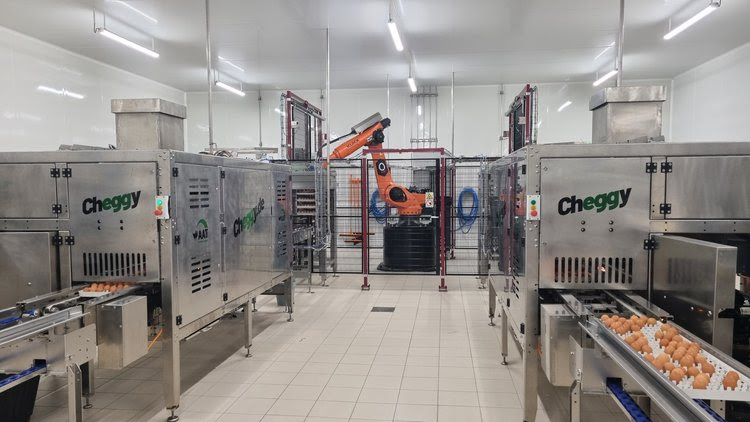
AAT/Cheggy: High throughput—but brown layers only
For AAT/Cheggy, CEO Jörg Hurlin acknowledges that its hypersectral imaging approach only works on brown layers but notes that France, Spain and Italy are all predominantly brown-egg markets, Meanwhile premium eggs—the initial target market for in ovo sexing in markets without a legal driver—are typically brown, he claims.
“We have worldwide more brown layers than white layers, and if you look to the free-range, the barn sector, all around the world they are using brown layers because this is the high value egg, so this concept of humanely hatched eggs fits very well.”
According to Hurlin, Cheggy has the highest throughput of the available technologies and is the “cheapest solution available,” with installations in France, Germany, Belgium, the Netherlands, Italy, Spain, the US, Brazil and Australia.
Hatcheries, he says, care about throughput, accuracy, ease of use and the physical footprint of the machines. “We have a footprint that in most cases fits in existing hatcheries, so they don’t have to build new buildings.”
In general, he says, “I’m very optimistic that this technology will grow all around the world. We’re now getting serious requests from India, Africa and South Korea.” In the US, however, “The big retailers say yes, you can do it, it’s nice, but we are not willing to pay any extra.”
According to Hurlin, who says AAT owns its equipment and charges for sexing as a service, it’s still unclear how things will pan out in Italy, where male chick culling will be banned from 2027 “as it’s still possible to bring day-old chicks from another country where the male has been killed.
“There is a big question mark next year: what will happen in this market? Are the producers buying in Italy from an Italian hatchery, or are they buying from abroad at a cheaper price?”
Asked whether the first wave of players in this space could be rapidly displaced if someone comes along with technology that can sex eggs before they even hit the incubator, he says: “We are ourselves doing a lot of research on very early approaches, on day zero. But at the moment we don’t have something to hit all the requirements the market wants on throughput, accuracy, cost, and reliability.”
Orbem: Making MRI work at hatchery speed
German rival Orbem—which set up an office in Texas last year—is also gaining traction in the US, with a second installation going live now and a third project scheduled for 2027, following installations in France, Germany, Switzerland, and Norway.
The Netherlands is complicated, claims the firm, which raised a €55.5m ($64 million) Series B in January following a €30m ($35 million) Series A in 2023
According to head of global business development Jennifer Volz Dutch, hatcheries are already equipped with in-ovo sexing systems, largely because they supply Germany, where male chick culling is banned. They could theoretically convert all domestic production, claims Volz, but retailers have proved resistant to the tech, which adds about a cent per egg to the retail price, she says.
The country is also a major exporter. A nationwide mandate could make Dutch products less competitive in overseas markets where customers are unwilling to pay a premium.
According to Volz, Sweden, Denmark and Finland are showing signs of following Norway, while discussions are also underway in the UK, although she describes progress there as slow.
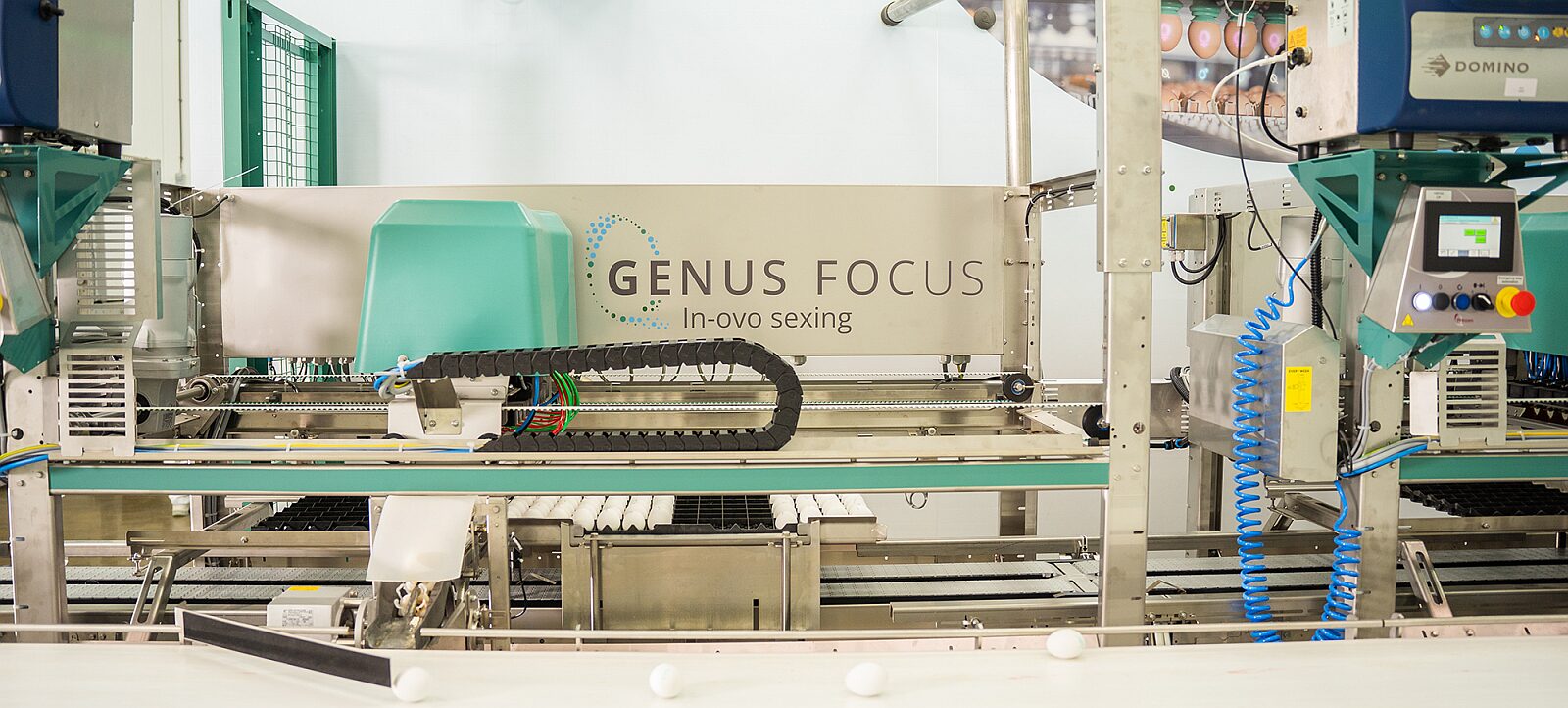
While traditional MRI scans are costly, slow and require skilled operators to interpret the resulting images, Orbem’s AI-powered approach can acquire and analyze an image in under a second, making MRI practical on industrial hatchery lines with 99.5% accuracy.
“By combining MRI with artificial intelligence, we can drastically reduce the cost so the speed of acquiring an image is reduced from 15 minutes to a split second and analysis of the image is completely automated by AI.”
Its modular platform can be configured for smaller hatcheries producing around one million females annually or scaled to process up to 24,000 eggs an hour, claims the firm, which is “already profitable.”
Rather than selling the MRI equipment to hatcheries, Orbem also operates a pay-per-use model, installing and maintaining the machinery and providing the complete sexing service, reducing the upfront capex investment required from customers. Hatcheries may still have to expand their facilities, create space for the equipment or upgrade utilities, however.

HatchTech/SelEggt: ‘DNA does not lie’
HatchTech Group uses a DNA-based in-ovo sexing process whereby eggs are first screened through the SetGate system, which removes infertile eggs and unviable eggs with an accuracy chief commercial officer Joost ter Heerdt says exceeds 99.9%.
A small sample from the viable eggs is taken from each egg and analyzed by PCR, delivering up to 49% female yield with an accuracy above 99.5%, says the firm, which now has systems running in the US, the Netherlands, Germany, and Norway. “We know that DNA does not lie,” says CCO Joost van Heerdt. “Therefore, it will provide the most accurate results. Our data proves this.
While the approach is minimally invasive rather than completely non-invasive, “Compared to hatcheries that do not use in-ovo sexing, the impact on hatchability is negligible,” adds ter Heerdt. “Furthermore, our researchers have not found a difference in chick quality.”
A HatchTech SelEggt line has an input capacity of up to 33 million eggs a year and requires two hatchery employees to operate, he says. “It integrates seamlessly into existing hatcheries and does not require additional investment in electrical infrastructure or external electrical partners for installation although it does require some floor space. We notice that there is often enough room within existing hatcheries, as fewer setters are needed.”
Omegga: Can a later entrant leapfrog the incumbents?
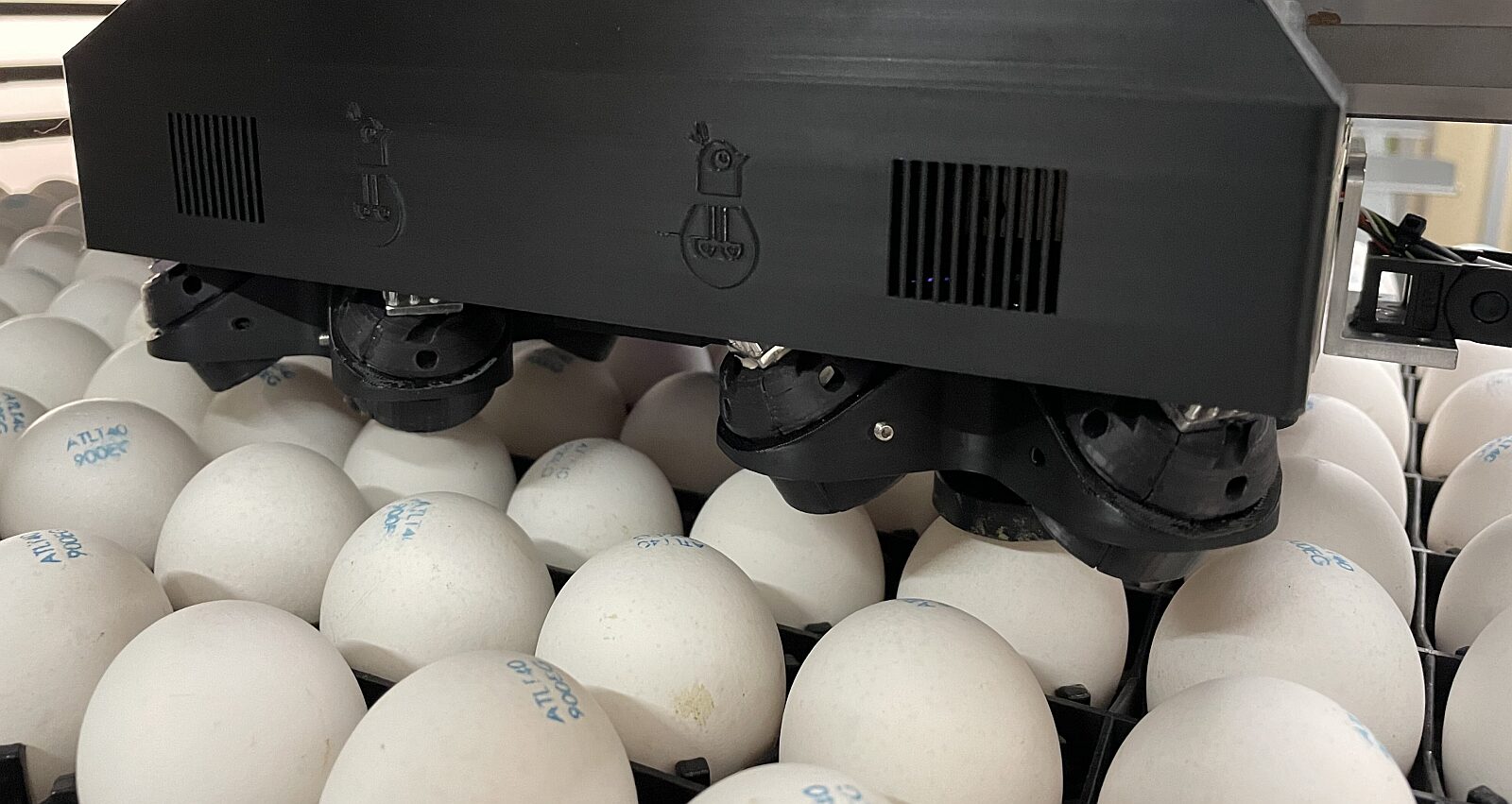
Omegga—which deploys spectroscopic imaging to look at embryonic development over time within the incubator—claims to have a solution that’s cost efficient for hatcheries of every size, and “for new markets that want to start small and then go big,” says cofounder and CEO Katharina Hesseler.
The tech looks for a variety of signals that can be detected optically including early sex differences in embryonic blood, to achieve reliable sexing significantly earlier than rival tech, says the firm, which recently raised a €10m ($11.6 million) seed round,
According to Hesseler: “Right now our competitors can sex between day nine and 13. We can sex before day seven [with the firm’s latest Omegga Plus tech]. We supply them with a measurement arm [scanner], and slightly adapted trolleys that we’ve designed with a hardware partner that’s very established in the ag industry.
“As we are doing all the sexing inside the incubator fully autonomously, sexing is already finished when the hatchery worker opens the incubator door. So our throughput can range up to 50,000 eggs an hour. By implementing a solution that is sexing and sorting out the eggs earlier, you can produce more laying hens from the same space: production capacity increases.”
In the US, she says, high-throughput solutions are especially important. “You have hatcheries that are 10 to 20 times bigger than in Europe. And while Cheggy can do 20,000 eggs an hour, they can only do brown layers, and 90% of the US market is white.”
Typically, there is a setup fee and then a pay-per-use model based on the scanning volume, she explains. “You can equip one incubator or you can equip 10, so you can start small and go big. And from an opex point of view, it’s quite competitive. It’s just like a flashlight shining through the eggs. It’s fully autonomous. It does not involve any laboratory. It’s not energy intense. It does not require extra personnel. We don’t need to have our staff on site managing anything.”
Omegga is now operational with four machines at German hatchery Gut Averfeld and is currently equipping a facility for a second customer, says Hesseler.
Rather than selling male eggs into low-value animal feed markets, she notes, they could be used in vaccine production as biological incubators for growing things such as influenza viruses, where embryonated eggs are generally inoculated at around day 9–12.
This would effectively exclude competitors that sex around day 12 or 13, but provide a viable market for Omegga, which can determine sex by the end of day six.
“If you look at our deal pipeline, we have customers that are producing laying hens and eggs for vaccine production. So there are already companies that do both, that have the infrastructure in place, as you need to keep them [male eggs] in warm and humid conditions for them to be a use case for vaccine production.”
While Omegga arrived on the scene after AAT/Cheggy, HatchTech and Orbem, she acknowledges, “The key question is what will make the hatchery the winner of the future? If a solution comes up where hatcheries believe it’s a better deal for them, they are not locked in forever. At the same time, new markets are also opening up, so this is a huge market opportunity.”
Who pays? US brands wrestle with the in-ovo premium
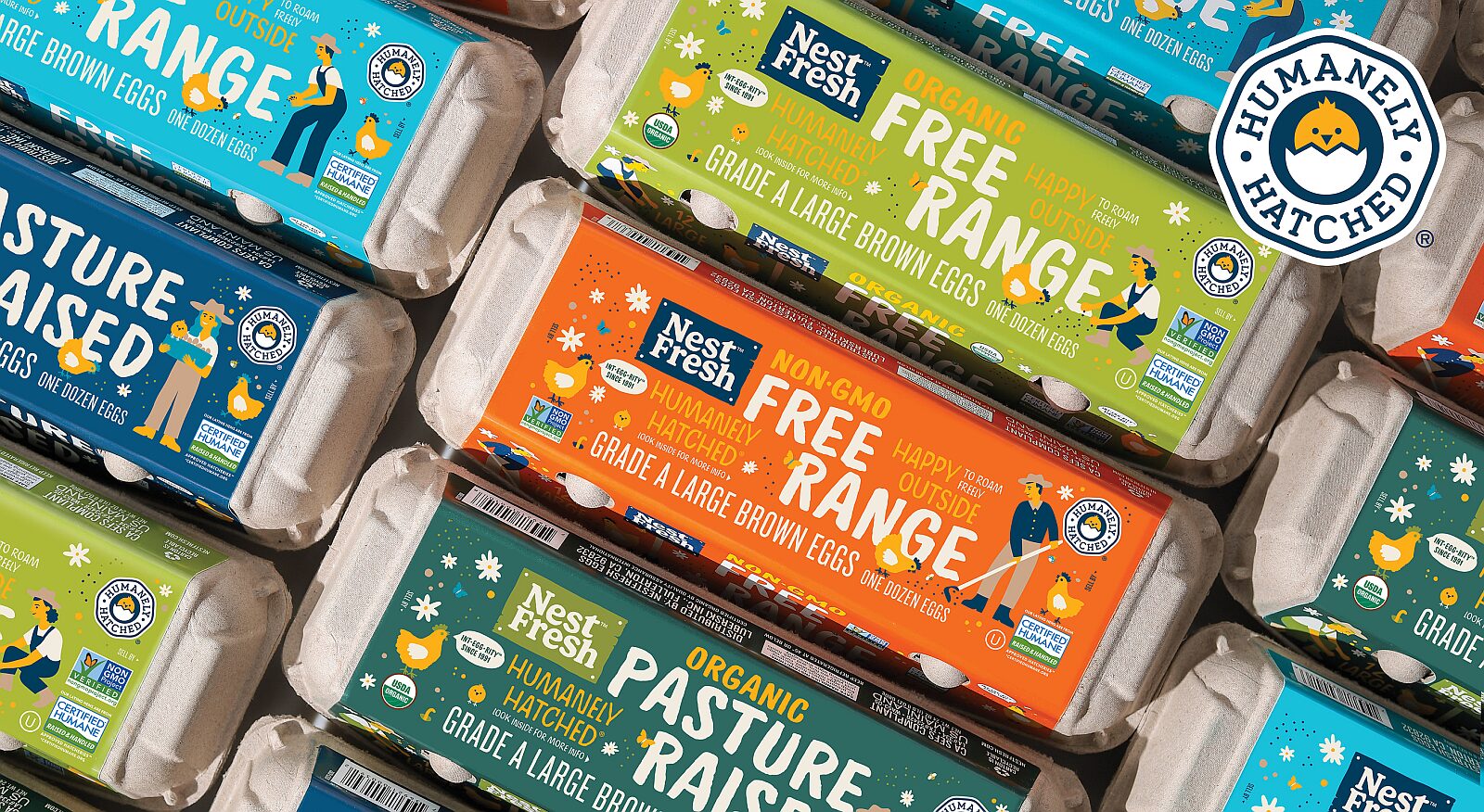
At US egg brand NestFresh VP, Mike Sencer says he visited hatcheries doing in-ovo sexing in Europe some years back and persuaded his US hatchery supplier Hy-Line to explore the tech.
He adds: “We were only interested in doing brown eggs so AAT’s Cheggy machine was perfect for us since it only does browns and does a fairly fast process [Hy-Line and AAT are both owned by poultry giant EW Group].”
NestFresh pays an undisclosed premium. It does not currently pass this onto consumers, but says the humanely hatched logo further enhances its positioning as an ethical brand, says Sencer.
“We decided if we charged for the process it would never get off the ground so our marketing team decided to absorb the costs for now. We truly believe in this process and think it will save billions of males throughout the world in time.”
Asked whether NestFresh and other US brands adopting in ovo sexing tech will eventually be able to charge a premium, he says: “Yes, or the technology will get better and cheaper. Everyone has to crawl before we can walk and run.”
As to what needs to happen for in-ovo sexing to move beyond premium brands, he says: “Number one for the US, the cost of doing white eggs and speed must improve, but there are also new technologies. There is a new system in Canada that can sex eggs a few days into incubation [the HyperEye system, see above].”
But he predicts that the real game-changer is tech to sex eggs before incubation, “so the male eggs could be used for liquid products at full value, [as you only get embryonic development in fertilized eggs if you incubate them].”
Fellow US brand Vital Farms, which also has a premium market positioning, is also working with Hy-Line and AAT/Cheggy, with birds hatched after in-ovo sexing scheduled to arrive at its network of farms in early 2027. “By 2028,” says the firm, “We anticipate the majority of our hens will have come from this process.
“We are not currently passing that cost along to farmers, customers, or consumers. While not all hatcheries in our network have adopted the technology yet, we’re hopeful that taking this step will help inspire broader change across the industry.”
At Kipster USA, which works with Hendrix Genetics and the HatchTech SelEggt allantoic sampling system, managing director, USA, Sandra Vijn says that the “cost for the first few flocks was carried by Kipster. We are now in transition to launch our own brand in early 2027 and we’re currently working out how the costs for in-ovo sexing will be allocated amongst the various parties.”
Vijn doesn’t “see a clear winner yet” when it comes to in ovo sexing tech and predicts it will continue to evolve. To move beyond premium eggs, she says, consumer awareness and demand would also need to increase “before brands decide it’s worth the investment. It would need to translate into growing sales or not losing sales to competitors.”
She adds: “We do frequently receive emails or questions through social media from people inquiring about where they can buy our eggs because they appreciate the use of in-ovo sexing technology. However, Kipster eggs are currently not on the market so it’s hard to tell how this translates into sales.
“Whatever the consumer may choose to do, as Kipster, we started our company based on the promise that we put the chicken’s animal welfare at the center of what we do, and not culling day old male chicks is still very much part of that approach. So regardless of if there is a clear demand from the consumer for eggs produced with in-ovo sexing technology or not, we’ll choose to use it as long as we aren’t in a position to raise the male chicks for consumption.”

Sign up for our weekly newsletter.