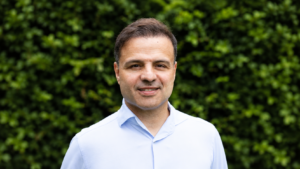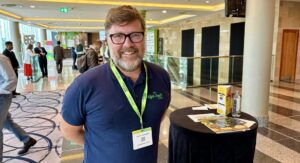
Connie Bowen is founding general partner at Farmhand Ventures, an early-stage impact investment firm that invests in agricultural technology focused on farmworker well-being, economic viability, and climate resilience. Hannah Johnson is founder of Hannah Johnson & Co. and industry lead at UC ANR Innovate. Together, they operate UC ANR Innovate’s Connect program, a series of selective, free field days designed to get startups with real solutions in front of California’s farming industry.
The views expressed in this article are the authors’ own and do not necessarily represent those of AgFunderNews.
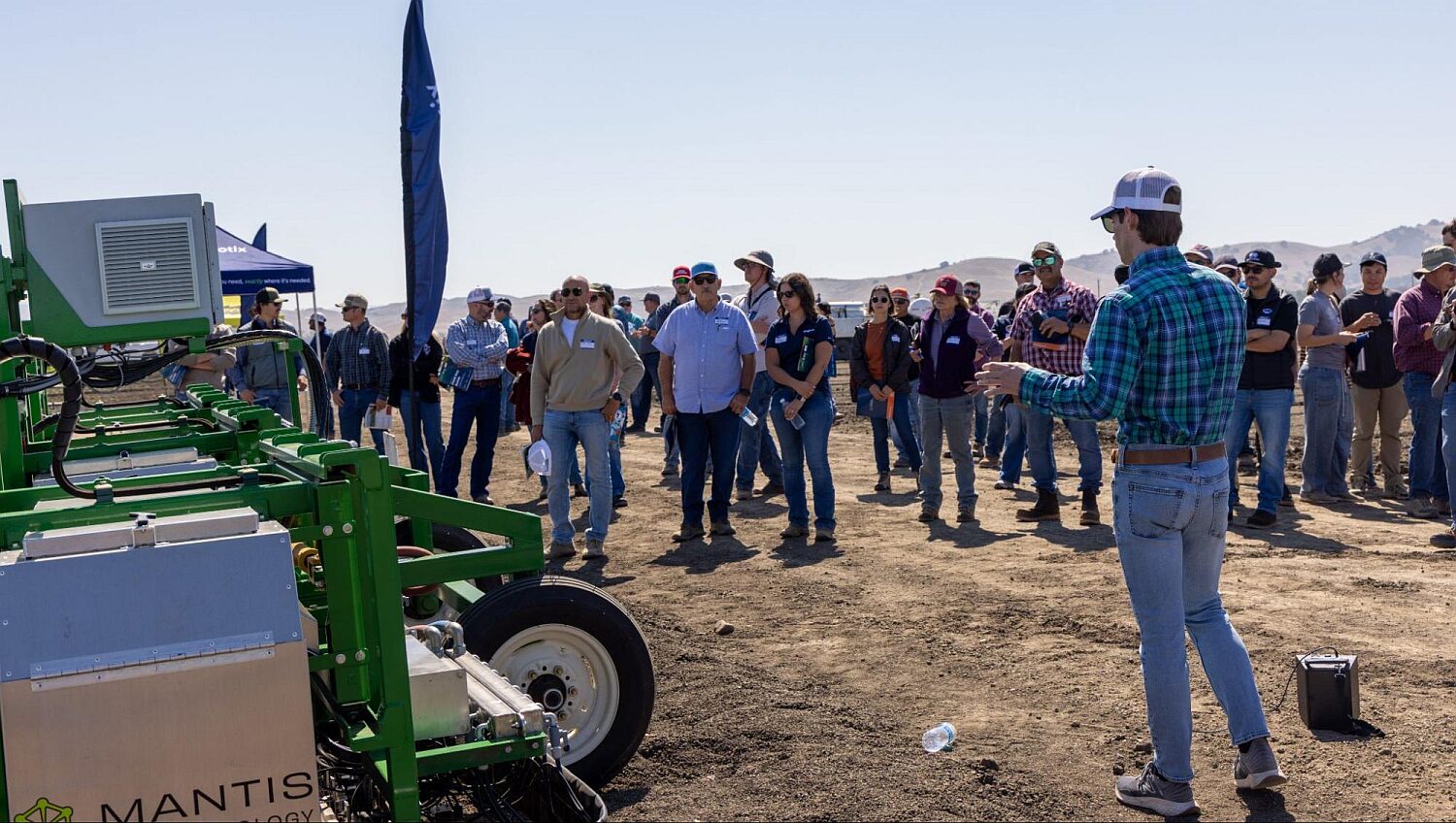
On August 6, more than 250 growers, investors, and startup teams from the US, Brazil, and Europe converged on a Connect field day to watch advanced physical AI technology take on one of agriculture’s hardest crops to automate: leafy greens. It was the sixth Connect field day we’ve hosted in just two years, with more on the calendar this fall and into 2027.
There are many factors to evaluate when investing in a startup. Most investors will agree that team is one of, if not the, most critical and controllable factors to analyze in making an initial investment decision. Markets shift, products fail, co-investors and customers change their minds, and at the end of the day, the people are left to navigate changing tides.
Unfortunately, it can be really hard to evaluate teams. Founders are always on their best behavior while courting investors, and they’re almost always going to make introductions to customers and partners with whom they have strong relationships. External reference checks can help, but we’ve found something better – pressure testing in the field.
Over the past two years, we’ve been working together to develop and implement the University of California Ag & Natural Resources (UC ANR) Connect program. Startups apply, get vetted by growers and researchers, go through virtual prep, then demo live at one of several field days hosted across California.
And what we notice after every cohort, in spite of all the vetting and prepping of these companies throughout the program, is that the field day tells us whether or not they’ll stay in business for the long run. The signals and data points that come from a company’s participation in a field day are invaluable in vetting teams, and too many investors are missing them.
We aren’t. And neither are most farmers.
And the stakes are real. The founders who nail these signals don’t just leave with good feedback — they leave Connect with commercial contracts in hand. The ones who don’t, leave with a list of what to fix before the next one.
The clues investors can’t get from a pitch deck
We immediately clock how a startup staffs the event. When a company sends enough technical staff to answer growers’ specific questions, that tells us they value the opportunity and can support the work behind it. When one overwhelmed rep shows up, we ask why: they may be resource-constrained, or they may not understand what the opportunity demands.
Afterward, we watch what happens next. Do they follow up with growers who asked questions, send the data they promised, and thank the host farm or research station? Those small acts are predictive because companies that treat a field day as a one-and-done PR stop rarely treat customers differently after the sale.
The clearest signal is care: does the team ask growers real questions and listen to the answers—or do they see acreage instead of a person carrying the weight of feeding people for a living?
We get it — the economics still have to pencil, and none of these soft cues catalyze an exit on their own. But if the “there” doesn’t strengthen our food system or solve a real grower’s problem, we don’t care how good the math is. The win is short-lived, for all of us.
We want more investors to see what we’re seeing — and act on it before the next cohort proves us right. We think you’ll be more successful, and agtech — and agriculture — will be better off too. With our next Connect field days already on the calendar for this fall and 2027, the smartest diligence you can do this year might be a day in the field.