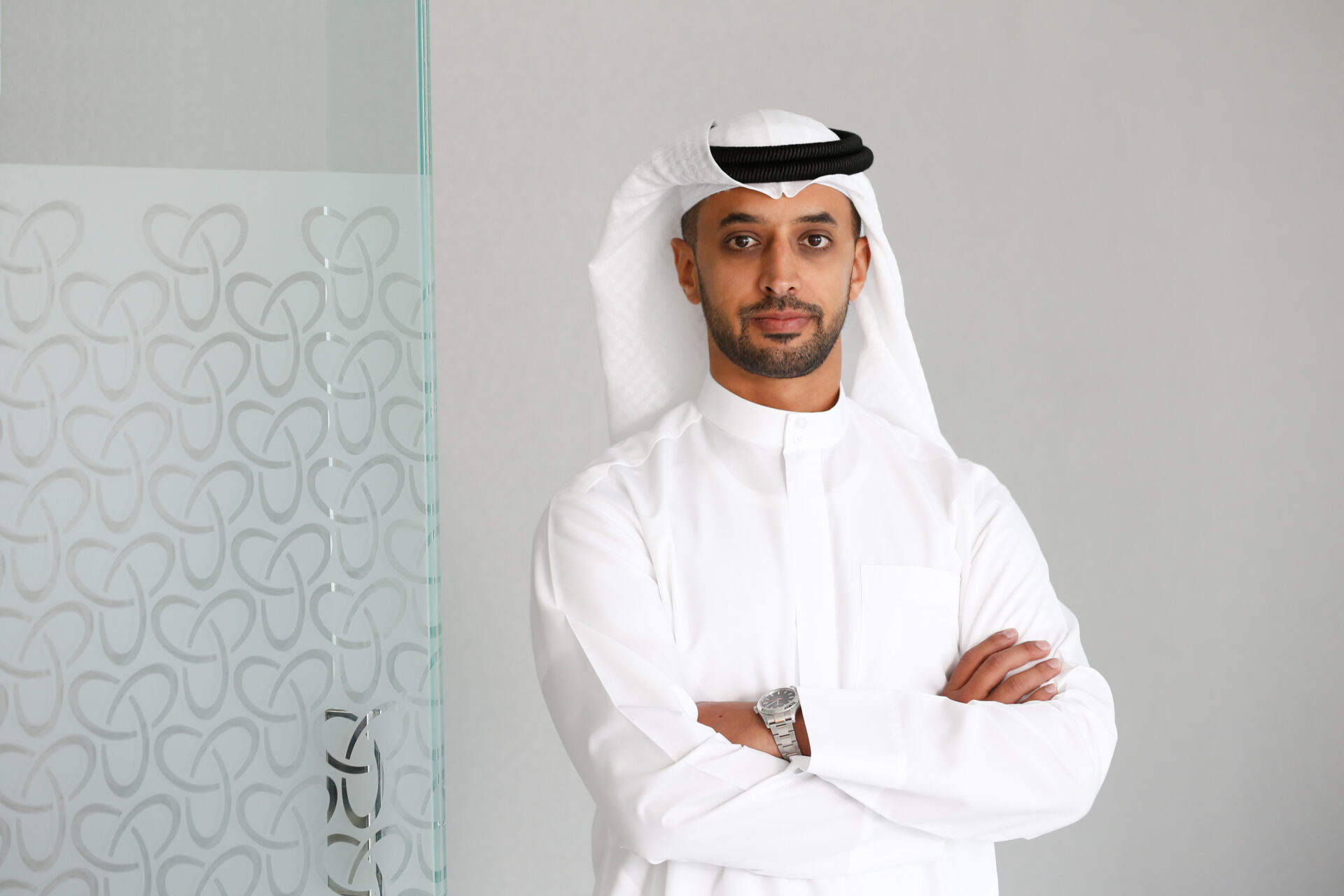
Editor’s note: Ahmed Bin Sulayem is the executive chairman and CEO of Dubai Multi Commodities Centre (DMCC).
The views expressed in this guest article are the author’s own and do not necessarily represent those of AgFunderNews.
The global food system is under serious pressure. As the world’s population continues to climb, particularly across the high-growth corridors of Asia and Africa, the challenge of securing stable, high-quality protein supply chains has moved from the realm of logistics into the heart of national security. Food security is no longer a domestic concern, but a critical pillar of economic sovereignty, regional stability, and long-term resilience.
Protein sits at the center of this challenge, and one that goes far beyond meat. Plant-based proteins such as soy, pulses, and grains dominate volume globally and underpin food security at scale. Aquaculture and seafood are growing fast, particularly across Asia and emerging markets. Dairy, eggs, and alternative proteins matter too, as governments and consumers look for more diversified food systems.
At DMCC, our ambition is to build the infrastructure for a new global meat ecosystem, and to use that foundation to progressively anchor a wider protein trade architecture for the region.
As a high-value industry—which is structurally fragmented, and burdened by persistent gaps in traceability, halal assurance, sustainability verification, and trade finance—meat represents an industry that is ripe for reform, and one where Dubai’s strengths in logistics, re-export, standards, and trade finance apply most directly.
Structural shifts in a global food system
To understand the strategic opportunity, consider the structure of global production. The industry has historically been shaped by significant geographical imbalances, with a small number of dominant exporters, primarily Brazil, Australia, India, and the United States, supplying much of the world. That concentration is now shifting towards a decade that will see a meaningful expansion of the producer table.
Paraguay and Uruguay are among the most credible new entrants over the next 10 to 15 years, while China and Russia are growing fast in poultry and pork, respectively. Argentina is poised for a major comeback as it works to normalize its trade policies. Ukraine, Kazakhstan, Mexico, Thailand, and Türkiye all carry significant potential, provided they can navigate current geopolitical headwinds and build out the necessary infrastructure.
A common pattern runs through these emerging giants in that each possesses abundant grazing land or cheap feed, currency competitiveness, and proximity to fast-growing demand centers.
Yet the binding constraint is not herd size, but the absence of robust cold chains, traceability systems, and disease-free certification. Nations such as Ethiopia, Sudan, Tanzania, and Namibia carry enormous longer-cycle upside, provided they can resolve Sanitary and Phytosanitary (SPS) compliance. The competitive advantage in the next generation of global meat trade will belong to those who solve these technical and infrastructural challenges first.
The UAE’s competitive advantage
This structural shift exposes the fundamental inadequacy of the traditional high-volume, low-transparency model of meat trade. The market is moving toward accountability, and the infrastructure to support it does not yet exist at scale.
As H.H. Sheikh Mansour bin Zayed Al Nahyan, Vice President and Deputy Prime Minister of the UAE, noted at the Emirates Agriculture Conference and Exhibition in Al Ain: “The UAE is moving forward as a modern agricultural model that combines authentic agricultural heritage with advanced technologies, thereby enhancing food security and keeping pace with its ambitions for a more sustainable and prosperous future.
The UAE’s competitive advantage has long been logistics and connectivity. The next generation of that leadership requires these strengths to be integrated with a unified, standards-based framework. This is not simply a trade ambition, but a strategic positioning exercise that aligns with national food security doctrine.
H.E. Dr. Amna Bint Abdullah Al Dahak, Minister of Climate Change and Environment, has articulated this shift directly: “The nation’s agricultural sector has moved beyond its traditional role to serve as a strategic driver of technology and innovation. The Sustainable Product initiative represents a major shift in the UAE’s approach to food security, moving beyond supporting production to strengthening consumption and creating market demand.”
Dubai ready to lead
This vision requires institutional infrastructure to deliver it. Of the UAE’s wider moves to create a smart global food hub, Saleh Lootah, Chairman of the UAE Food Cluster, has called SMEs the backbone of the food ecosystem and pressed for a “unified, digitally empowered sector capable of competing on efficiency and compliance.”
A DMCC meat ecosystem would be designed to provide exactly that: digitized supply chains, embedded traceability, and the standards architecture that ensures shipments meet halal, sustainability, and safety benchmarks consistently and at scale.
The future of the global protein economy depends on transitioning from opaque, fragmented supply chains to an accountable, accessible model. A meat ecosystem would be the first concrete pillar of that new architecture, and a platform from which Dubai could progressively build coverage across the full spectrum of protein trade, from livestock and poultry to seafood, dairy, and plant-based alternatives.
The UAE has the logistics, DMCC has the model. What remains is execution—that is, building the infrastructure that moves the international community from vulnerability to shared resilience, and ensures the world’s most essential resources reach the people who need them. Dubai is ready to lead.