Corporate commitments to regenerative agriculture are becoming more common, but evidence of measurable outcomes is not keeping pace. As a 2026 FAIRR assessment of 78 publicly listed agrifood companies recently revealed, just 28% had quantified regenerative agriculture targets, down from 35% three years earlier.
This gap is not necessarily a lack of ambition. Rather, FAIRR’s assessment highlights the ongoing difficulty in connecting corporate sustainability targets to consistent, credible evidence across thousands of farms in multiple geographies.
Sustainability at the field level is shaped by local conditions. Irrigation, fertilization, and soil-management practices produce different results across various crops, climates, soil types, seasons, and farms. In some cases results can significantly vary from one acre to the next.
Simply documenting that a practice took place is not enough to demonstrate that water use was reduced, carbon was sequestered, or biodiversity systems preserved. Companies must consider what changed after implementing the practice, how this compares to the original baseline, and how confidently the change can be attributed to the intervention. All of this information must also stand up to independent scrutiny.
Why farm-level outcomes are difficult to measure
Regenerative agriculture practices typically include cover cropping and crop rotation, reduced tillage, and integrated livestock management. Results of these practices differ across farms, geographies, and crops, and what works in one field may be ineffective in another.
Cover cropping can support weed suppression, erosion control and soil health in some settings, while in water-constrained environments it must be carefully managed to avoid competing for limited soil moisture.
“Adopting the same practice does not guarantee the same result because every farm operates under different soil, climate, crop and management conditions,” explains Hande Gunacti, Director of Climate and Sustainability Impact at Doktar.
“A practice that improves soil moisture or productivity in one location may have a limited effect—or require a different approach—elsewhere. That is why we need to evaluate practices in their local context and measure the outcomes rather than assume them.”
Comprehensive reporting requires a much deeper analysis of each unique setting.
Practices are not outcomes
Sustainability disclosures and impact reports often include activity and output metrics, such as practices adopted, or hectares enrolled in a program. While these indicators are important for demonstrating scale and implementation, on their own they do not show whether an intervention has delivered measurable outcomes, such as reduced water use, lower emissions, improved soil health, or stronger farmer livelihoods.
The challenge is not to replace activity metrics. But it is important to connect them clearly to the environmental and social outcomes they are intended to create.
As FAIRR noted in its report, this focus on practice versus outcome makes it difficult to assess the true scope of a company’s regenerative program, and can call an organization’s credibility into question.
To avoid this, and to move beyond simply reporting practices, companies must implement credible measurement infrastructure.
What credible measurement infrastructure requires
True measurement infrastructure is not just a set of new technologies. Rather, it requires a robust operating system that connects corporate objectives with farmer implementation, agronomic support, field evidence, outcome calculation, and verification from the start of the program.
Every measurement program requires a baseline—the level against which progress will be compared.
A comprehensive measurement program design will outline, from the start, what this baseline is and which methodologies it will use to assess progress. The appropriate methodology depends on the environmental outcome being assessed, the intervention, and the local context, says Gunacti. As with farming practices and interventions, these methodologies and framework should be applied in ways that reflect regional and farm-level conditions, and data.
“If the baseline and data architecture are not defined at the beginning, it becomes very difficult to demonstrate what has genuinely changed,” she notes. “Programs need to establish in advance what will be measured, how the data will be collected, which methodology will be used and what reference point progress will be compared against. Otherwise, teams may reach the reporting stage with data that is incomplete, inconsistent or unsuitable for the claims they want to make.”
Farmer engagement in any project is a critical component from the outset, and directly connected to data quality, as they are the ones implementing and recording day-to-day activities in the field.
“If they do not understand why information is being collected, or if the process does not reflect how they actually work, the resulting data will inevitably contain gaps and inconsistencies,” explains Gunacti. “Farmer onboarding, feedback and ongoing agronomic support therefore need to be designed as part of the measurement system itself.”
Digital tools, remote sensing and automation can make field-level data collection more consistent and scalable. They can help identify anomalies, track changes over time and support agronomic recommendations.
However, technology must be combined with farmer input, local agronomic expertise, active onboarding and appropriate quality controls to produce credible results.
Measurement programs should use recognized methodologies appropriate to the environmental outcome being assessed. The methodology must be selected at the program-design stage and applied consistently, with clear assumptions, boundaries and supporting evidence. Depending on the intended outcome, relevant guidance, alignment tools and methodologies vary. Water stewardship framework aligns with WRI’s Volumetric Water Benefit Accounting (VWBA) methodology. For assessing and improving on-farm sustainability performance, SAI Platform’s FSA applies as an assessment framework in all impact areas.
Applying digital monitoring, reporting and verification (MRV) in water stewardship
Doktar’s work across multinational agricultural programs illustrates what this data infrastructure looks like in practice.
For example, agriculture is often treated only as a source of water risk, even though it can also become an important part of the solution. Doktar helps companies move beyond sustainability actions limited to their own operations by addressing water use upstream, at the farm and basin levels.
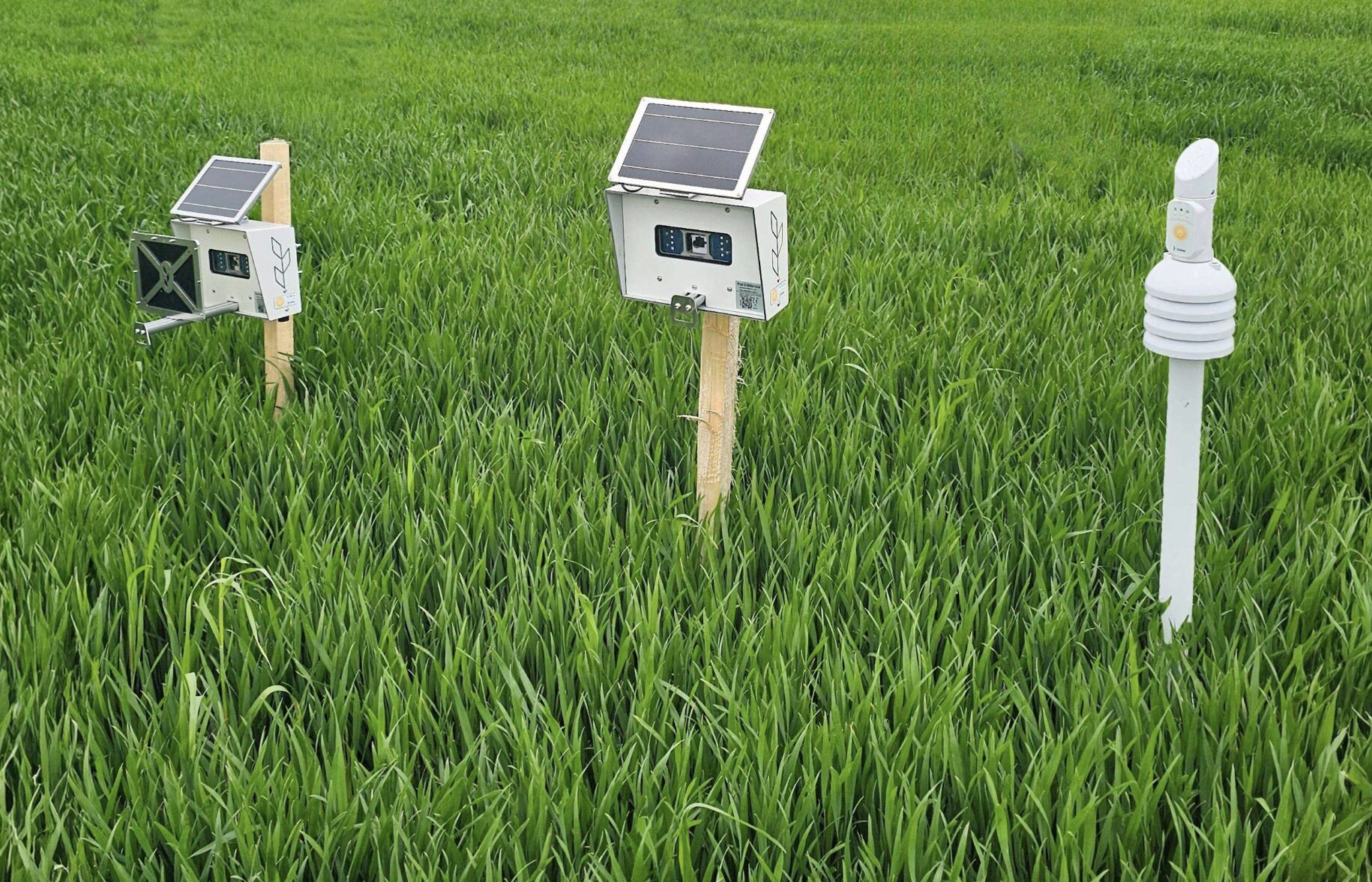
Doktar combines field technologies, satellite monitoring, agronomic expertise, farmer engagement, and MRV infrastructure to improve irrigation decisions, strengthen soil water retention, and translate farm-level interventions into credible environmental outcomes.
The differentiation is not a single product or monitoring tool. It is the integration of technology, agronomy, farmer engagement and adoption, and traceable impact measurement within one operating model. This enables sustainability programs to move from isolated activities towards measurable and verifiable outcomes.
A typical Doktar water stewardship program begins with a farm and basin-level assessment, after which the baseline and measurement methodology are defined.
Farmers are then onboarded to the program and trained on tools and practices, supported by agronomists. Technologies deployed might include field sensors, satellite data, and irrigation monitoring tools, all of which support more-informed decision-making.
Doktar’s digital MRV framework monitors progress over time, generating evidence that can help companies understand the relationship between field interventions, water outcomes, agricultural resilience, and objectives in the supply chain.
Credible progress towards 2030
Credible measurement infrastructure factors all of these things into a program’s design from the outset. Regenerative agriculture outcomes are not isolated results; they can influence sourcing resilience, farmer productivity, environmental performance and a company’s entire supply chain. Meticulous planning and program design at the start are vital to ensure that interventions generate measurable and credible progress over time.
As Gunacti notes, “Measurement should not be treated as something that happens at the end of a sustainability program, it must be built into the program from the beginning. When companies connect sourcing objectives, farmer implementation, agronomy and field-level evidence, they can move beyond reporting activities and start making better decisions about resilience, investment and long-term outcomes.”
As 2030 approaches, the companies best positioned to demonstrate progress will be those that can trace the connection between corporate commitments, interventions in the field and credible outcomes.