Just 2.5% of all public climate finance currently goes to agriculture and land use systems, despite the sector producing around 33% of all global greenhouse gas emissions. Ahead of COP31, the United Nations climate conference that starts November 9 in Antalya, Turkey, many are hoping these numbers will change.
“If agrifood accounts for 33%, the finance to help it should go up to that number as well, so that we have the tools to reduce greenhouse gas emissions and we [can] adapt and mitigate climate change,” Ismahane Elouafi, executive managing director of the CGIAR, said in a webinar this week.
Climate finance is a key agenda item at COP31. The UN defines it as “the provision and mobilization of funds from public, private, and alternative sources to support mitigation and adaptation, particularly in developing countries.”
As the above numbers make clear, food and agriculture have historically been sidelined in climate conversations, including those at past COPs. And while this is slowly changing, farming and land use, particularly for smallholder farmers in low- to middle-income countries, are among the most vulnerable sectors in the world when it comes to climate risks.
More climate finance reaching agrifood could, as Elouafi says, enable smallholders around the world to improve farm productivity and increase their ability to withstand climate shocks. To get there, she suggests, the way we approach climate risk, adaptation, and innovation needs to change.
Climate anticipation must become action
Efforts have to go beyond just predicting climate risk and/or major climate events, said panelists during this week’s webinar. These predictions should translate into actions at the farm level that will secure yields and livelihoods.
“Farmers don’t eat forecasts,” noted Todd Rosenstock, director of CGIIR Climate Action. “We’re getting a lot better at anticipating shocks, but whether or not we can predict a drought or flood doesn’t protect a farmer.”
He said that at CGIAR, success is measured by whether or not these predictions can change farmers’ actions in fields, reduce losses from climate shocks, and lower agricultural emissions. For example, in the face of El Niño, farmers should be able to adjust planting dates, crop choices, and water and livestock management strategies.
For many smallholders, this is easier said than done.
“Farmers need resources, institutions, and agency services to act on it,” said Rosenstock. “What science can do is help governments target policies and preparedness investments, help development banks improve allocation of resources in more climate-effective ways.”
In other words, all of these groups must work together to turn evidence of climate risk into practical next steps at the farm level.
“The challenge isn’t just producing better forecasts,” he added. “It’s building that institution, building the trust, and delivering information to farmers in ways that they trust and are used to receiving.”
Farmer adaptation must come first
One of the ongoing challenges for climate financing is balancing how much money goes towards emissions reduction strategies versus adaptation solutions. The two have to co-exist, said Rosenstock.
That said, “We have to invest in farmers first, especially the farmers in the developing world,” noted Elouafi.
“To transform your agriculture system, you need to adapt first. You need to provide vulnerable communities, particularly small-scale producers, with support so that they can move from certain practices that are emitting to practices that are producing but not emitting so much.”
For example, in many low- to middle-income countries, the yield gap is very high: farmers might produce 1.5 pounds per hectare on land that could yield eight with better practices and conditions, said Elouafi. Currently, the fix is to simply clear more land to get to eight pounds.
Her recommendation: “Instead of pushing that farmers go and clear another hectare to get more [yield], it’s to work with farmers at the land they are using right now to have more innovation, better seed irrigation, so that they can produce more per hectare instead of clearing more land.”
Similarly, livestock could produce more milk with the right feed and vaccinations, and with more support for the farmers.
Effective agtech depends on local conditions
Nowadays technology often aids in this process. But panelists agreed that technological innovation only works when the right tools are delivered to the right locations at the time they’re actually needed. If a tool can’t improve productivity, food and nutrition security, farm resilience, and emissions reductions, it’s unlikely to be of much use on a farm.
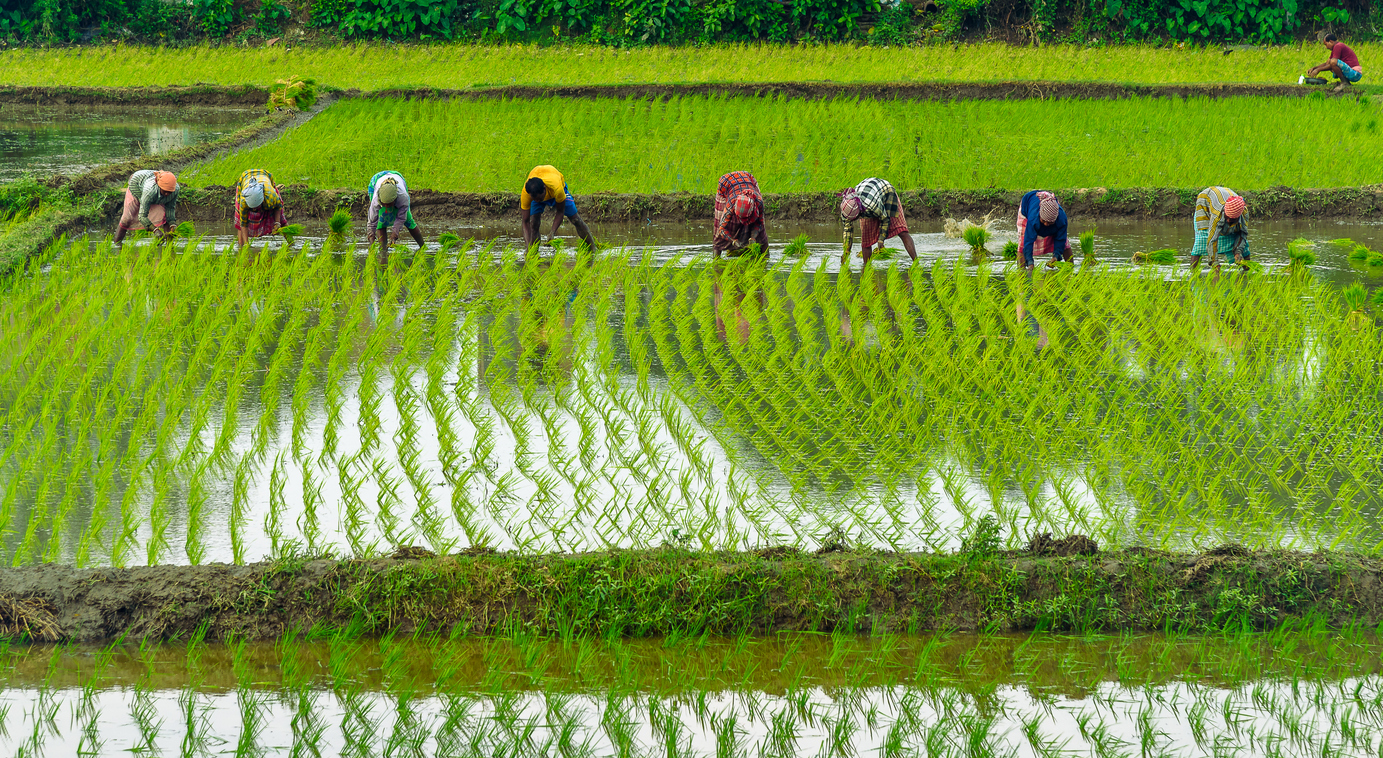
Rosenstock mentioned work CGIAR has done in Southeast Asia on rice farms, reducing methane emissions through alternate wetting and drying of fields. This is a well-documented strategy for lowering methane in rice production, but it doesn’t work in every field. Not all producers control their own water systems, which makes alternate wetting and trying impossible in some situations.
“The results really depend on local conditions,” says Rosenstock. “Sometimes people don’t have the agency to actually control water. So this really isn’t a universal solution.”
Perhaps no tool or practice illustrates this sentiment more than AI, which panelists were asked about during the event.
“Models are only as good as the data that go into them,” noted Rosenstock. “And so much of the training data for AI thus far has not been inclusive of the types of farmers that we are largely trying to interact with in Africa, the Americas, and Asia.”
Elouafi, while acknowledging the high return potential AI has for investors, cautioned about the inequalities it could exacerbate in the coming years.
“We’re talking about small-scale farmers in least-income countries that might not have even a phone,” she said, adding that we need to “rethink” AI and information sharing in the context of mitigation strategies.
“At the people level, particularly in vulnerable communities, I see a risk from the finance side that’s going to squeeze it even more towards AI and technologies and less for other sectors.”

Sign up for our weekly newsletter.