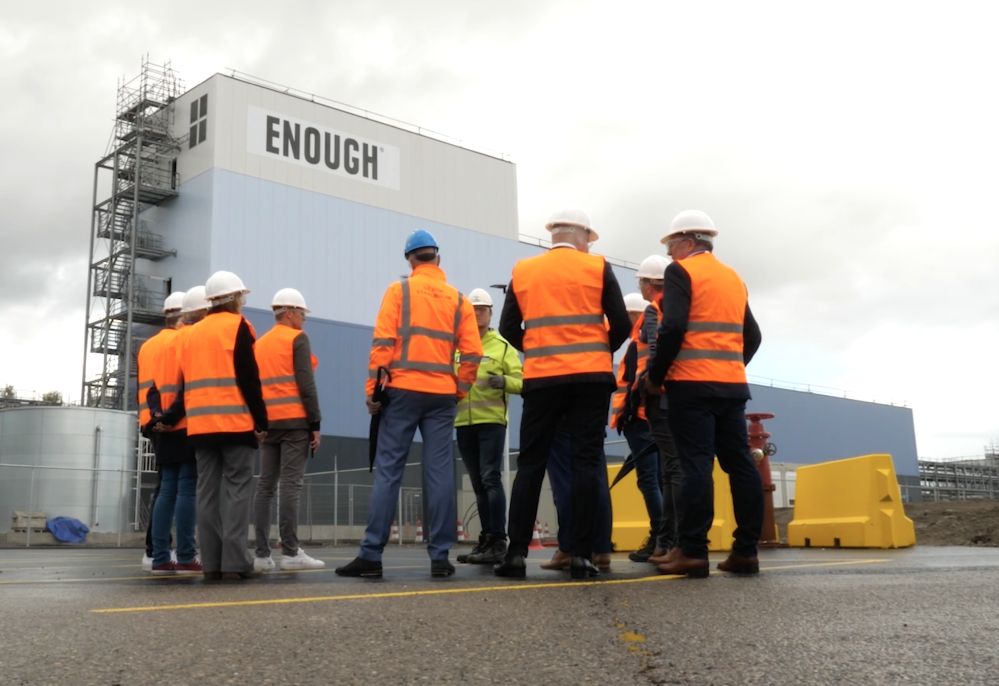
Mycoprotein maker ENOUGH Food is exploring strategic options, including a potential sale, partnership or alternative use of the assets at its fermentation plant in the Netherlands after three years of operational problems, says cofounder Jim Laird.
“I personally remain convinced of the long-term need for sustainable protein solutions and see mycoprotein playing an important role in that. We continue to explore options for the facility in Sas van Gent,” Laird told AgFunderNews.
“ENOUGH continues to have the support of its existing shareholder base,” added Laird, who stepped down as CEO last year but remains a non-executive director.
“A number of existing shareholders have provided additional financial support to the business through shareholder financing arrangements to help fund the restructuring and allow time to explore strategic options.”
Operational challenges
Founded in 2015 in Glasgow, Scotland, as 3FBio, ENOUGH’s ABUNDA mycoprotein is from the same fungal strain as Quorn (Fusarium venenatum) via biomass fermentation. The company has raised over $120 million in grant and equity funding from backers including World Fund, CPT Capital and Cargill, which supplies the feedstock for its Dutch plant from a co-located starch and sugars facility and signed commercial offtake agreements to use ENOUGH’s mycoprotein in early 2024.
While demand was strong, however, operational challenges have dogged the firm from the get-go, acknowledged Laird.
“As I said when we spoke in October 2024, we had confidence in the market opportunity and customer demand. To this day, we continue to believe strongly in mycoprotein’s role in the future of food. Our challenge was translating the original technology and plant design into consistent, reliable and economically viable industrial-scale production.
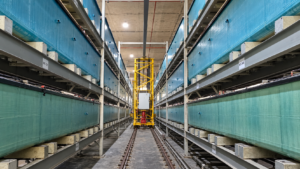
“We struggled to achieve the facility’s design capacity, primarily due to difficulty in reaching our target number of days of continuous operation. The Sas van Gent facility was a first-of-its-kind industrial-scale installation, and achieving the sterility standards required to support long-term continuous operation proved more difficult than anticipated.”
He added: “While we made progress in addressing these issues, aspects of the as-built installation meant that we did not achieve the production performance, reliability and efficiencies envisaged in the original design. After three years of operation, it became clear that further significant time and investment would be required to realize the facility’s full potential.”
Board made ‘pragmatic decision’
This was compounded by a more challenging funding environment for growth-stage businesses, particularly those requiring “substantial” further capital investment, he explained.
“Ultimately, the board made a pragmatic decision based on an assessment of the underlying market opportunity, the operational and technical position of the facility, and the further investment required to realize its potential.”
Shareholder support
According to Laird, ENOUGH retains the support of its existing shareholder base.
A charge in favor of shareholder MLC 50 LP Inc outlined in documents at Companies House “relates to security provided in connection with these financing arrangements,” said Laird. “It should be seen in the context of continued shareholder support for the business.”
The arrangements do not change the company’s underlying governance structure or give MLC control over the strategic review or any potential asset sale, he clarified. “These remain matters for the company’s board.”
The company’s current directors, according to filings at Companies House, comprises Arnoud Balhuizen, Nicholas Elmslie, Harry Kalms, Vinod Kanbi, Guy Semmens, and Jim Laird.
Brutal shakeout in alt protein
The developments come amid a brutal shakeout in the alt protein sector, in which several well-funded players have struggled to translate promising tech into commercially viable businesses.
In the biomass fermentation space, Meati spectacularly imploded last year, while Swedish mycoprotein maker Mycorena filed for bankruptcy in 2024 before its assets were acquired by Belgium’s Naplasol. MycoTechnology has exited the alt protein space, while Nature’s Fynd is phasing out its consumer branded business and exploring higher-value products in biopharma, alt-leather and food ingredients.
BMC Ingredients, which has pursued an asset-light approach to scaling production via its partner in India, continues to advance commercialization plans, as do other players including MAASH, The Protein Brewery, Enifer, Planetary, MicroHarvest, Infinite Roots, MAASH, and Superbrewed Food.
Further reading:
Better Meat Co targets large-scale production in India in Q2, 2027 amid brutal mycoprotein shakeout
The Protein Brewery wins EU approval for Fermotein mycoprotein six years after novel foods filing
Enifer enters petfood market as commercial mycoprotein plant nears launch