dsm-firmenich is preparing to move its Protopia single-cell protein into industrial-scale production, with a 120,000-liter fermentation run planned later this year, and plans to move into a larger facility in Europe in 2027.
Single-cell protein (fermenting microbes and harvesting the whole biomass) has attracted growing interest as a more efficient way to produce large volumes of protein but many startups have struggled to translate bench scale yields into competitive economics at industrial scale.
dsm-firmenich is betting that a highly optimized yeast strain, flexible low-cost feedstocks, and superior yield and productivity can close the gap.
Its “feedstock agnostic” strain of torula yeast can feed off ethanol, methanol, acetate, sugar, molasses or other substrates and deliver 2-3x the productivity of most liquid biomass fermentation systems, enabling it to compete head on with fishmeal in aquaculture and whey in human nutrition, claims the firm.
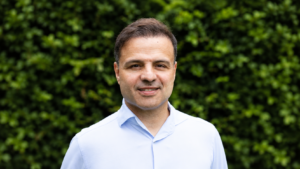
It could also generate a novel revenue stream for Indian ethanol producers who have rapidly expanded production capacity to meet government biofuel mandates but are now sitting on significant underutilized capacity, director of single cell protein Karim Kurmaly, PhD tells AgFunderNews.
The initial plan is to produce sufficient quantities to prove out the bioprocess at scale and provide enough product to enable market testing, says Kurmaly, who is based in the Netherlands. The longer-term plan is to expand via a licensing model whereby local production partners would make and sell the protein, while dsm-firmenich would supply the strain, process technology, know-how, and tech support.
The torula yeast in question has a long history of use in foods in multiple geographies including the EU, notes Kurmaly. What’s new is that dsm-firmenich has optimized a strain and fermentation process so it can be produced as a ~70%-protein, neutral-tasting ingredient at inclusion levels high enough to function as a primary protein source.
Scaling production for customer trials
According to Kurmaly, dsm-firmenich has produced batches for customer trials in a 15,000-liter fermenter and plans to move to a 120,000-liter fermenter later this year. After that, the plan is to move into a facility, most likely in Eastern Europe, with access to both bioethanol and beet sugar, where it aims to produce about 2,000–10,000 tons/year.
The aim is to produce around 400–500 tons from the middle of next year onward to seed the market and support customer trials, while simultaneously working on licensing agreements in three countries.
Higher yields and significantly higher productivity
Unlike many startups in the single cell protein field, dsm-firmenich has extensive experience in biomanufacturing at an industrial scale, says Kurmaly. “We started in reverse order: if this is the COGS, how do we get there?
“We optimized the process tech and the strain to get higher yields and significantly higher productivity. We also had to make the strain versatile enough to be feedstock agnostic.”
The company has explored continuous fermentation but concluded that semi-continuous operation works better on cost and overall performance, particularly because contamination in a fully continuous process can result in a much larger loss, he claims.
Protopia contains a minimum of 70% protein, with a full complement of essential and structural amino acids, and a protein digestibility (PDCAAS) score of around .94–.96, almost on a par with animal protein.
For aquaculture and pet food, downstream processing is relatively straightforward: dewatering, pasteurization and drying. Food applications require additional processing to make the material pumpable before spray drying, with particle size adjusted according to the intended use. But none of this requires exotic equipment, stresses Kurmaly.
“The strain is the magic, not the facility, not the steel and the concrete.”
Regulatory status and labeling
As the underlying yeast has a long history of food use, Protopia can already be used in the US and EU without requiring a GRAS notice or EU novel food authorization. However, dsm-firmenich is separately assessing regulatory requirements in markets including India and Brazil.
Labeling will vary by geography but will likely be something along the lines of “yeast protein” or “fermented yeast protein.”
Target markets: aquaculture, pet food, and human food
In Europe, dsm-firmenich is working with the top three players in the aquaculture sector, the top five in the pet food sector, and the top five in the food sector, claims Kurmaly, who says inclusion rates can go up to 10–12% inclusion in human foods without negative impacts on taste and up to 20% in salmon diets.
For the aquaculture market, the key opportunity is salmon production, where producers are grappling with rising fishmeal prices and concerns over availability. These have been exacerbated this year with El Niño disrupting Peru’s anchovy industry, says Kurmaly.
“Today 65% high-quality fish meal is around €3,000/ton and we can compete at those levels. Providing it doesn’t drop below €2,000/ton, we’re okay.”
Trials with aquaculture companies show Protopia can serve as a 1:1 replacement of fishmeal, where producers are laser focused on nutritional content and security of supply, he explains.
In pet food, palatability is the #1 issue along with price, with independent kennel trials showed Protopia outperforms competing proteins, he adds.
For human food, Protopia is supplied as a fine off-white powder with a slight savory note if eaten on its own. Interest is coming from a wide range of foods from snacks to meat alternatives, with customers interested in its functional properties (gelling, emulsification), nutrition, and sensory advantages over plant proteins, which come with off tastes, says Kurmaly.
“There is no smell, no aftertaste, and no grittiness, so it also lends itself well to smoothies and milk alternatives” at a time when the price of whey protein has “skyrocketed to $25 to $28 per kilo, and that’s if you can get it,” he adds.
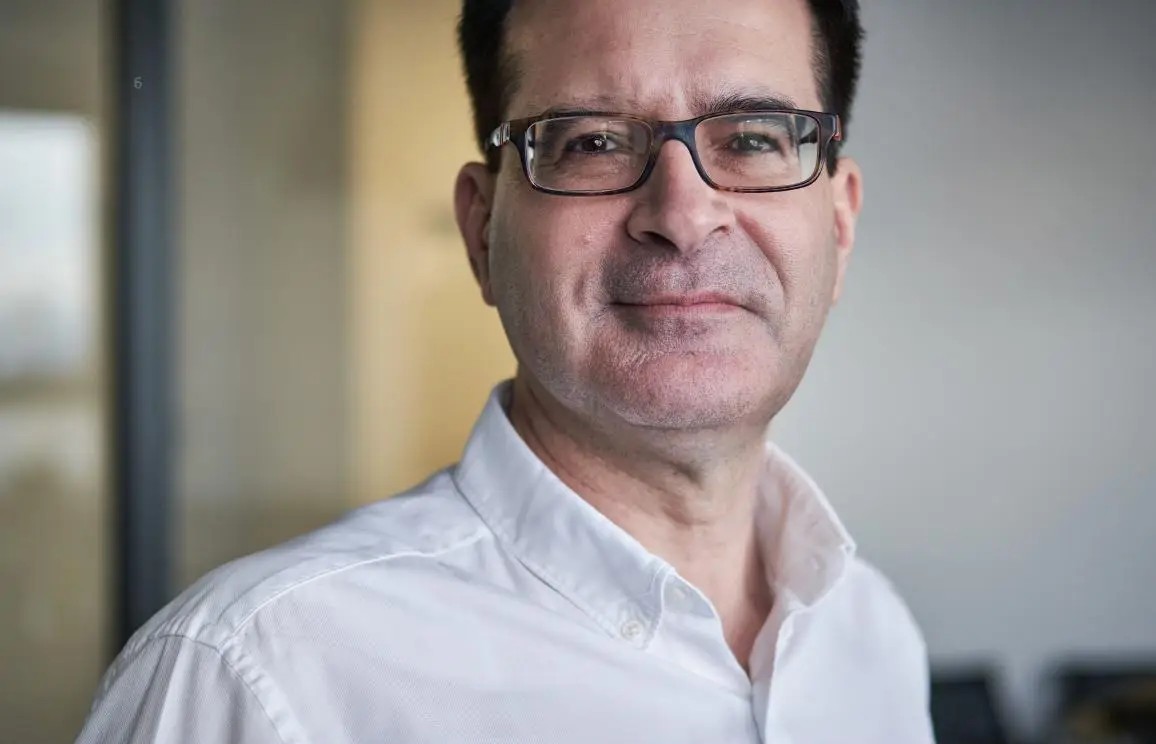
India makes “very little cheese in comparison to the mountains we have in the Americas and Europe,” adds Raman (Chandru) Chandrasekar—managing director at UK-based Sustein Ltd, which works on sustainable protein and bioeconomy projects.
“And because most of the cheese is paneer, you don’t really get much whey protein out of it, so India imports almost all of its whey and prices have gone way up. Proptopia is a suitable replacement nutritionally and it’s also very similar in color.”
India could become a major licensing opportunity
Chandrasekar—who grew up in India but is now based in the UK—sees India as a particularly attractive market for Protopia given its protein deficit and surplus ethanol capacity.
Potential applications range from mass-market protein fortification of noodles, breads, chapatis and snacks through to more functional uses in premium beverages, he says.
The aim is to co-locate a Protopia fermentation module with an existing ethanol or sugar producer, using its feedstock, utilities and effluent infrastructure, while bringing in major food companies as off takers. A Protopia plant consuming 100,000 liters/day of ethanol could produce around 16,000 tons of Protopia annually.
“The ethanol industry has invested in nearly $5 billion worth of capacity to produce 20 billion liters,” says Chandrasekar. “But the government can only procure realistically half of that for E20, which is itself facing a huge backlash in India because the vehicles are not ready to go from E10 to E20.
“Protopia can utilize this ethanol as feedstock but also has the flexibility to use any source of sugars, methanol, acetate or any carbon source, really. So it’s a magical technology.”
While Quorn—which is produced via biomass fermentation—has been around for a while, he says, it lacks the protein content of Protopia and requires a cold chain, whereas Protopia can be stored for long periods as a dry powder at ambient temperatures.
“China has a strategic pork reserve; India could have a strategic protein reserve.”
Closing India’s protein gap
Chandrasekar adds: “India currently imports almost all the yeast protein used in snacks and savory products, from a neighboring country where production is limited to 10,000 tons per year right now, and the companies probably have another 11,000 tons coming online in the near future. But 21,000 tons is just a drop in the ocean when you look at the unmet protein gap in India.
“If we just took the surplus ethanol and made Protopia protein from that, we could meet at least 40% of that demand gap.”
He adds: “Aquaculture and pet food are also growing in India and [for human food] the most popular snack is the instant noodle, which is often criticized for being just starch and junk food.” Adding Protopia would be a low-cost way of boosting the protein content of what has become a food staple without breaking the bank.
“So that’s a huge market that’s immediately open for innovation, and we are talking to some of the FMCG companies who are actively interested in this.”
But there are also opportunities in premium market segments, says Chandrasekar, who notes that Starbucks now offers a protein foam made from yeast protein on menus in India.
Licensing is central to the scale-up model
Ultimately, dsm-firmenich does not envisage owning dozens of Protopia factories but would instead supply what Kurmaly calls the “software”—the strain, process technology and application expertise—while partners supply the physical infrastructure.
Under this model, the licensee would manufacture and market Protopia under license and pay dsm-firmenich a royalty, with dsm-firmenich supporting both applications and go to market strategy to help partners secure offtake agreements.
The IP portfolio currently comprises 18+ patents spanning three areas: strain, process technology and applications, with additional filings in development.
The broader ambition is to build a repeatable licensing model around regions with either cheap feedstocks, existing fermentation infrastructure or low-cost renewable energy. Beyond Europe and India, Kurmaly highlights Brazil, China and the US as promising markets.