In the past five years, the food supply chain has grappled with a dizzying series of shocks from a global pandemic to Russia’s invasion of Ukraine, Trump’s trade war, and conflict in the Persian Gulf, where a narrow strip of water is now holding the world’s economy hostage.
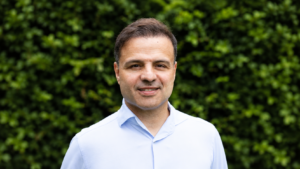
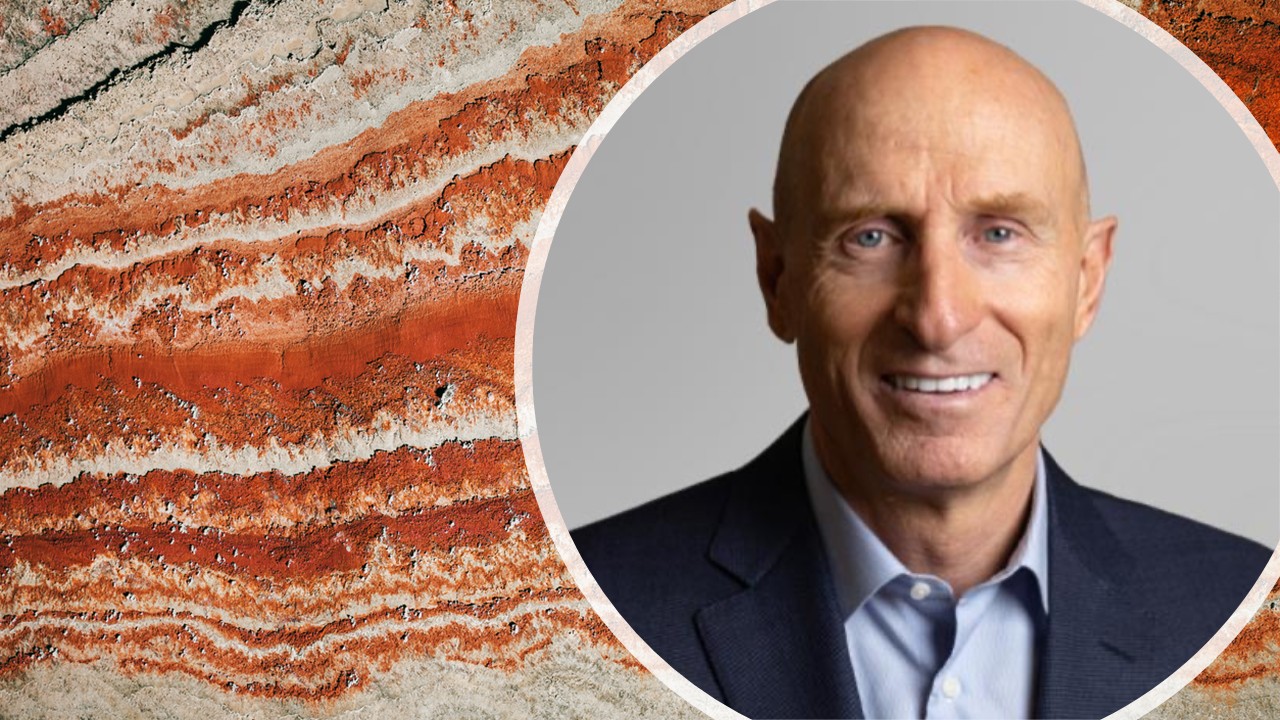
Against this backdrop, food security has rapidly moved up the agenda, says Mayo Schmidt, a former president and CEO at fertilizer giant Nutrien, who is now leading efforts to build a potash mining operation in Brazil as executive chairman at Brazil Potash.
The business case is clear, he says. A global agricultural powerhouse, Brazil accounts for almost a quarter (22%) of global demand for potash, which supplies crops with potassium. But it is reliant on imports for a whopping 98% of its needs, despite sitting on one of the world’s largest undeveloped potash basins in its own backyard.
In-market solution slashes transport costs, reduces risk
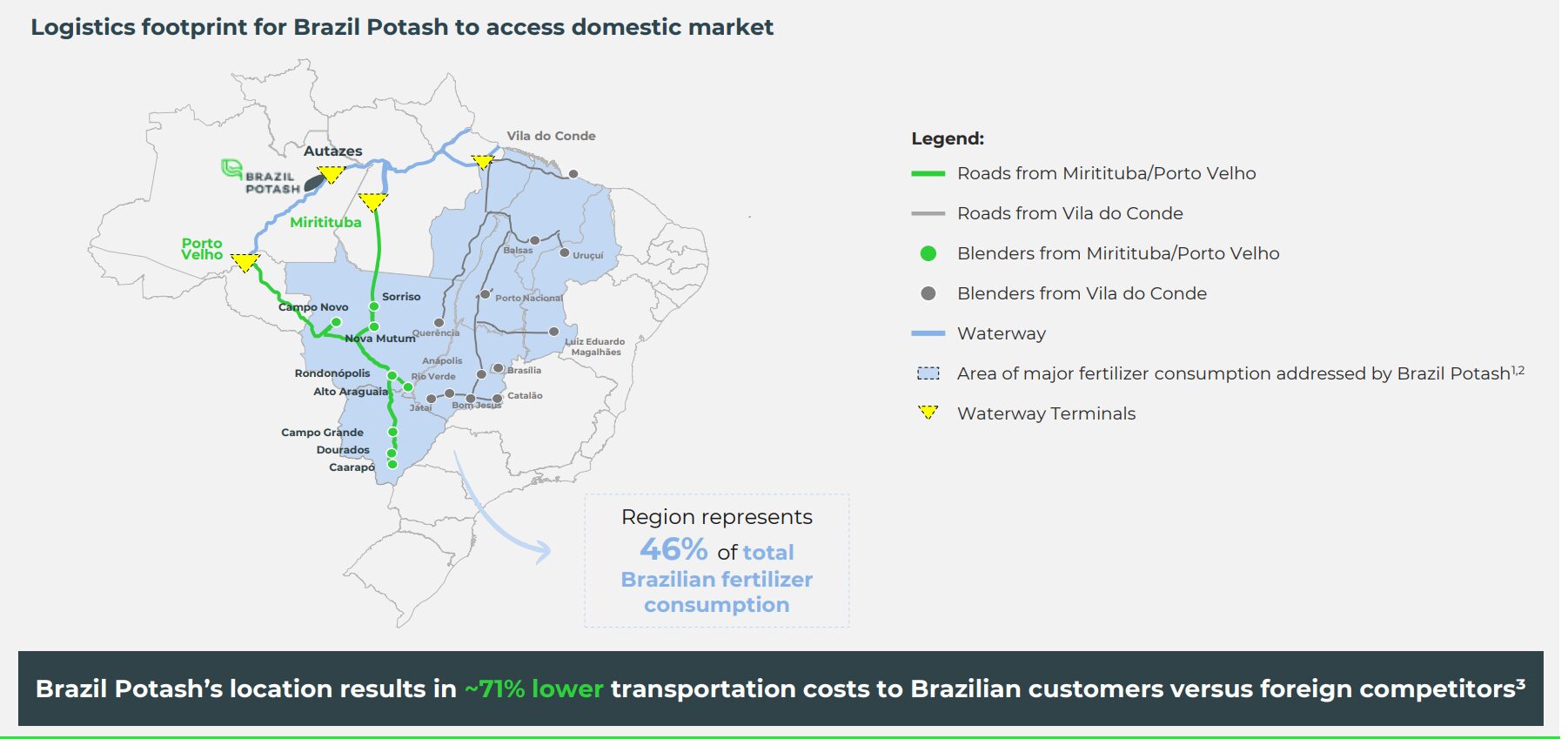
Toronto-based Brazil Potash—which is raising funds to mine a potash basin in northwest Brazil—is designed to reduce this reliance, providing Brazil’s farmers with lower-cost potash transported on barges via an inland river system in partnership with ag commodities giant Amaggi.
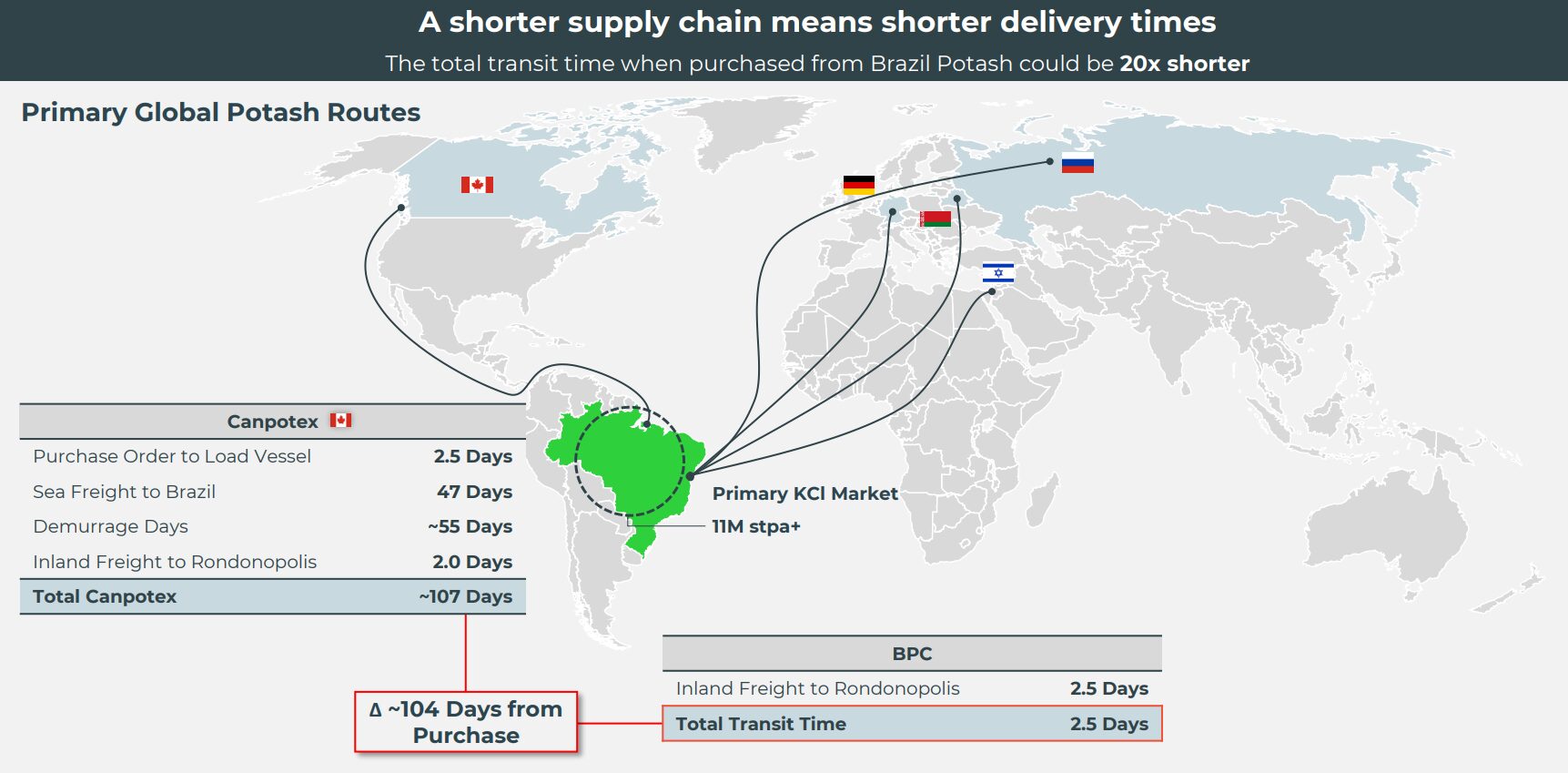
“First, the global potash market is highly concentrated today,” says Schmidt. “There are three [leading] suppliers [Nutrien, Mosaic, Belaruskali], and they operate through trading agencies. So fundamentally, you have two sellers [Canpotex and the Belarusian Potash Company], which creates oligopoly pricing power. Second, if you’re in Brazil, it takes 107 days from origin [from, say, Canada] to get to market.”
Given that there is a narrow window for applying crop inputs, any kind of supply chain disruption can put that crop at risk, he says.
“Even before the latest conflict, you had situations where depending on where you were in the world, prices could go from $250 to $300 a ton [in 2020/early 2021] to over $1,200 a ton [in April 2022]. If you’ve got that volatility it constrains your willingness and ability to invest. So it’s important to have an in-country, in-market solution, which is what we’re bringing.”
Iran war’s direct and indirect effects
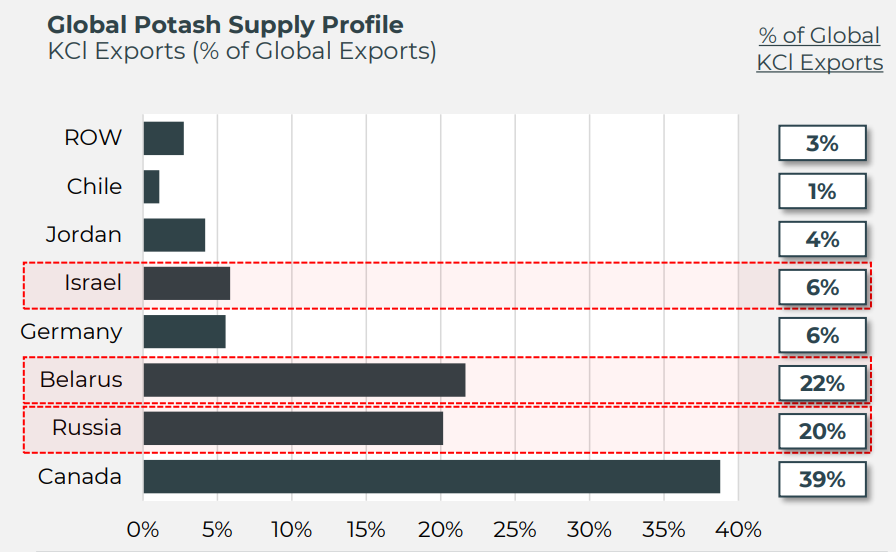
Given that potash is primarily coming from Canada, Russia and Belarus—whereas many nitrogen and phosphorous-based inputs are coming from the Middle East—a casual observer might assume it’s not really impacted by the war with Iran.
Not true, says Schmidt: “It’s having direct and indirect effects, direct being [higher] fuel costs, because it’s coming [to Brazil] from halfway around the world by truck, rail, ship. Second, you have the question of things like insurance for these vessels [which is now higher].
“And then you get into other things, like, for example, there were delays last year as Canada had rail and port strikes. And one emerging risk, which we haven’t even seen the world get its arm around yet, is the Panama Canal in terms of ownership, availability, passage, and cost.”
Long-term offtake agreements
With initial planned production of up to 2.4 million tons per year at its “Autazes Project” in Brazil, Schmidt believes Brazil Potash could potentially supply 17% of current potash demand in Brazil.
While the company—which went public in 2024—has not yet secured all of the funds needed to build a mine, it has signed long term offtake agreements with three key partners (fertilizer trader Keytrade: 900,000 tons/year; fertilizer trader Kimia Agro Solutions: up to 704,000 tons/year; and soybean producer Amaggi: 500,000 tons a year) that Schmidt says significantly de-risk the enterprise for potential investors.
The Autazes Project is now fully permitted for construction and has already seen ~$270 million invested in exploration, technical studies, land acquisition, public hearings and consultations with indigenous communities, some of which had initially raised objections, but have since worked with the company to establish a framework to move forward with their support.
“Our plant does not sit on indigenous land,” says Schmidt. “However, we did go to all the indigenous communities within 200 kilometers and work with them to get their approval.”
Financing the project
He adds: “We are now in position to begin construction, which we intend to start within the calendar year or early next year. The land preparation for the surface plant is largely complete and ready for beginning to drill the shaft.
“From a financing point of view, the international banks have given us strong confidence in our position to be able to secure the debt, and we’re getting very positive feedback [from investors about our] ability to secure the equity.
“All in all, it’s a $2.5 billion project over the course of the next four years. First production will be in 2030; that’s the plan right now, and final engineering should be complete by this year. So when you think about ground prep, permits, engineering, we’re in good shape.”
As to where he hopes to secure equity financing from, he says: “There’s certainly the sovereign wealth [funds] of the world that have a strong view on their food security requirements. So when you look through the Middle East and Southeast Asia, they’re all inquiring and interested in how they can participate.
“Further, we have financial players, because the return on invested capital here is rather extraordinary. It’s unprecedented in the agriculture sector.”
He adds: “We’ve undertaken a number of projects over the last year which have put us in position to be able to move on the final piece, which is the equity, because the equity triggers the debt. And Franco-Nevada [a specialty finance firm for the mining and energy industries] has purchased a $150 million royalty option [whereby it will take a percentage of revenues once the mine is up and running].”
Food security moving up agenda
Stepping back to look at the global potash market, he says, “There is a need to continue to build capacity globally. In Brazil, local demand is growing at 6.7% a year, and all of our production will stay in market.
“91% of our product is already sold to the farming community for the next 10-17 years. So it’s not a case of us going out and competing to be able to find a home for our product. We have the lowest cost, and we’ve already sold the product.”
Looking at food and ag supply chains more generally, he says, “Instability has increased substantially. And that’s why in-market supply [matters]. All these countries are moving to protect themselves.”
What is potash?
Potash fertilizers provide nutritional sources of potassium: the “K” within the NPK macronutrient complex of fertilizers alongside nitrogen (“N”) and phosphorus (“P”).
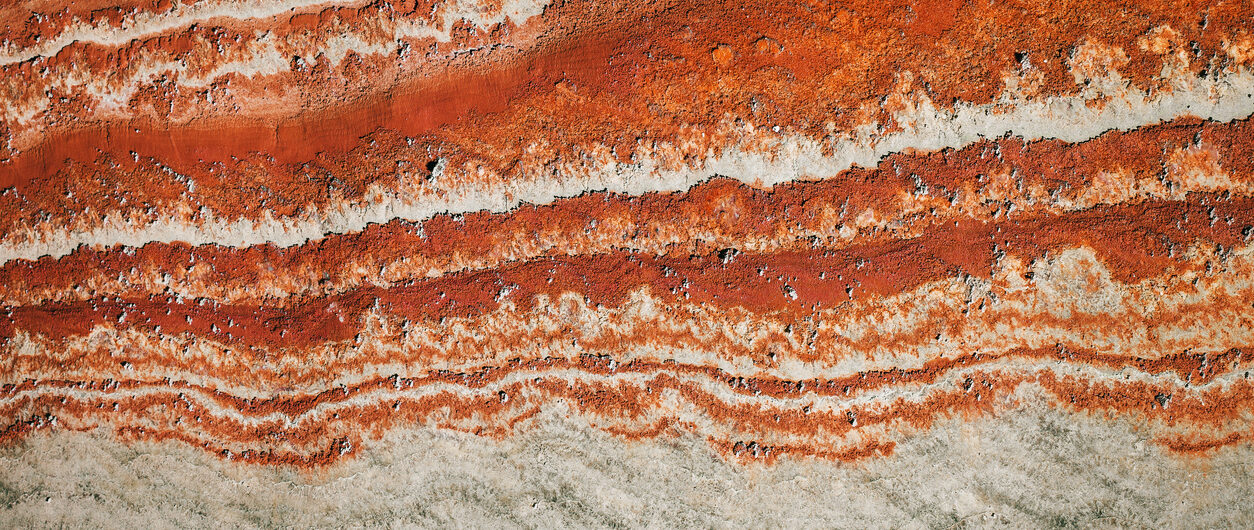
Potash deposits are primarily formed through the evaporation of ancient inland sea waters in arid, hot climates, leading to the crystallization of potassium salts.
Key international potash players are Mosaic, Kali + Salz (K+S) and Nutrien. Outside of the Saskatchewan Basin in Canada, Russia’s Uralkali and Belarus’s Belaruskali are the other key producing regions.
Mid-sized potash developers include Canadian firms Sage Potash and Millennial Potash Corp, which are developing projects in the US and Gabon respectively; and Kore Potash, which is developing a project in the Republic of Congo.
Further reading:
Fertilizer spike adds up to $35/acre for US corn as Iran crisis deepens
Guest article: Food’s fossil reckoning; energy crises are the new normal, and food is next
Guest article: Food’s fossil reckoning; energy crises are the new normal, and food is next