BioScout—an Australian startup behind an AI-powered early warning system alerting farmers to fungal pathogens—has raised a A$6.75 million ($4.8 million) seed round co-led by Demea Sustainable Investment and Astanor.
The round—which was also backed by GrainInnovate, GrainCorp Ventures, Hort Innovation Venture Fund, Artesian, and Division Q—will help the Sydney-based firm boost its presence in Europe and expand its global network of sensors from 250 to 1,000 units by 2029.
“BioScout is one of those rare companies that solves a massive, urgent problem, whilst also building a unique and powerful dataset that amplifies the impact,” said Astanor partner Harry Biggs.
“Fungal threats are the scariest threats to most farmers, yet farmers remain mostly blind to the threat until it’s too late, so they have to over-spray harmful chemicals or risk catastrophe. BioScout are the first to solve this hard problem with real-time spore-detection, and in the process collating a unique global real-time heat map.”
Why it matters
Right now, says founder and CEO Lewis Collins, PhD, growers typically follow routine preventative spray programs, applying fungicides weekly, fortnightly or monthly rather than waiting for confirmation that a pathogen is present, given that damage can be hard to mitigate once visible signs of infection appear.
“You essentially can’t see it before it’s too late,” Collins told AgFunderNews. “And once you have [detected] it in the crop, that’s when you have to get into really expensive curative fungicides that literally get in the leaf and try and destroy the fungus once it’s inside, which is very difficult to do.”
By the time growers see a lesion, the pathogen may already have completed a reproductive cycle and begun spreading through the crop, he added: “Then you’re in a very expensive chase your tail situation.”
How it works
BioScout is an early warning system designed to identify airborne fungal threats before visible symptoms are observed in the field, says Collins.
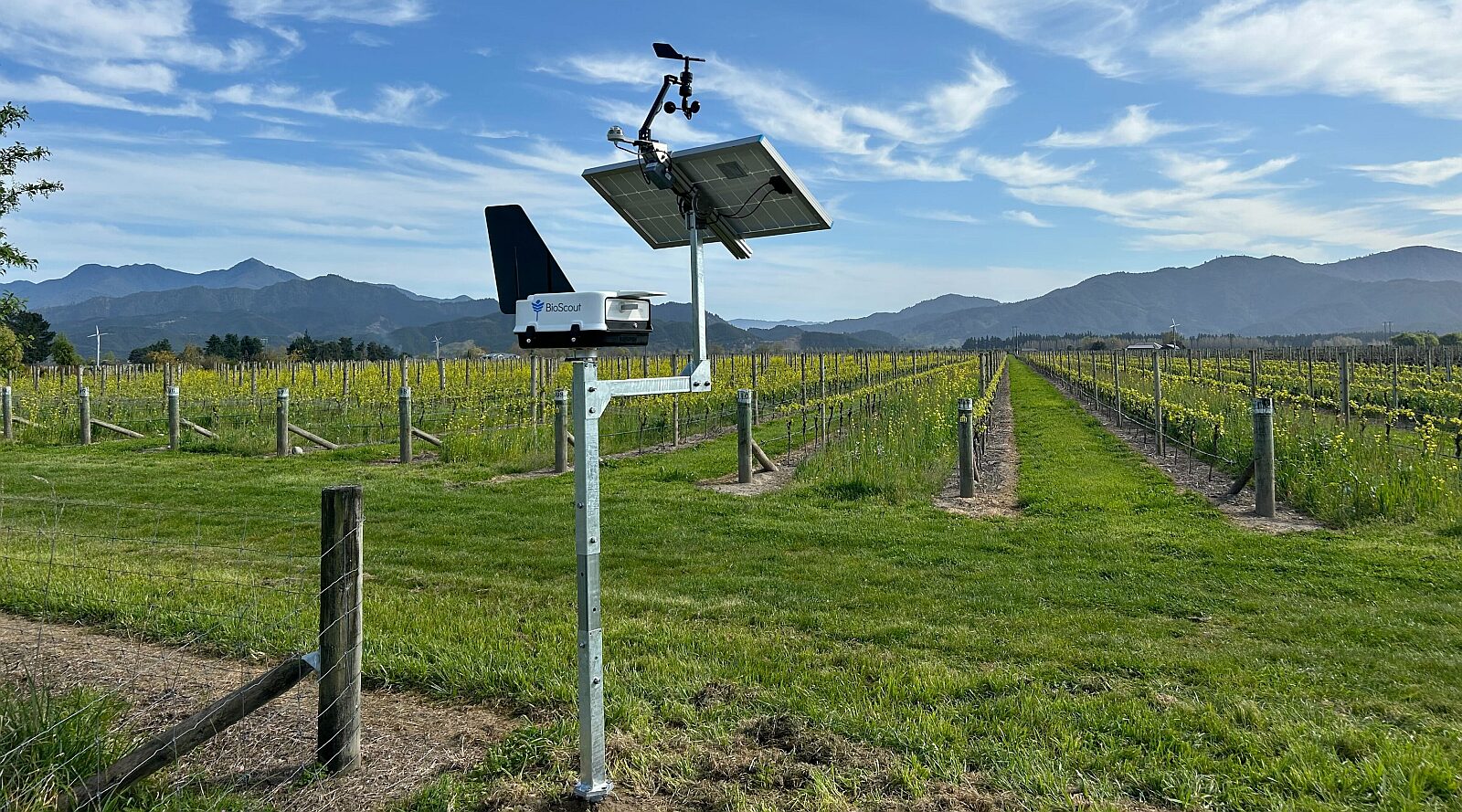
It works by continuously drawing in air using a wind vane and capturing airborne particles including fungal spores on clear adhesive tape. After each sampling period, the tape is automatically positioned beneath a microscope that captures hundreds of high-res images.
These are relayed to BioScout HQ and analyzed using trained AI detection models. The data can then be interpreted alongside environmental conditions including temperature, humidity, atmospheric pressure, rainfall, wind speed and direction. This enables it to estimate infection risk over the following days.
Each sensor monitors 40+ airborne threats from crop-disease spores to pollen and other particulates. Acting on that early signal, rather than spraying to a fixed calendar, can cut growers’ spray costs by up to 50%, which can translate to thousands of dollars per hectare in high-value crops, claimed Collins.
The tech has been validated through genetic testing and morphology, coupled with field trials to establish how spore counts correlate with disease incidence and crop infection.
However, as always with farm-level data, the key is translating the information into actionable insight, said Collins. BioScout does not simply identify whether a pathogen is present, but measures its concentration and interprets changes over time. A brief spike might indicate spores blowing in from another area without successfully infecting the crop. A second rise shortly after may indicate that the pathogen has completed another life cycle locally.
Actionable insights
Customers access the data through a dashboard, but BioScout places greater emphasis on alerts notifying growers when spore levels rise. Growers can also enter their spray programs and assess whether applications are reducing pathogen pressure.
“The bread and butter of what we do is notifications and alerts,” said Collins. “We’ve seen the spore level rise over the next last couple of days: it’s time to look at it.”
The cartridges that collect spores can operate for up to two years without replacement, while the devices are designed to work in isolated broadacre fields with minimal maintenance. BioScout is also adapting the system for greenhouses, where it can use direct power rather than solar.
Sensor density varies significantly by crop and pathogen. In Australian grain-growing regions, BioScout believes devices positioned roughly every 30km may provide useful regional coverage because rust spores can travel vast distances on the wind. Vineyards may require a unit for every 100 hectares because diseases such as downy mildew tend to spread over much shorter distances.
Target crops
Potatoes have emerged as a particularly promising market amid high disease pressure and declining fungicide performance, with deployments in Europe, South Africa, Australia, New Zealand and the US. The company also expects to have around 20–25 systems operating in Brazilian soybeans by the end of the year.
“Potatoes are really exciting right now,” said Collins. “Soybeans in Brazil are a big opportunity because that is a crazy challenging market right now in terms of disease pressure. We’re also talking to people in the US about cyclospora in lettuce, which is a huge issue right now.”
Collins said crop-protection companies have been more receptive to the technology than he initially expected. While BioScout could enable farmers to spray less, chemical suppliers also recognize that habitual overapplication, reduced rates and poorly timed treatments can accelerate resistance.
“They are watching us very closely. I thought they’d hate us when we started because we’re telling farmers to spray less. But actually, these companies know that a lot of farmers are over spraying their chemicals even against their own advice.”
The business case
The business sells each unit for roughly A$15,000 ($10,500), with annual service fees ranging from around $10,000–20,000 ($7,000-$14,000) depending on the level of support. “We’re acting almost as an agronomy service, a pathology service on tap, right, which is a very specialized skill set.”
In vineyards, BioScout has demonstrated that customers can potentially eliminate around half of their routine fungicide treatments, he claimed. The barrier is often not agronomic knowledge, but the risk attached to advising a grower to skip an application without objective data.
“You can cut out about 50% of your sprays. And yes, you could probably do that without BioScout but because you have the data you now have the confidence to make that call.”
In one New Zealand example, he said this equated to savings of almost $500 per hectare for one grower.
BioScout can also provide an insurance function by alerting growers when a fungicide program is not working. Collins cited one vineyard that lost $1 million worth of grapes to botrytis after spore levels continued rising despite repeated sprays.
“One of our customers had a few units with us via a government program and perhaps because of that they weren’t so engaged looking at the data. But when the manager looked through the data with us, he was like, we should have seen that coming. It was really obvious in our data that the spore levels were increasing, they were spraying, but it was just getting worse. Now they are one of our biggest customers.”
Risk management
One of BioScout’s biggest commercial challenges is persuading growers and agronomists to alter established spray programs. Some customers are unwilling to reduce treatments because they want near-total assurance that disease will not affect yield or quality. In those cases, BioScout positions the system less as a spray-reduction tool and more as a form of risk management.
“It would be like not using BioScout would be like not using irrigation sensors [to monitor water levels]. That would be crazy,” said Collins. “It’s taken that long for people realize that spore data could be as essential as water irrigation sensing.”
The technology could also support greater use of biologicals, which generally have narrower application windows than broad-spectrum chemicals and may need to be applied at specific stages in a pathogen’s life cycle.
Tornado or hurricane watch… for crop disease
According to Collins: “The simplest way to describe it is a tornado or hurricane watch, but for crop disease; we see it coming across the region in time to act, rather than after it’s already taken hold.
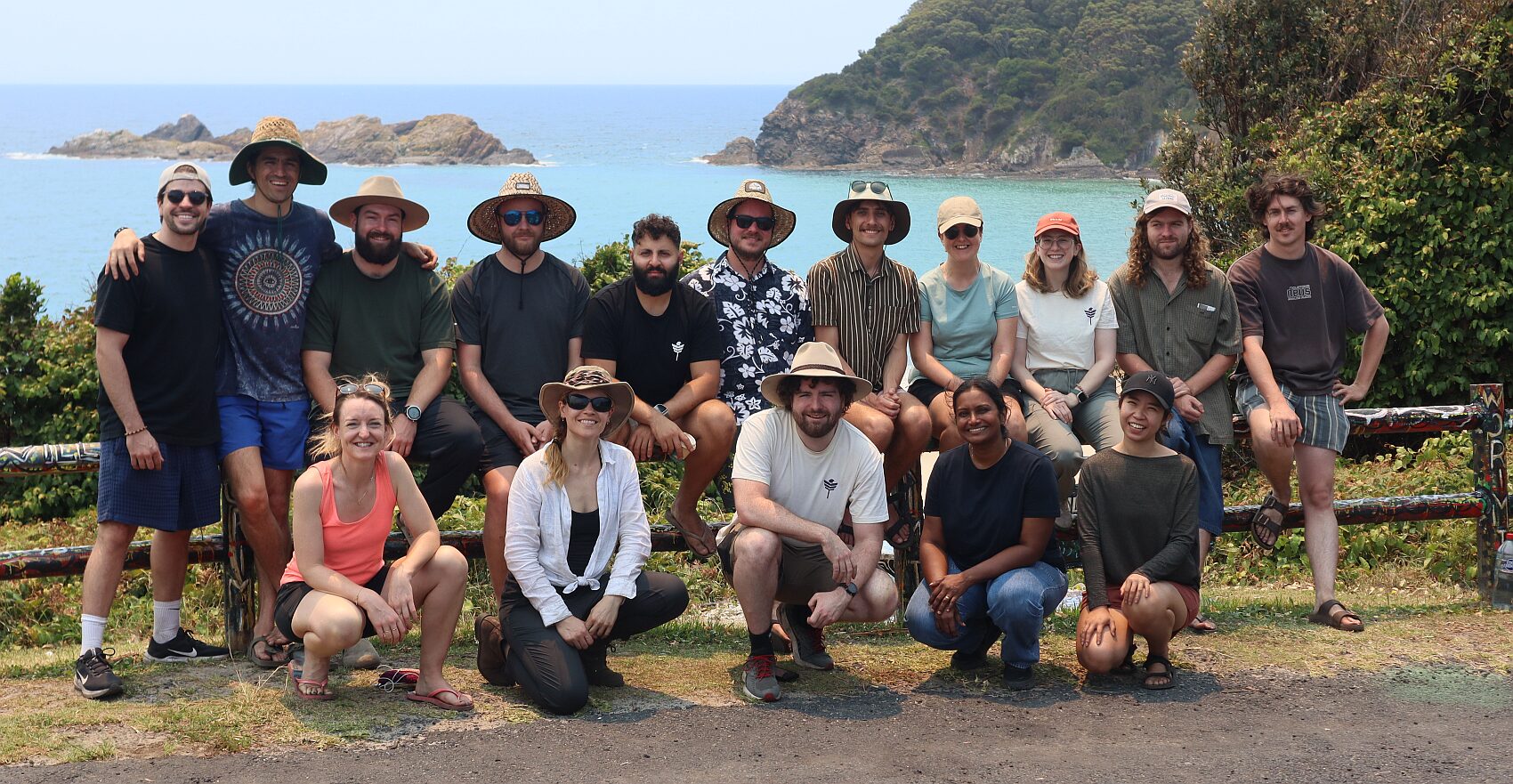
“BioScout humbly started as my PhD at the University of Sydney and is now a multinational company of 30 people operating on five continents. Every one of our sensors is designed and manufactured by a team of Australian scientists and engineers right here in Marrickville, NSW. Their work is now protecting growers across 15 countries, and key Australian industries here at home, every day.”
Today the company uses AI primarily to identify spores in microscope images. However, it is now beginning to explore how it could use AI to couple that with other data on weather, spray programs, field observations and grower notes to reveal the causes of outbreaks and improve recommendations.
Further reading:
Crop Diagnostix launches RNA-based crop health early-warning system
Barnwell Bio raises $6m to bring COVID-era bio-surveillance playbook to poultry barns
Picketa Systems raises $1.5m to bring crop nutrient testing to the field