Kenya, for the umpteenth time, is grappling with a rather familiar challenge of a severe drought instigated by below-average rainfall.
The 2025 short rains between October and December delivered only 30-60% of the long-term average, a catastrophe that has resulted in over two million Kenyans facing worsening food insecurity and causing widespread livestock deaths.
“Drought is a perennial challenge and will worsen due to climate change. Kenya must stop depending on rainfed agriculture to deal with the problem,” says Dr. Joshua Mugendi Njiru, co-founder and director of Kenya-based seedling propagation firm GrowPact Kenya.
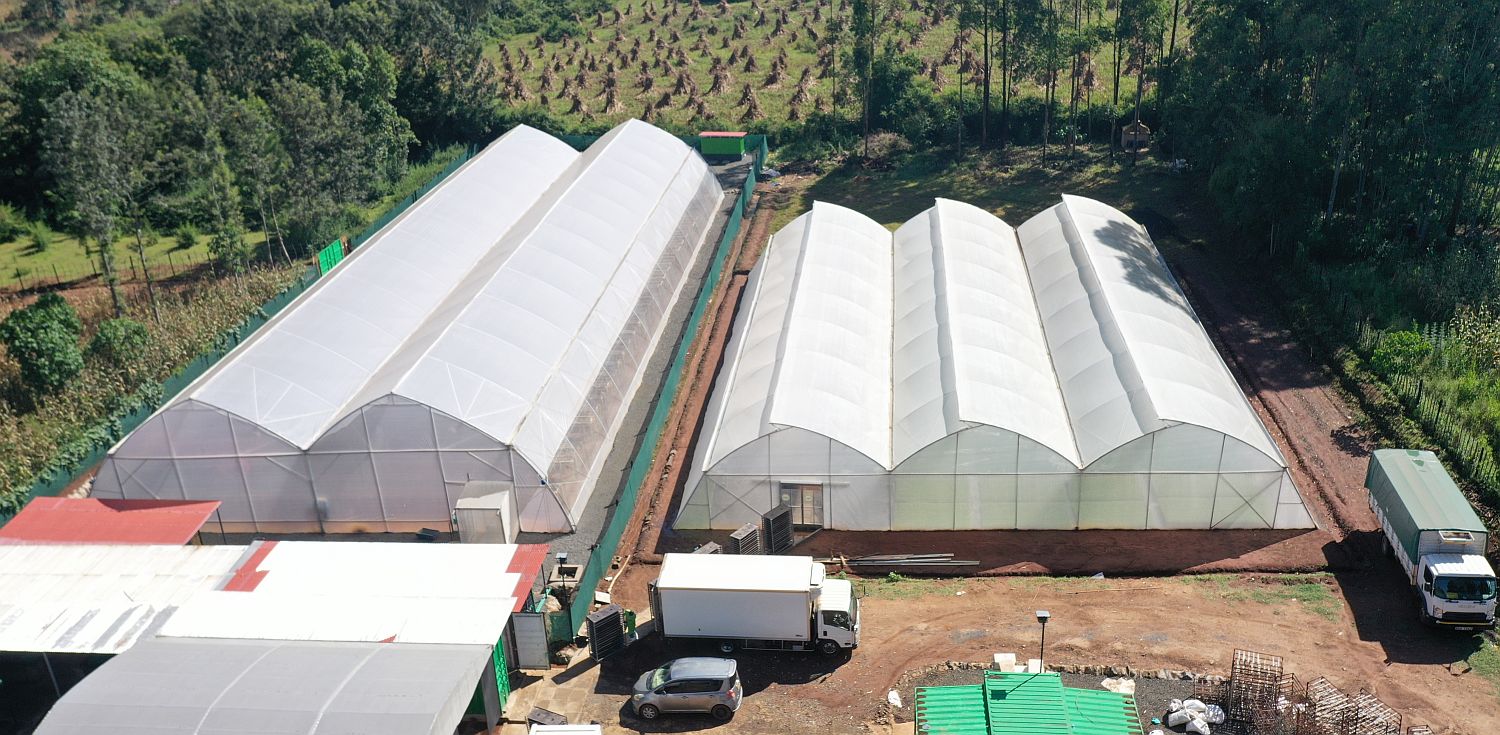
GrowPact, which has it base in Kitale, a region in northwestern Kenya—the food basket of East Africa—is spearheading a paradigm shift in Kenya’s agricultural practices by helping farmers adopt greenhouse farming, hybrid seeds and tech innovations in the quest to tackle food insecurity.
Access to quality and affordable seeds and seedlings has long been a challenge in Kenya, as most varieties of hybrid seeds are produced by multinationals, putting them out of reach for many smallholders.
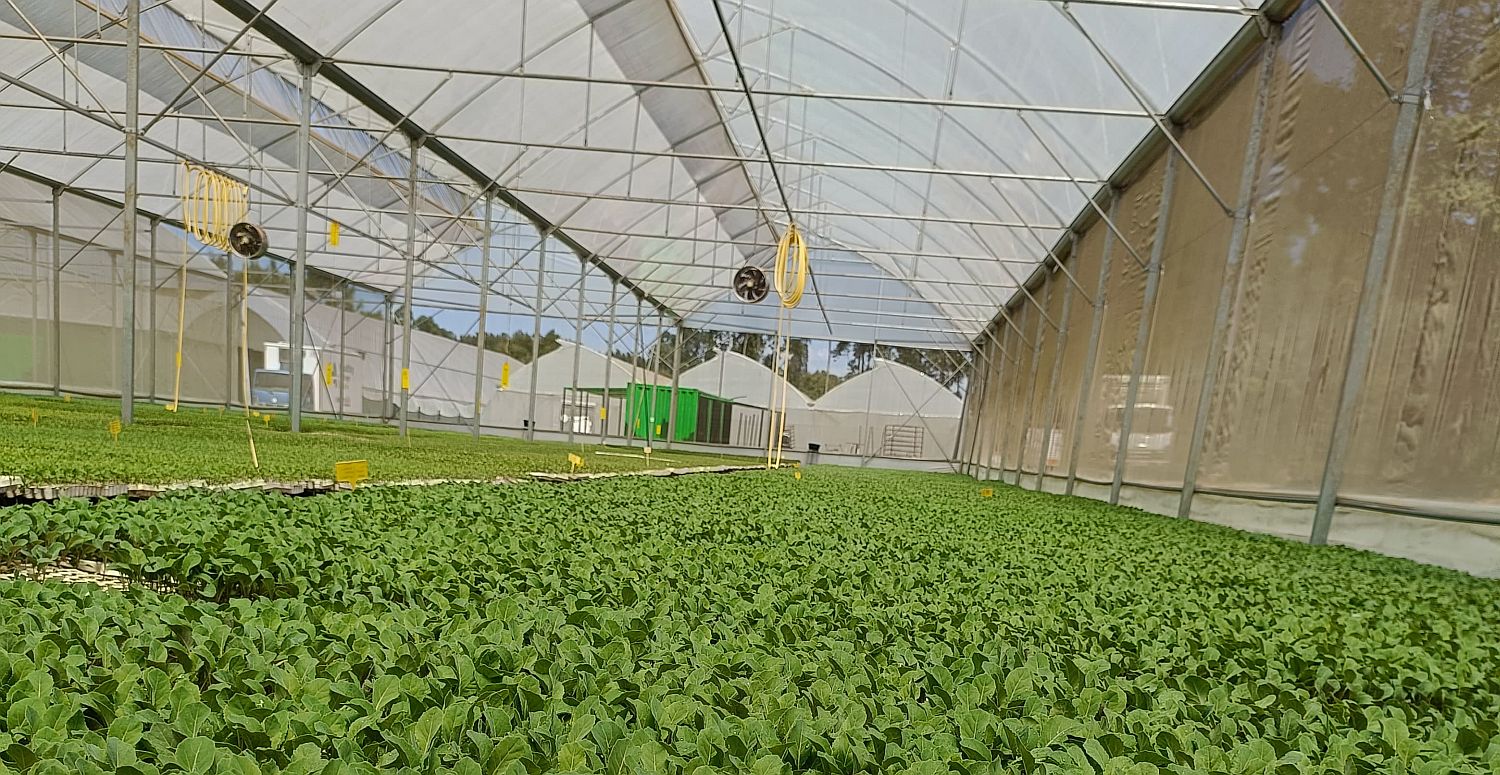
To stop farmers using low yielding open pollinated seed varieties, GrowPact serves as the link between the seed companies and farmers by buying hybrid seeds that are used to propagate seedlings that are sold to farmers at affordable prices.
On a weekly basis, it produces about 800,000 seedlings and has managed to build a network of over 20,000 farmers for whom horticulture has become a profitable venture. Notably, most farmers working with GrowPact are into greenhouse farming, something that guarantees their returns and contributes to food security.
Turning hybrid seeds into affordable seedlings for smallholders
For Joshua, who founded GrowPact with his partner Mercy in 2016, the desire to confront the food insecurity challenge has been long-standing.
Having graduated with a degree in microbiology, he went on to do a master’s in biotechnology majoring in genetic engineering and molecular biology. This allowed him to carry out extensive research on orphaned crops such as sweet potato, cassava, and yam. Mainly cultivated by peasant farmers and women, these crops have witnessed a significant decline in value despite their critical role in the food chain.
The in turn informed his decision to focus on cassava research for his doctorate while working at the International Institute of Tropical Agriculture (IITA).
While at IITA, he got to interact with Kenya’s disjointed seed systems that had forced smallholder farmers to use open pollinated varieties of seed that gave them low yields, the ripple effects of which was meagre earnings and unending cycles of poverty.
“I saw an opportunity to improve the lives of farmers by supplying them with seedlings that offer high yields, are of better quality, are less vulnerable to diseases and whose returns could be over 500-fold,” he explains.
Viscon Group, a Dutch company that provides machine automation, software and integrated solutions for agriculture, became a partner of GrowPact in the Kenyan operation, while Dutch impact investor Truvalu came on board through a debt and equity investment.
Broadening the offer beyond seedlings
Though its core mission is seedling production, GrowPact has since expanded its scope of services by offering farmers inputs including fertilizer, chemicals, and drip lines.
It has also established a tissue culture lab undertaking cutting edge research on crops including banana, potato, and sweet potato and a breeding division for bulking and multiplying of hybrid seeds for specific crops.
Another critical line of business is the company’s demo farms and academy that offer training programs and agronomic support to farmers, enabling them to adopt modern and sustainable farming practices.
“Ours is a journey of transformation and empowerment,” explains Joshua, adding that GrowPact has developed a five-year strategic plan dubbed GrowPact 2030.
‘Exponential organic growth’
One goal includes reaching at least 100,000 farmers and producing over 100 million seeds by 2030.
Besides expanding to more parts of Kenya, GrowPact also wants to dive deep into market linkages by working with off takers, processors and manufacturers to ensure farmers have a guaranteed market for their produce. The company has already built a pack house in its base in Kitale that is awaiting accreditation to become an aggregator.
To achieve this, GrowPact needs a new capital injection to the tune of $3 million in the medium term, says Joshua. “We are achieving exponential organic growth and we are looking for new partners for our next phase.”
From Kitale to Ghana: taking the model across Africa
Before embarking on fundraising, the company recently undertook a restructuring of its shareholding that saw the exit of Truvalu, which sold its stake to a private Dutch family office that has been a long-term co-investor in GrowPact.
Truvalu contends the timing of the exit was perfect and that the returns, both on investment and on impacts, it got from GrowPact would make other investors jealous. More important, however, is that the exit was in line with GrowPact’s plans to bring on board new investors who are best suited for its growth trajectory.
“GrowPact needs a partner that can satisfy its thirst for growth while balancing operational excellence and efficiency,” says Truvalu Kenya managing director Peter Owaga.
He adds that while exits for investors tend to be a complicated and challenging affair owing to limited avenues, including under-developed capital markets, Truvalu had a seamless process owing to the fact that it sold its stake to an existing co-investor.
Though Truvalu has exited GrowPact Kenya, it remains a partner in the newly formed GrowPact Global.
The new entity incorporates Truvalu, GrowPact Kenya, Viscon Group and other technical partners, and intends to replicate the Kenyan seedlings propagation success story in other African countries, starting with Ghana.