How can agrifoodtech startups avoid getting stuck in a cycle of promising pilot projects with large corporates that never translate into commercial partnerships?
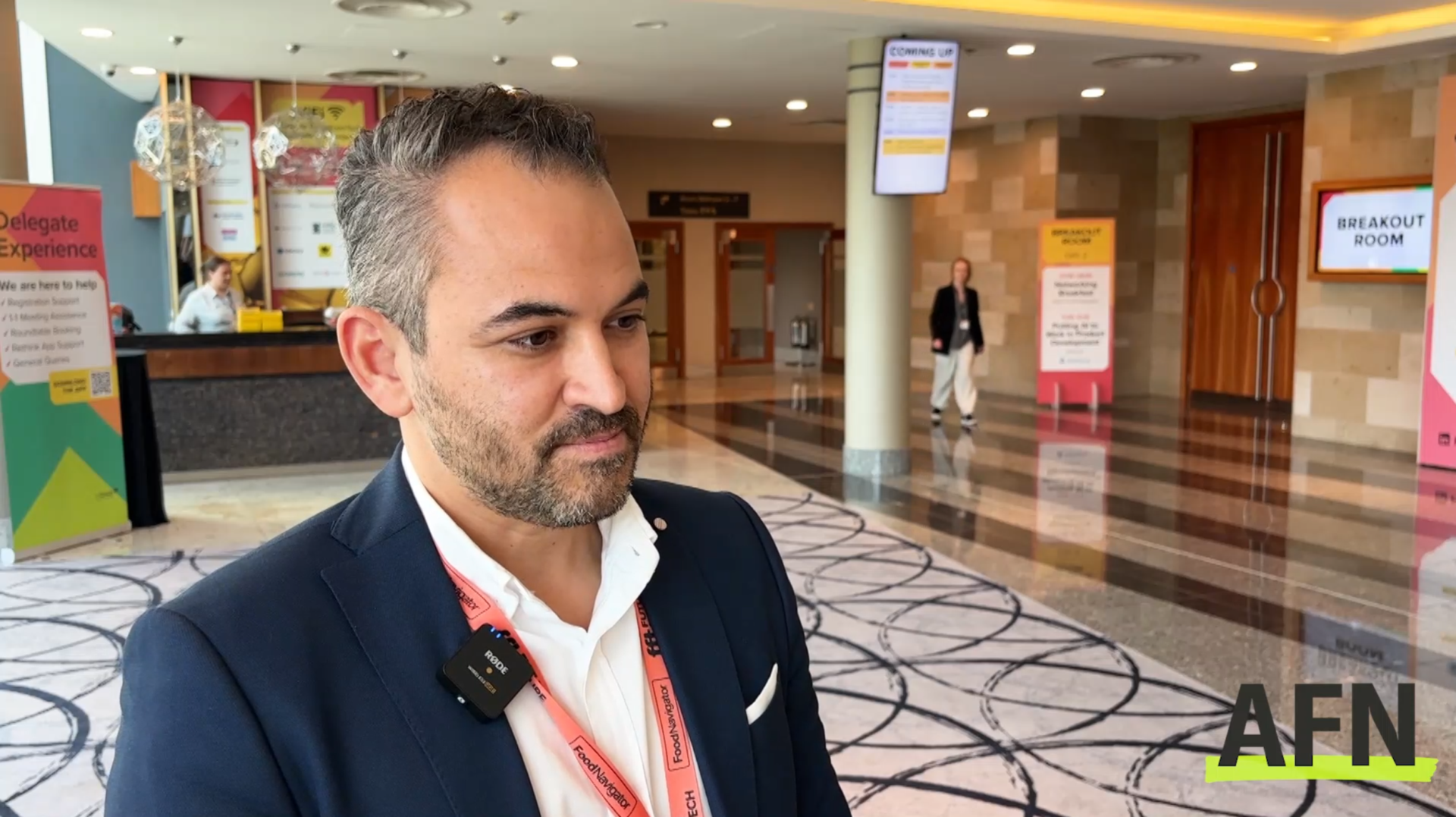
Clearly defined objectives, agreed criteria for success, and an internal champion who believes in the strategic value of the technology are key ingredients, says Mustafa Safa Özen (MSO), global external innovation at Cargill, who caught up with AgFunderNews (AFN) to discuss the firm’s approach to external innovation.
AFN: What external technologies are you personally most interested in right now?
MSO: Precision fermentation, of course, is a very interesting technology across many products, and also in the sweetness space. Sweet proteins are very interesting and also complementary to out portfolio if we can find the right evidence to support them, and [we’re also exploring] all sorts of other proteins. Novel fibers is another interesting technology space we’re looking at.
AFN: Are you doing much proactive tech scouting? Are you getting a lot of inbound?
MSO: We have our internal tools and databases based on startups and based on our discussions all over the world from different colleagues.
Also, we are doing a lot of proactive scouting work with our vendors, with the right defined targets in terms of technology maturity or commercial maturity. Also, we are leveraging our ecosystem partners including accelerators such as EIT Food, so we have access through their accelerator network to hundreds of startups. So if there is a specific challenge and we we need to identify a [relevant] startup, we can use all these tools, including our colleagues all over the world.
AFN: Where are you based?
MSO: I started my career in the Istanbul office in Turkey, as a customer-facing person, but today I’m based in the north of France, while other colleagues in external innovation are all over the world.
AFN: Large corporates are sometimes criticized for running pilots that go nowhere while startups are burning time and cash, waiting for decisions. How do you avoid that kind of pilot purgatory?
MSO: It’s a very good question. I think the main thing is defining the need very specifically [at the start of a collaboration] and really defining success criteria, because that can be different for each partner. Finding a sponsor, having an internal champion in the corporate who believes that this technology or this new ingredient will be a strategic technology for us is also really important.
AFN: Can you give me an example of where an external collaboration has moved beyond the pilot or collaboration stage and created some meaningful commercial value?
MSO: I’m really proud of my colleagues who initiated our collaboration with Voyage Foods. We believe that there are emerging technologies, emerging needs in different markets, and we are investing in this relationship with Voyage Foods to create a commercial partnership on alternative cocoa and chocolate products. So Voyage Foods is bringing technologies, expertise, and IP, and Cargill is bringing application expertise, regulatory expertise, go-to-market channels, and customer relationships [to the collaboration].
AFN: Any other examples of successful collaborations?
MSO: We have a joint venture [“Avansya“] with dsm-firmenich focusing on fermentation-derived sweetness. Our first successful launch was our Eversweet steviol glycoside [a sweet component found in the stevia leaf that Avansya makes via yeast fermentation]. They [dsm-firmenich] brought strain development and fermentation expertise and Cargill brought fermentation scale, applications expertise, and of course regulatory reach all over the world.
AFN: How is AI impacting the innovation process at Cargill?
MSO: We’re using it in sensory science to accelerate the development and reformulation process. We are also constantly exploring new ingredient discovery tools that can help us find the next molecules or ingredients with the right criteria.
AFN: Is AI also used to optimize your bioprocesses?
MSO: AI is very helpful in process development and process modeling, improving efficiencies and finding the right parameters for a specific process.
AFN: And what about consumer insights?
MSO: We leverage a lot of AI in consumer data and consumer insights gathering, and we are now putting sensory science and consumer data together to make quicker and more effective decisions.
Further reading:
🎥 How does front end innovation work at Givaudan? In conversation with Alexandre Bastos
🎥 Inside Novonesis’ playbook for external innovation in biotech
🎥 Inside Tate & Lyle’s open innovation model: In conversation with Karen du Plessis
🎥 Inside Danone’s open innovation model: From AI to Ozempic-era nutrition