We’ve all heard of agritech, but what is agrihealth, and can it become a viable investment category?
For Antony Yousefian, managing partner at UK-based VC firm The First Thirty, the premise starts with a simple question: if “you are what you eat,” shouldn’t we also be asking, “What did your food eat?”
The investment thesis is built around the idea that falling costs in genomics, sensing and AI will make it increasingly possible to connect data across soil, plants, and animals to human health, creating new opportunities for companies that can measure, interpret and move that information through the food system.
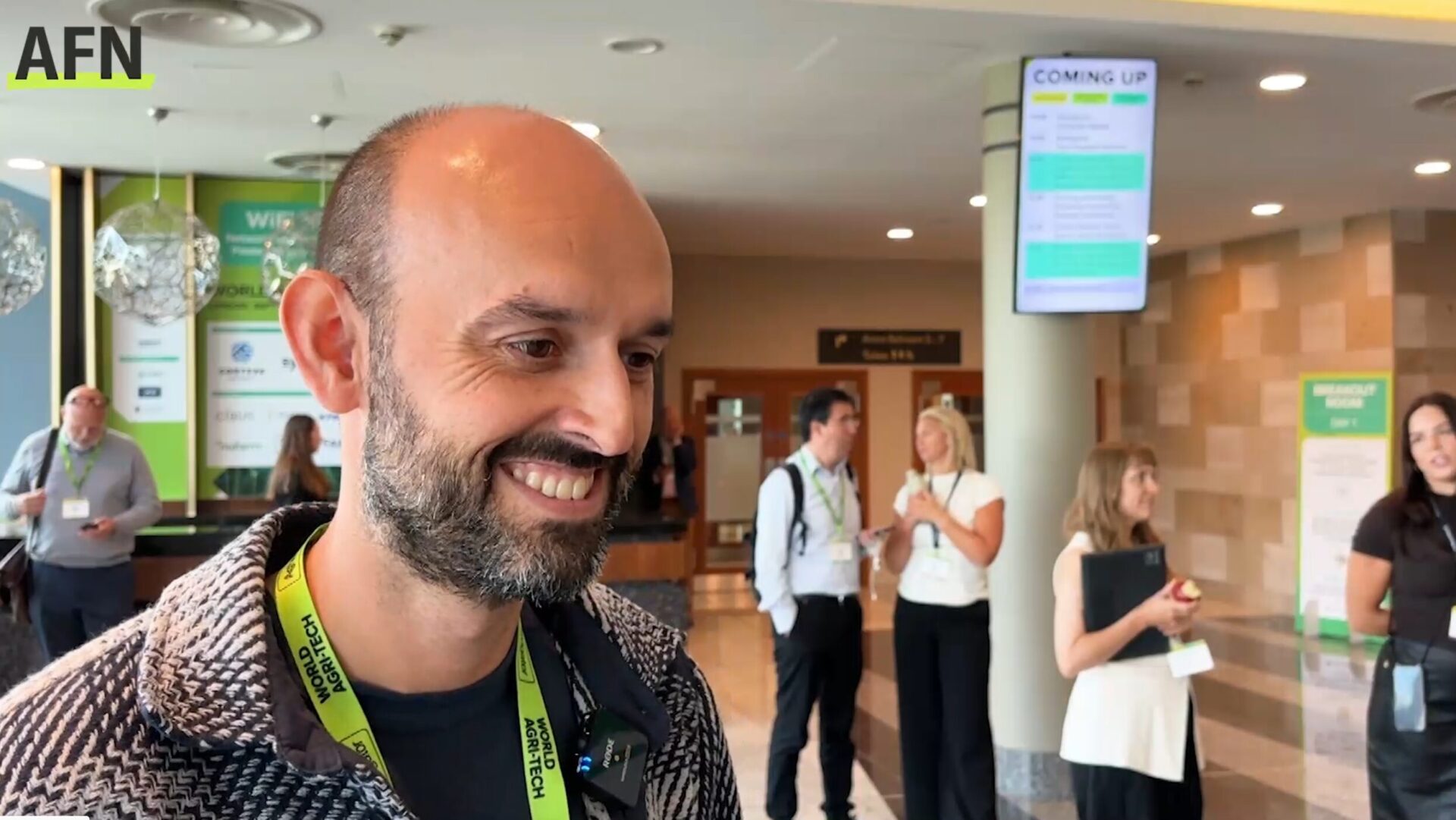
AgFunderNews (AFN) caught up with Yousefian (AY) at the World Agri-Tech Innovation Summit in London to discuss the emerging agrihealth stack and where the investment and exit opportunities might lie.
AFN: You’ve said that the next phase of health-relevant food systems doesn’t begin in the kitchen; it begins in the first 30cm of soil. What does that mean?
AY: We all understand that you are what you eat, and so what we’re saying is we should also be asking the question: What did your food eat? And then that takes you to the ultimate question of what’s in the first 30 centimeters of soil. Hence why we’re called The First Thirty, because that’s going to become the ultimate query that all of us and our future agentic friends will be asking about our food system.
AFN: We know farming practices affect soil biology, which can affect food composition, which can in turn affect human health. But how clear, consistent, and provable are the links between these things?
AY: I think what the problem has been to date has been the cost of measuring biology, the cost of understanding the soil and all those interactions and the plant interactions and microbe interactions. It’s still expensive, but what we’re about to see now is a real new flow of data connecting soil, plant, animal, and human health. You’re seeing a drop in the cost of genetics, sensing, intelligence that’s going to make these connections much more visible in real time.
AFN: Does it matter if a regeneratively farmed carrot has 10% more of a micronutrient if some kids aren’t eating carrots at all? Isn’t this a bit like precision health where you’re appealing to a handful of affluent people who are already dialed into their own health?
AY: One of the biggest issues [historically] has been the cost of intelligence, but I think now 50% of us have wearables, so it is actually quite democratized. Now a significant part of Apple’s earnings are from the Apple Watch. What’s happened is intelligence has gone to zero with AI, and that’s the big difference. Now it’s really democratized. So I think it [all this data and insight] is going to be really accessible.
AFN: Can you provide a few examples of the different layers in an agrihealth stack and where you would invest?
AY: We love businesses that are gathering biological intelligence on a regular basis. There’s like IoT at the edge, edge sensing, genomics… and the businesses that have a real competitive advantage are both gathering that data and quickly translating it into recommendations.
You need to be able to move the data through the supply chain. So we’re seeing [portfolio] companies doing this from Edacious to Cerve, which is deploying agentic AI into food businesses.
We think with this model that new food giants will emerge, and you’ll see the emergence of Apple Health feeding into food. We’ve seen it with Amazon and Google is also very much involved in this space. So I think hopefully at this conference we’re going to see emergence of new players because to truly improve people’s health, the foundation is their food and the agricultural system.
AFN: So what does a focus on agrihealth mean in terms of the kind of LPs you can attract and potential exits for your portfolio companies?
AY: With LPs, we’re seeing a range as what we’re talking about is a disruptive, different kind of approach. But it’s not a hard leap for someone who cares about health to say you should care about your food, so an allocation into agtech is actually not too big of a leap [for a health or tech company]. Them we also have engagement from food companies, some of whom are stagnating and need a solution.
As for exits [for TFT portfolio companies], we’re investing in the data layer and what is quite clear right now is that the models are only as good as their data. OpenAI has already started acquiring biology companies and biotech businesses, so I think we’ll see more of that.
AFN: You’ve said that you back fewer companies, and “back them because they make each other more valuable.” Can you give me an example?
AY: We’ve invested in a soil health monitoring company called Mapana which in theory could understand the quality of the crop that goes into the animal. And then we invested in Antler Bio [which uses RNA/gene-expression analysis to tell dairy farmers how management, feed and housing are affecting cows’ health and milk yields].
So they could validate that improved nutrition at the crop level is actually driving improvements in animal health through to Edacious, which measures the actual outcomes [of improved soil, crop, and animal health] in the form of better milk and meat. Then the production system [that delivered those benefits] can get paid more because it’s delivering better quality. So those three companies could slot into any food business, for example.
AFN: If you want to significantly change the nutritional profile of staple crops, wouldn’t an agrihealth fund be better off investing in plant breeding companies versus, say, regen ag companies?
AY: Yes I think totally that [could be] part of our stack, that is a gap in our portfolio, and we’re actively looking to invest into that space.
AFN: You’ve mentioned Edacious. What does it do, and how does it fit into your agrihealth thesis?
AY: Edacious offers a nutrient measurement, food quality measurement and verification service for the industry. Historically, this has always been a very expensive lab service. Edacious has developed incredible technologies to really collapse that cost, which really opens the door for anyone to differentiate their crops, grains, milk, and meats, in the marketplace.
Edacious was able to really show what’s in the product, and also allow you to benchmark and see how you compare to what’s already out there, which I think is going to be the big. Food benchmarking could be massive. I don’t need a certification because I can now see how does this [milk/meat/produce] look relative to what’s out there? Yes, that means a massive increase in complexity, but I’m going to use my shopping agent to [navigate] that.
It’s already happening from the [shopping] basket being decided by my [AI] assistant. Edacious is almost like that verification layer that looks at that dataset and goes, “Oh, you’re making omega-3 claims. You’re making vitamin C claims.” And it could say, “Oh, I’ve seen the report from Edacious, and I have a high confidence level that that [this claim] is true.”
Then you start seeing outcomes as a service. That is the business model we’re quite convinced about. It’s going to win in this market and be quite disruptive.
👉 Read more interviews in our Investor Q&A series.