ESG-centric investment was always bound to focus on food and agriculture, says Dr. David Buckeridge, a longtime operator, investor, and advisor in agribusiness and life sciences.
We saw this play out in 2021—often dubbed “the year of ESG investing“—when investors pumped record levels of capital into alt meat, indoor ag, and other food- and farming-related industries.
“There was a big drive on the ESG agenda—both in venture and in private equity—to see people’s institutional capital go to sustainable uses,” he explains, adding that on a macro level, the potential of food and ag investments here was undeniable.
With more than three decades spent with agriculture and life sciences companies, Buckeridge, who is now chair of the National Institute of Agricultural Botany in the UK, has carefully tracked the events of the last several years in agrifoodtech investment.
Hindsight reveals a lot of overlooked details, he noted in a recent conversation with AgFunderNews. And while it’s easy to say that in 2025, it’s worthwhile to put ourselves in the shoes of the investors to understand “the urgency” they’re facing.
As always, the past offers some useful lessons for agrifoodtech startups trying to raise money in this far more cautious environment.
How did we get here?
Good old-fashioned FOMO’s to blame for some of the hype in 2021. As Buckeridge notes, “When capital goes through these cycles, there’s a real urgency for money to get to work.”
But FOMO begot a lower level of scrutiny among investors at that time, which in turn led to some critical details getting overlooked.
Some investors overestimated agrifood technologies’ abilities early on, and based investments on partially or entirely novel go-to-market strategies.
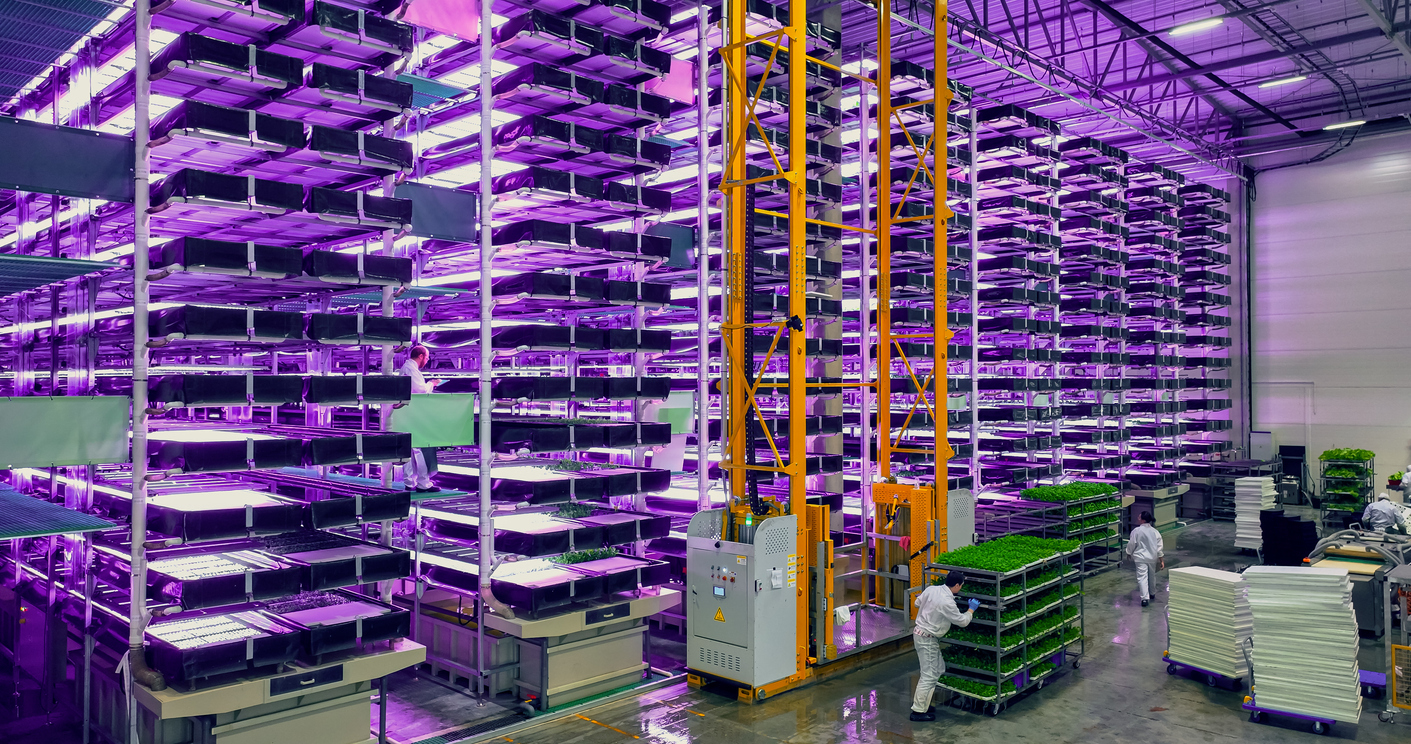
“Technology has to work and be durable, often in field conditions,” says Buckeridge. “Even in CE [controlled environment] ag there is a lot more variability of conditions than in other high-tech settings.”
For example, despite claims about pest-free, clean-room-type environments, more than one indoor ag operation had its business severely impacted by disease.
Adoption rates, too, were overestimated, particularly upstream, where farming and/or lab-based technologies inherently require longer timeframes.
“Ag markets generally cycle annually, across multiyear rotations or livestock cycles, and even longer in permanent cropping settings,” Buckeridge explains. “This is all compounded by the fact that experience is gathered in an increasingly variable climatic environment where fragile product benefits are easily exposed.”
Just as you can lose an entire indoor crop to listeria, you can lose a whole year by bad weather in the field. “That can materially alter the journey and cash burn for an investor.”
Meanwhile, “the value proposition to the planet has often exceeded the value proposition to the customer,” he adds. “These concepts are exciting for society, but capital markets are unforgiving, and sometimes, the lack of a sound business model has left companies exposed.”
Consider regenerative agriculture: “You read stories about a farmer that [transitioned to] regen, and seemingly miraculously, all the butterflies returned and the birds were singing,” says Buckeridge.
Being both a biologist and a farmer, he knows a thing or two about the actual pace of nature.
“It moves incredibly slowly. Soils move incredibly slowly. Even if you were doing all these wonderful new things, you would certainly not get the [ideal] outcome within two years, probably five years. You might also see that outcome miraculously just reverse on you.”

Who’s to blame?
Given all this, it’s temping to want to heap the blame for the current market correction squarely at the feet of investors. Buckeridge cautions against being “overly skeptical” about agrifoodtech moving forward, however.
“These investments were made from pools of capital designated to achieve high returns, and with this comes risk,” he says.
“In many cases, individual companies have significant risks, but they are part of a portfolio constructed to be balanced, creating overall returns at the targeted MOIC [multiple on invested capital] and IRR [internal rate of return].”
“Fund construction judgment is a critically important skill of these investment fund committees, and so judging them on a single company is not necessarily logical from the investor’s perspective.”
Nor is it logical to be shocked by the so-called failures, he adds.
“Things don’t always work. That’s why it’s called venture capital and attracts the IRR that it can attract. Things should fail in the journey. Otherwise people aren’t taking enough risk with the capital for the asset allocation that they’ve been given.”
What startups should do now
In today’s far more cautious environment, startups seeking capital would do well to remember a number of do’s and don’ts, says Buckeridge.
First among them, start early. “Money that could have been raised in weeks three years ago may now take a year. Therefore, you need to determine early enough when you will need to raise capital to take advantage of opportunities.”
Thoroughly researching would-be investors is also a must. “It’s also about pitching to investors who are highly likely to have an interest in what you are saying,” he notes, adding that he frequently sees early-stage startups “spending a lot of time wooing investors who are never going to write them a check.”
For example, a large investment fund with a proven track record in agtech might look like a key target. But if that firm’s typical investment size is $10 million, an early-stage startup raising $3 million total (from multiple investors) likely only needs $500,000 from that investor to get started. Big funds can’t resource an investment that small; they need to have their teams working on bigger pools of capital than that.
“These funds will undoubtedly be interested in your story, and it’s excellent investor relations for a few years down the line, particularly if you’re planning to pursue Series A or Series B rounds in future,” says Buckeridge.
As far as that pitching goes, startups should bear in mind these points:
Add value to investors’ capital. “Try to identify clear value inflection points that can happen in your journey to increase certainty and take risk off the table. With early-stage capital, you will need a clear vision of where you are heading, but it’s highly likely your next stage will be to scale with further follow-on capital, not to exit.”
Have an ambitious vision. More importantly, show the path to achieving that vision. “Investors see that as a mature assessment of your approach.”
Spend real quality time on a pitch deck. Make it clear and concise, and it must convey your value proposition and USP (unique selling proposition), says Buckeridge.
Test-drive the pitch deck on as many people as possible. “Don’t ask cheerleaders; ask people who will be honest with you and who possess an opinion worth having. How much money do you really need, and what’s it for? Investors like people who are clear about their sources and uses: how much money do I need, and what are the three things I’m going to use that money for?”
Expect to be distracted from your business (and expect to kiss a lot of frogs). “Especially in the current environment, fundraising can take a CEO out of the business for an entire year. You must stay positive and confident. Ask for constructive feedback after every meeting and incorporate it to better answer and manage objections.”
Consider an advisor. Many early-stage fundings try to operate without an advisor, says Buckeridge. “There is a huge amount of detail to deal with, and it may be details where you lack experience. Fundraising will undoubtedly take you away from what you do best and know most about: running your company.”
Advisors aren’t cheap, but then again, you only get one shot when you first engage with an investor.
“Make sure it’s your best one,” says Buckeridge.
“Even in a highly discriminatory environment like the one we’re in now, it’s not impossible to raise capital if you’re really professional, have a very focused and clear story, and your value proposition is crystal clear and compelling.”
Dr. Buckeridge will host a series of investment pitches at this year’s Focus on Finance event hosted by agritech innovation network Agri-TechE. Join him as well as AgFunderNews managing editor Louisa Burwood-Taylor on September 11, 2025 in Cambridge, UK.