UK-based startup The Bland Company has raised $2.67 million to scale tech to transform plant proteins from ag side streams into highly functional soluble proteins that can replace eggs in multiple applications.
The pre-seed round was led by Initialized Capital alongside Entrepreneur First, Transpose Platform, Behind Genius Ventures, Alumni Ventures, and Vento.
“Functional proteins are a massive supply-chain bottleneck, and whoever builds the replacement becomes the backbone of modern food manufacturing,” says Initialized Capital partner Zoe Perret.
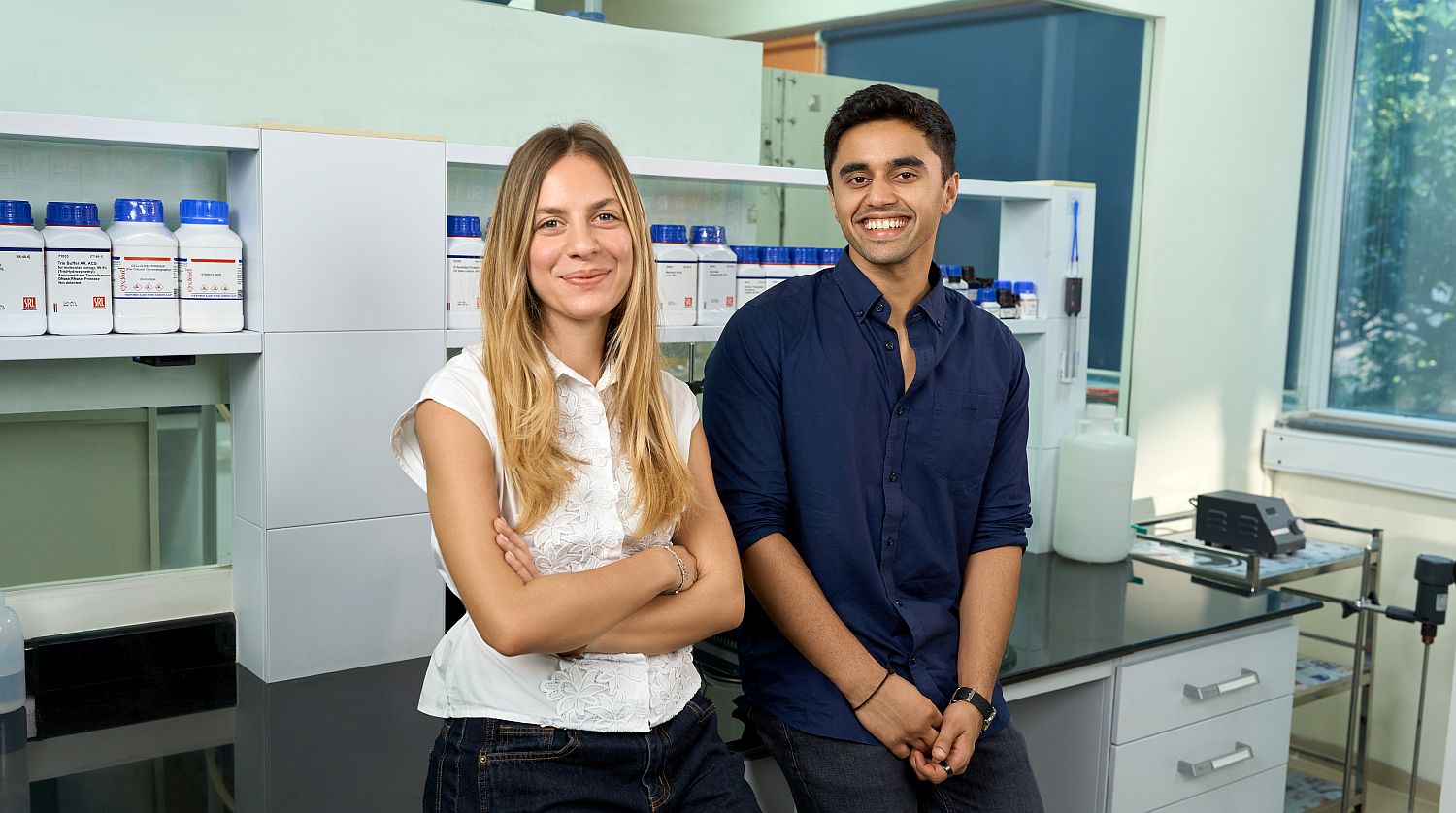
“[Cofounders] Yash [Khandelwal] and Micol [Hafez] have paired real scientific rigor with a platform that’s already surpassing egg-white performance and hitting the economics manufacturers actually buy. That combination is why commercial interest is moving fast and why this is such a clear infrastructure play.”
The egg replacement challenge
While several companies offer egg alternatives, no one has really cracked the code as yet, with egg proteins from precision fermentation coming with high capex and opex, Rubisco-based solutions requiring costly downstream processing tech, and mung-bean-based options working better in scrambled egg alternatives than, say, baked goods.
Other solutions, meanwhile, require firms to use a cocktail of ingredients including starches and hydrocolloids along with plant proteins to achieve the desired functionality, says The Bland Company cofounder Yash Khandelwal.
“Existing solutions either lack performance or come at a price point that blocks significant scale.”
But demand continues to grow, he says. “Eggs are a procurement nightmare. Prices swing wildly due to avian flu outbreaks, cage-free regulation rollouts, demand seasonality, climate shocks, and feed costs. In the past 18 months alone, prices have fluctuated by 2–3x, forcing manufacturers to constantly reformulate and re-forecast.”
Using a proprietary biochemical process, The Bland Company can transform agricultural side streams into highly functional proteins without requiring novel equipment, claims Khandelwal, a biochemist who teamed up with fellow biochemist Micol Hafez in 2024 to launch the business.
According to Khandelwal, who has started trials with large CPG companies in the US and Europe to replace eggs in baked goods and other applications, The Bland Co’s platform has three key advantages:
- Multi-functionality: Its proteins are highly soluble, and can foam, bind and emulsify
- Cost efficiency: It can plug into existing infrastructure
- Feedstock flexibility: Its platform is feedstock agnostic
Plug and play
Plant-derived proteins to replace eggs clearly make the most sense from a cost perspective, says Khandelwal. “But they don’t have the right protein structure. What we’ve been working on is cutting-edge protein science derived methods to functionalize these proteins and non-protein compounds that are available in abundant plant raw materials. If we could get the emulsification, foaming, binding, and solubility from the proteins, we can limit the number of other ingredient solutions that formulators need to replace eggs.”
He adds: “I can’t go into too much detail because we’re going through a patent filing process, but we’re working on a couple of different side streams with large agri producers, some from the byproduct of rice production, some from the byproduct of pasta production.
“These are companies producing tens or hundreds of thousands of tons of these side streams, and they contain quite a lot of protein, which in its original state, doesn’t function that well. But just by doing some smart chemistry, we can really boost and amplify the function of these ingredients quite significantly. So we’ve seen 3-4x increases in solubility, and a significant boost in foaming and emulsification, so it’s very exciting.”
Asked whether it is a chemical, mechanical, or enzymatic process, Khandelwal, says: “It’s a clean label process that can plug and play into existing plant protein infrastructure. So depending on the ingredient, it might be chemistry or a combination of physics and chemistry to make these proteins much more functional.”
The business model
The Bland Company is a protein science company with a functionalization platform, says Khandelwal. “Upstream, we work closely with agri-commodity producers or finished goods producers who have side streams that are of interest. Downstream, we’ll be selling ingredients b2b either through ingredient distributors or directly to CPGs.”
For food and ag companies, he says, “Many of these side streams are just a cost center right now. We can help them create bio refineries to create multiple revenue streams.”
The Bland Company is talking to consultants to understand how the proteins might be regulated, he says, noting that the source materials are all familiar to the food industry. “The goal is to build a library of proteins that can solve different challenges.”
As for raising money, it wasn’t easy, but investors all recognize that The Bland Company is trying to solve a real pain point for the food industry, says Khandelwal.
“The question then is, can you do it, and is there a clear path to cost parity [with eggs]? But at worst we should be price competitive, and at best, undercutting [eggs] by a significant amount.”