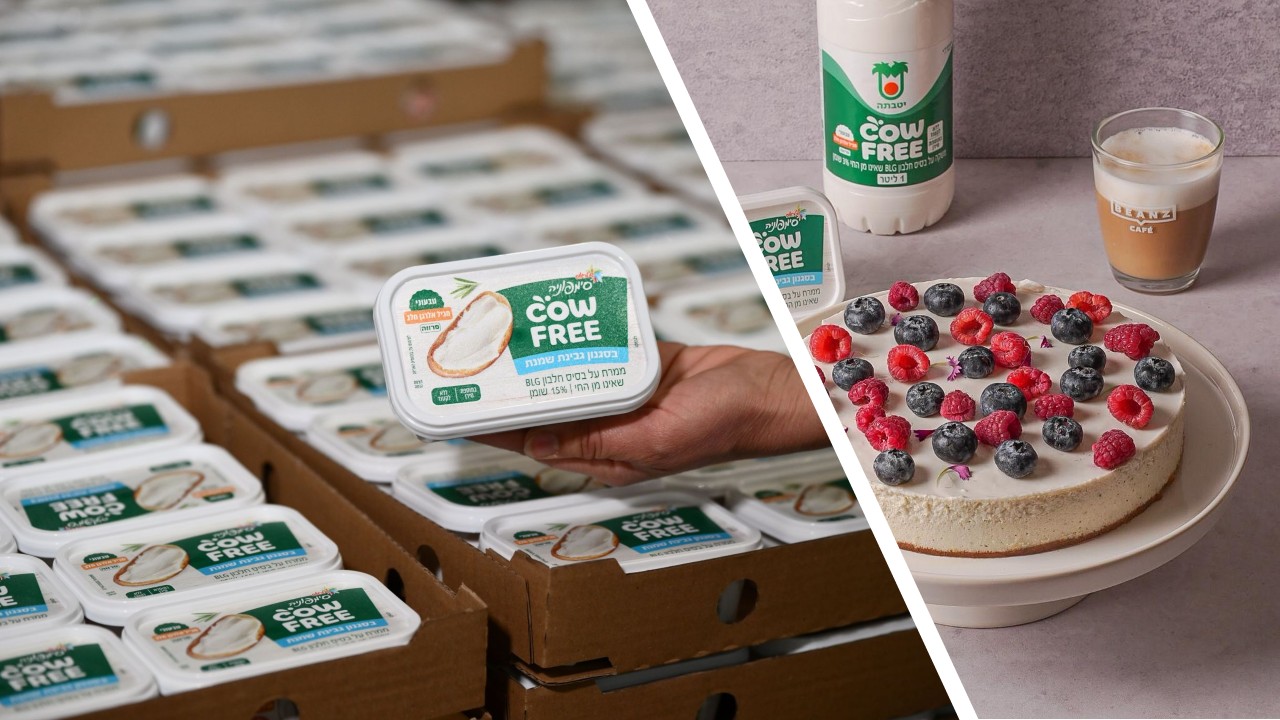
Israeli food giant Strauss Group is preparing to launch ‘cow-free’ drinks and cream cheese featuring whey protein from Imagindairy made by microbes, rather than cows.
The products, which will be sold under Strauss Group’s established Yotvata and Symphony brands, contain Imagindairy’s beta-lactoglobulin, a whey protein made in fermentation tanks by a genetically engineered strain of the fungus Aspergillus Oryzae (kōji).
The lactose-free products, which are both certified as kosher, will be available in retailers across Israel in the coming weeks, with additional cow-free products to follow, said Barak Weinstein, head of Strauss Neo: “The new products provide fresh solutions for a wide range of consumers whose needs have only been partially addressed until now.”
GRAS no questions letter
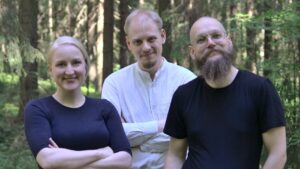
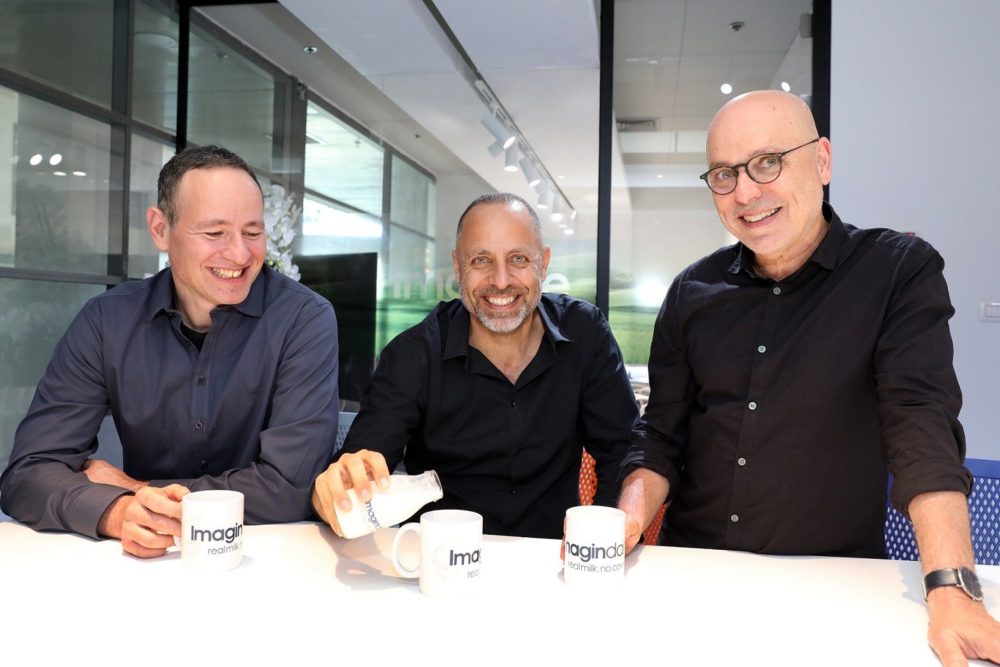
Founded in 2020 by Dr. Arie Abo, Dr. Tamir Tuller, and Dr. Eyal Afergan, Imagindairy has a customer pipeline spanning small companies keen to tap into the ‘animal-free dairy’ message, to multinationals looking to meet ESG goals by replacing some whey from cows with whey made by microbes, which has a lower carbon footprint, claims the firm.
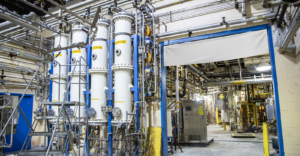
The company, which acquired a site with 100,000-L of fermentation capacity and associated downstream processing capabilities at an undisclosed location in early 2024, is one of a handful of startups to secure a “no questions letter” from the FDA for animal-free beta-lactoglobulin.
Perfect Day (which uses Trichoderma reesei fungus as its host microorganism) secured its letter in March 2020; Remilk (which uses Komagataella phaffii yeast) received its letter in February 2023; Imagindairy (which uses Aspergillus Oryzae fungus) received its letter in December 2023, and Vivici (which uses Komagataella phaffii yeast) secured its letter in February 2025.
The advantages of in-house production
Operating your own production lines confers several advantages, Imagindairy cofounder Eyal Afergan told us in a recent interview. “For very efficient R&D, to accelerate production and development, having your own production capacity makes a huge difference, because things do not always work in the same way at lab-, pilot-, and industrial-scale. Having our own large-scale lines means we can iterate fast.”
He added: “Most companies secure capacity with CMOs [contract manufacturing organizations], but there are two main disadvantages. One, the lead times… you need to wait at least 10 months to a year to secure access to production slots, and second, it costs a lot. We are doing some adjustments [to the newly-acquired equipment], but it’s suitable for our process.”
To those querying the unit economics of producing dairy proteins from fermentation, he said Imagindairy’s use of machine learning to optimize its production strain helped make the numbers add up.
“We’ve integrated AI machine learning technologies and very advanced molecular biology to get a more and more efficient strain that produces more and more protein. We have very good unit economics that mean we are already very competitive.”
He added: “Filamentous fungi are able to produce very high production yields compared to other microbial species such as yeast or bacteria.”
Microbes, not cows: Animal-free dairy
According to advocates of animal-free dairy, making dairy products without cows offers the best of both worlds: more sustainable and ethical products that deliver the nutrition and functionality of ‘real’ dairy.
As for the market opportunity, it’s still early days, with key stakeholders still exploring how best to communicate the concept to consumers, how to navigate the regulatory pathway in some markets, and how to position the opportunity for food companies.
French precision fermentation startup Verley (formerly Bon Vivant), for example, is developing a suite of ‘functionalized’ animal-free whey proteins that will hit the market in 2026, unlocking novel applications and adding value for food and beverage formulators. Dutch startup Vivici, in turn, says its beta-lactoglobulin is attracting interest in premium protein beverages and snacks, sports nutrition, and active nutrition.
On the manufacturing front, most firms in this space are working with co-manufacturers as VC funds have proved reluctant to fund large-scale capex projects and banks have been unwilling to finance technology that has not yet been proven in the marketplace.
The best-known player in the segment—industry pioneer Perfect Day—told us earlier this year that a new fermentation facility run with joint venture partner Zydus Lifesciences in Gujarat, India, would come online in 2026.
The firm, which became embroiled in an ugly legal dispute with Italian co-manufacturer Olon last year, told us in February that it was in “active discussions with a number of key partners who will serve as anchor customers for our new plant,” but has not provided any updates since.
Vivici meanwhile, has European partners “able to produce at full industrial scale,” and recently struck a deal with Liberation Labs to produce beta-lactoglobulin at its biomanufacturing facility in Indiana, which is expected to come online next year.