
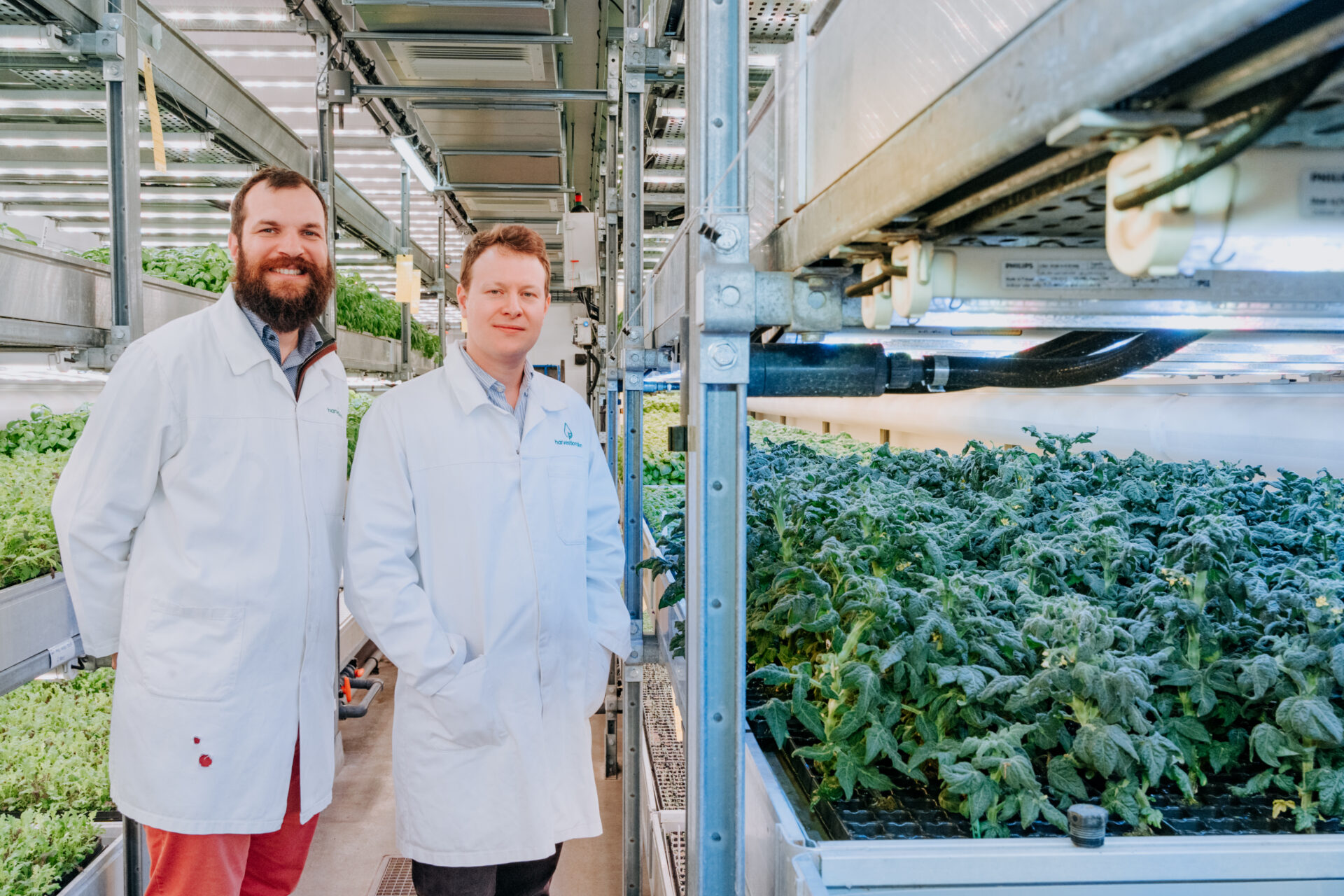
UK-based gene editing startup Phytoform is working with two of the world’s major seed companies—Beck’s Hybrids, the largest family-owned seed retailer in the US, and international breeder RAGT—to improve corn genetics for growers.
The companies will target “whole-plant corn architecture” to improve harvestable yield and productivity. While the specific trait remains undisclosed, Phytoform cofounder and CEO William Pelton describes the goal as improving how the plant grows and performs at a structural level.
Corn is the world’s most-produced cereal crop, underpinning everything from animal feed to fuel to food staples. Improving yield efficiency and plant architecture is increasingly more a necessity than a “nice to have” feature in crops. Research shows that every 1°C of warming to the planet reduces maize yields by roughly 7.4%, and some studies project losses of up to 28% by the end of the century even under optimistic adaptation scenarios.
Meanwhile, disease pressure is increasing for corn crops, production costs have roughly doubled since 2007, and the gap between potential and actual yields continues to widen. Plant architecture design such as Phytoform’s could in theory help crops do everything from capturing more light to using nitrogen more efficiently, in addition to tolerating climate stressors.
Complimenting, not replacing, seed breeding
The partnership combines Phytoform’s AI-powered crop development platform CRE.AI.TIVE with corn-breeding expertise from Beck’s and RAGT’s corn breeding expertise, proprietary germ plasm, and commercial market insights, says Pelton.
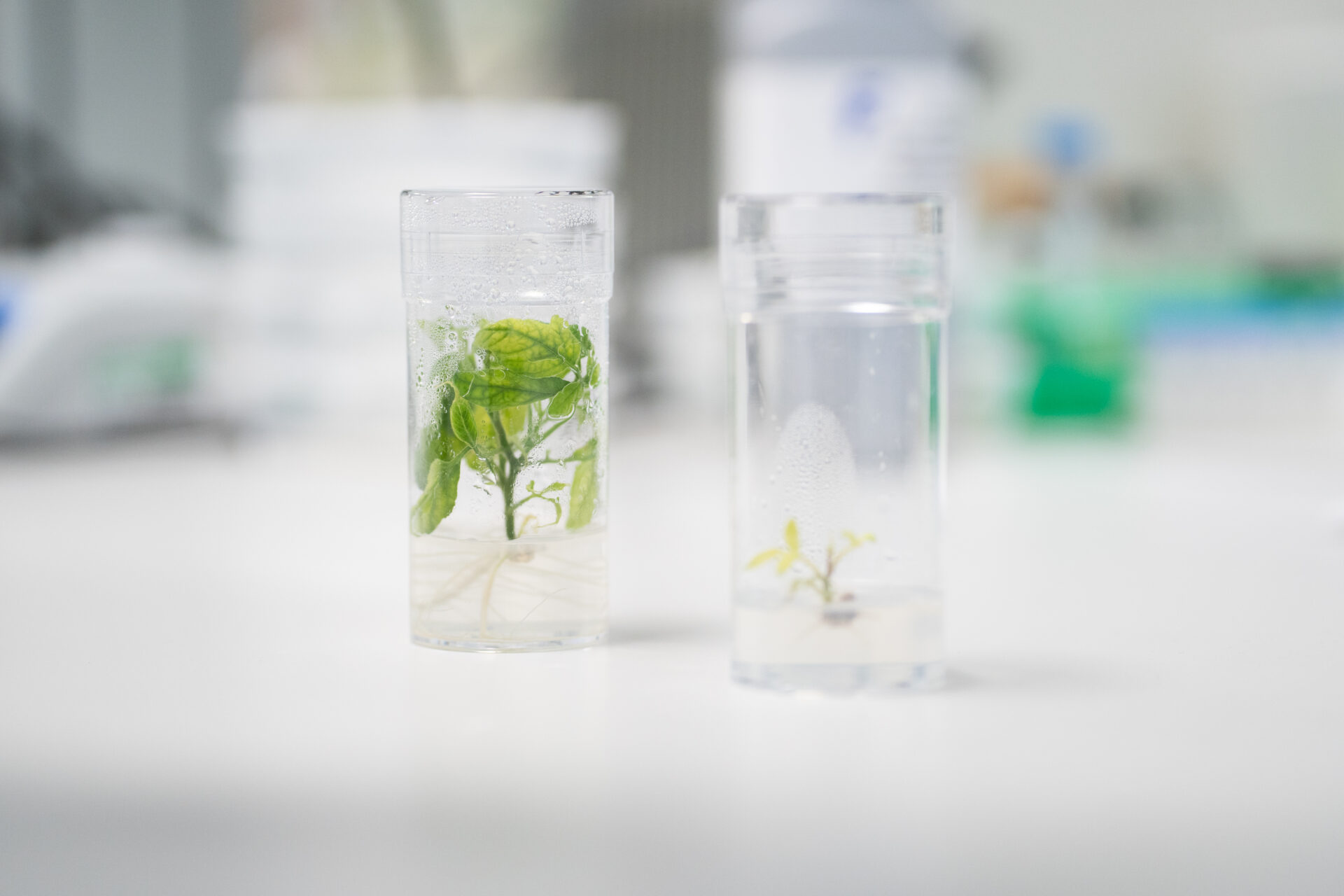
Phytoform’s CRE.AI.TIVE platform employs machine learning to identify small changes to DNA sequences in plants that could bring beneficial impacts if activated. It introduces these minimal changes to the plant without the need of foreign DNA.
Targeting native gene expression gives breeders a powerful way to address agronomic challenges in corn while allowing them to work within existing elite germplasm, he adds.
Both companies have their own genetics and breed plants, which Pelton says is important, as Phytoform’s technology isn’t meant to replace breeding.
“We work with breeders to accelerate their approach to specific challenges like plant architecture. They have the channels to market, they have breeding material, and they are providing some funding.
“The technology we are effectively designing with them is DNA sequences to change the activity of a target gene, so we can fine tune it for the output they need.”
Validating AI in ‘the real world’
The partnership will also work on validation to test Phytoform’s AI output in the real world, he says.
“People make many claims about AI, and it’s a bit of a buzzword, but honestly, we are not at the point where you can take something from an AI model and transfer it straight into the field and it works first time. You have to do some level of biological validation.”
Post validation, Phytoform will supply Beck’s and RAGT with edited material they can put into their breeding germplasm and take to market.
To start, the partnership will target major agricultural markets including the United States, South America, and potentially Europe. Both Beck’s and RAGT work across millions of acres, with Beck’s primarily focused on the Midwest corn belt in the US, and RAGT in about 50 different countries.
Pelton suggests the partnership is also an opportunity to make its AI tech more available to the wider seed industry, and that this is one of the first examples of this type of technology being used outside of major ag corporates.
Crop-agnostic gene editing
Phytoform landed $4 million earlier this year to use its technology for tomatoes, and also has a corn partnership in place with Corteva.
Since Phytoform’s CRE.AI.TIVE platform is crop-agnostic, there are future opportunities to apply the technology across additional species and trait challenges, according to the company.
“The thing that makes Phytoform unique is that we’re not just a gene discovery platform,” says Pelton. “We’re not finding genes and then using gene editing to put those genes into other plants or to delete those genes or whatever.”
This also allows breeders using the company’s gene-editing tech to bypass GMO regulations, potentially carving out a faster path to market.
Further reading:
Phytoform and Corteva partner on AI to boost disease resistance in corn
Phytoform says its gene-edited tomato could produce ‘up to 400% more fruit’ in a vertical farm
Phytoform bags $5.7m to boost crop resilience through genome edits