Seattle-based ag robotics firm Carbon Robotics has blamed “broader economic conditions” for an undisclosed number of layoffs but declined to provide additional context.
In a post on recruitment site Glassdoor on October 17, one former employee claimed that the company had “rapidly scaled headcount only to issue a sudden massive layoff months later, with some employees let go just weeks after starting.”
The post praised the “high degree of autonomy and ownership” afforded to staff at the firm, best known for zapping weeds with lasers, but claimed communications “lacked transparency, as leadership consistently painted an overly optimistic picture right up until the cuts.”
It added: “The final layoff message from the CEO also showed no sincerity or respect.”
VP marketing Brett Goodwin shared a statement with AgFunderNews and other media outlets including Geekwire, which broke the news, confirming an undisclosed number of layoffs. He did not respond to follow-up questions or clarify how many positions were impacted.
“We did have to realign costs due to broader economic conditions. Employees impacted were distributed across the US and internationally and across a variety of positions. Carbon Robotics has 275 employees worldwide.”
A Reddit post from March inviting people to join the firm described a “team of over 300 people” although Goodwin did not confirm this.
$100m+ revenue, IPO plans
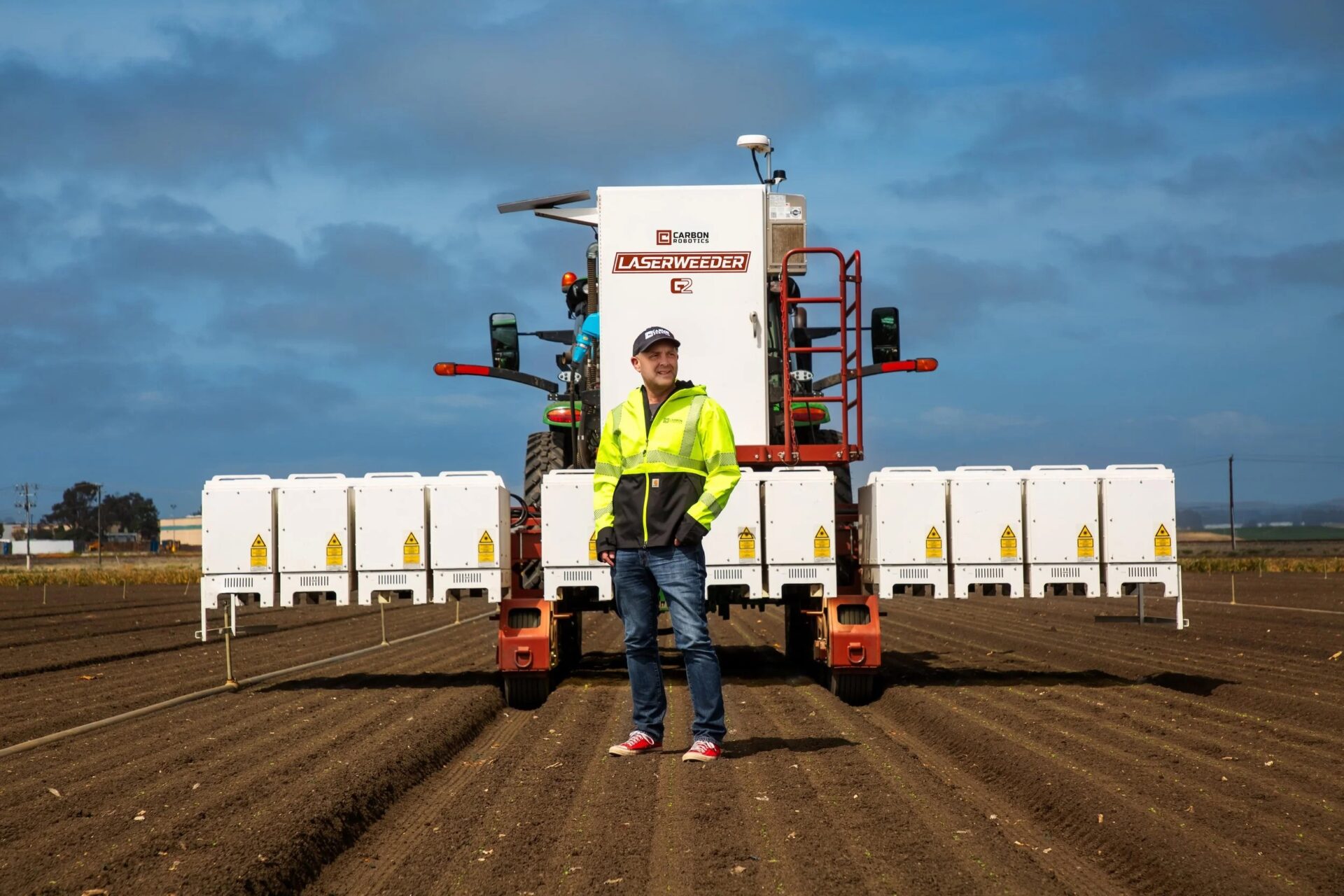
Speaking to AgFunderNews in August at the Ruggedize ag robotics conference at Reservoir Farms in Salinas, Carbon Robotics founder Paul Mikesell outlined plans to scale the laser weeding and tractor autonomy business, pointing to a market opportunity of thousands of laser weeders a year and potentially 30,000–40,000 tractors annually for its autonomy tech.
The firm, which passed the $100 million revenue mark in the year to March 2026, is also developing an as-yet-unannounced machine and ultimately aims to become a publicly traded company, said Mikesell.
“We are currently available in about 20 countries around the world, and we’re seeing the most traction in the United States, and then Western Europe, and Australia is pretty strong also. Laser weeders work in all the major growing regions where there’s a lot of vegetables grown.”
According to Mikesell, customers are seeing returns from reduced labor, reduced input costs, “dramatic yield improvements,” and helping farmers go from transplants to direct seeding, with payback in one to three years.
Asked whether the hefty price tag put customers off, he said: “The machines were so successful that we started getting more and more customers and eventually, the banks were coming to us saying, Okay, how do we help finance these things because we understand what this machine is, we see the residual value and we understand there’s a resale value.
“Now some of these banks are doing things like writing an operating lease for LaserWeeders. With an operating lease, you don’t have to put capital up front; you just pay a certain amount every month, and then as long as you’re making more money than that off the benefits from the LaserWeeder, you’re cash positive immediately.”
Further reading:
🎥 Carbon Robotics: $100m+ revenue, new machine and a path to IPO
🎥 ‘The whole system is now more investable’: Reservoir makes the case for ag robotics
🎥 TRIC Robotics scales to 1,500 strawberry acres with 15-robot fleet
🎥 From 2D images to 3D worlds: Bonsai bets on AI-powered farm robotics