
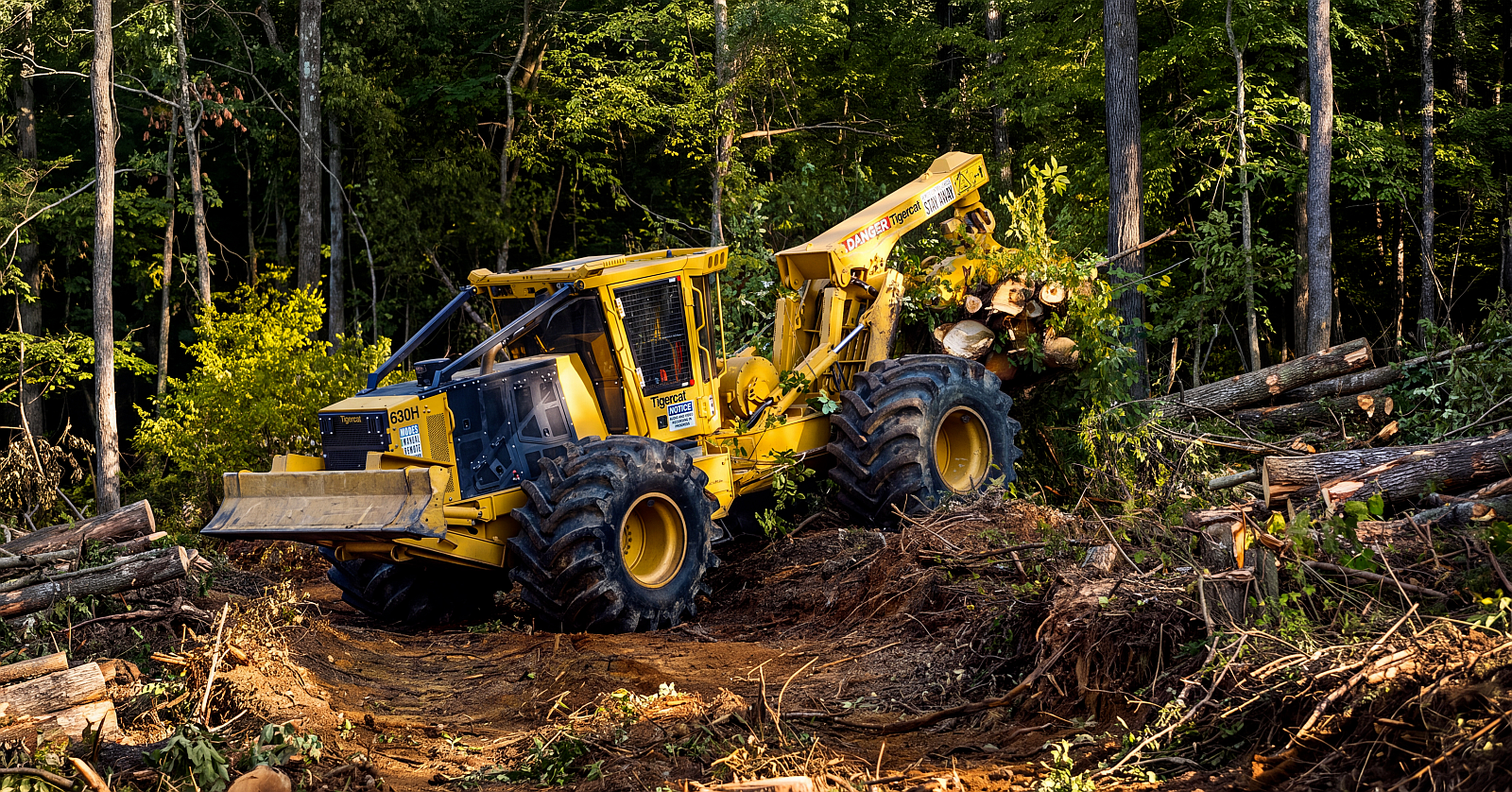
Kodama—a California-based startup building physical AI for forestry—has raised a $7 million seed round to accelerate its expansion after gaining traction in commercial logging operations across the US.
The round—co-led by Konvoy Ventures and Breakwater Ventures—includes participation from Blue Forest Asset Management, NYA Ventures, Breakthrough Energy Ventures, Congruent Ventures, Dangerous Ventures, M1C Ventures, and BTG Pactual. It brings the firm’s total funding to $14 million.
Labor reliability is the ‘number one issue’
Forestry contractors face growing demand for timber, forest management, and wildfire resilience but struggle to find and retain reliable operators, Kodama CEO Merrit Jenkins tells AgFunderNews.
The work is physically grueling, and when operators miss shifts, expensive machines called skidders used to drag logs sit idle, undermining the economics of the entire operation.
“The number one issue is labor reliability,” says Jenkins, who cofounded the company in 2021 with Matt Verminski.
“If you’re a logging business owner running a couple crews, they are generally on-site running machines by 5:30 in the morning. And they might be an hour or an hour and a half from the site. So as a crew member, you might be leaving your house at four in the morning and then working a 9-10 hour day in the woods.
“And this particular machine is driving over stumps and rocks all day, which is brutal on the body, so workforce turnover is very high. One of the loggers we work with had eight skidder operators in the past year.
“What I’m hearing is that someone will show up four days a week, but finding someone to show up five days is very challenging. And unlike, say, a fruit picking operation, where you might hire 40 people for a task and 30 show up [and you can still pick fruit], for this, you need a person in each machine. And these are also sequential operations, so if anyone doesn’t show up that day to be in the cab of the machine, productivity takes a massive hit.”
The path to autonomy
Right now, Kodama is “basically in a field of one” as other robotics players working in complex off-road environments have tended to focus on construction, mining, and agriculture, says Jenkins.
But it’s not going for complete autonomy from day one. The first iteration of the tech, which has been in commercial operation for a year, combines supervised autonomy with teleoperation, enabling machines to handle repeatable tasks while experienced operators remotely manage complex work and edge cases.
“The future of heavy equipment will not arrive in a single autonomous leap,” says Jenkins. “We are starting with human-in-the-loop autonomy systems and building toward an intelligent platform that orchestrates entire operations.”
In the first instance, this means operators that would previously man a skidder on site can now man that same machine—kitted out with Kodama’s autonomy stack—from the comfort of their own homes, says Jenkins.
“We’ve benchmarked our system and it matches the per-hour productivity of a manually operated machine. Our operators are paid similarly to in-cab operators, but our loaded cost [total employment cost] is lower due to lower workers’ comp costs and eliminated transportation costs to and from the woods. Daily one-way travel to the logging sites typically ranges from 45 minutes to two hours, so the cost of transportation is significant. The unit economics of course become even more compelling as operators control multiple machines.”
Remote operators can be trained in “about a day or two,” he says. “We like people who both have experience operating machines in real life, and also [ideally] have some level of gaming experience because they have good hand-eye coordination. We also generally hire on the younger end for this industry, meaning someone that’s in their mid-20s to early 40s.”
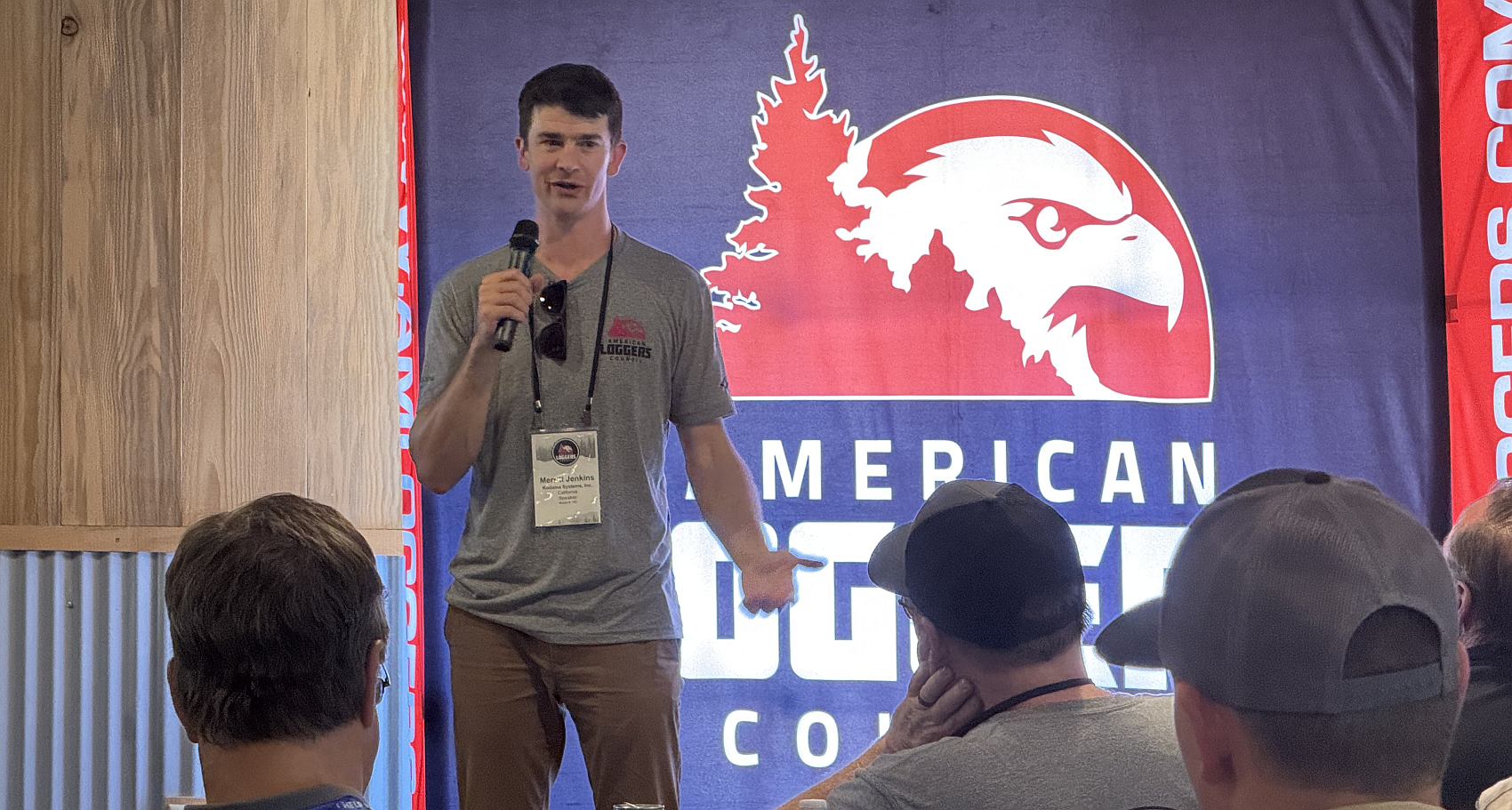
100,000+ tons moved in six months
The technology is operating in commercial logging operations across the Southeast, with machines equipped with Kodama’s tech moving 100,000+ tons of timber over the past six months, says Jenkins.
“We are integrated with two of the largest OEMs [original equipment manufacturers] in the forestry equipment world and our hardware stack consists of the latest NVIDIA compute, eight cameras, two LiDAR [sensors], Starlink, and GPS. It takes one to one and a half days [to retrofit a skidder].”
The business case is built around increasing capacity by operating longer shifts, eliminating transportation costs for operators traveling to and from the woods, and improving labor reliability, says Jenkins. “We are now preparing to run this 20 hours a day instead of 10. We can also operate at night. LiDAR doesn’t care if it’s daytime or nighttime.
“But the biggest ROI is that someone shows up to work. And for our remote workers, their quality of life is dramatically better.”
The business model
Like many players in the physical AI space, Kodama is offering robotics as a service, says Jenkins. “So they [logging contractors] pay us anywhere between a day rate and a month rate for the service.”
The machines run on diesel and need refueling and greasing, he notes, so there still needs to be some presence on the ground. “But our big focus now is enabling one operator to control multiple machines.”
As for customer interest, he says, “We have seen a lot of interest internationally from Brazil to Australia. The business model will be different depending on the geographic market and the structure of the industry.”
Kodama is also adding a data layer for clients, says Jenkins. “We’re generating high-resolution under-canopy maps all day long when we do thinning [cutting down, say, 50% of the trees in a given area], and for the remaining trees, the timberland owners care about trees per acre, diameter at breast height, basal area, and all of those parameters are captured in the LiDAR data.”
Accessing the market
When it comes to market access, logging contractors are the customers, but Kodama typically reaches them through timberland owners, OEMs and dealership networks. Because those channels are relatively consolidated, the company can reach a large number of contractors through a comparatively small number of relationships, adds Jenkins.
“The dealership networks have relationships across the logging contractors. And at this point, nearly the entirety of the southern logging industry knows about us.”
Further reading:
🎥 Polybee scales physical AI agents for “immediate, bankable ROI” in specialty crops
🎥 From 2D images to 3D worlds: Bonsai bets on AI-powered farm robotics
🎥 Carbon Robotics: $100m+ revenue, new machine and a path to IPO
🎥 ‘The whole system is now more investable’: Reservoir makes the case for ag robotics