
[Disclosure: AgFunderNews’ parent company AgFunder is an investor in IIF.]
IIF, an Australian investment platform connecting farmers with consumers, will expand across Canada following new funding from food- and ag-focused firm Verdex Capital.
Verdex is IIF’s first Canadian investor, and will be an important partner for the startup as it makes its platform available to both farmers and consumers around the country. Existing investors AgFunder and Investible also participated in the new funding round.
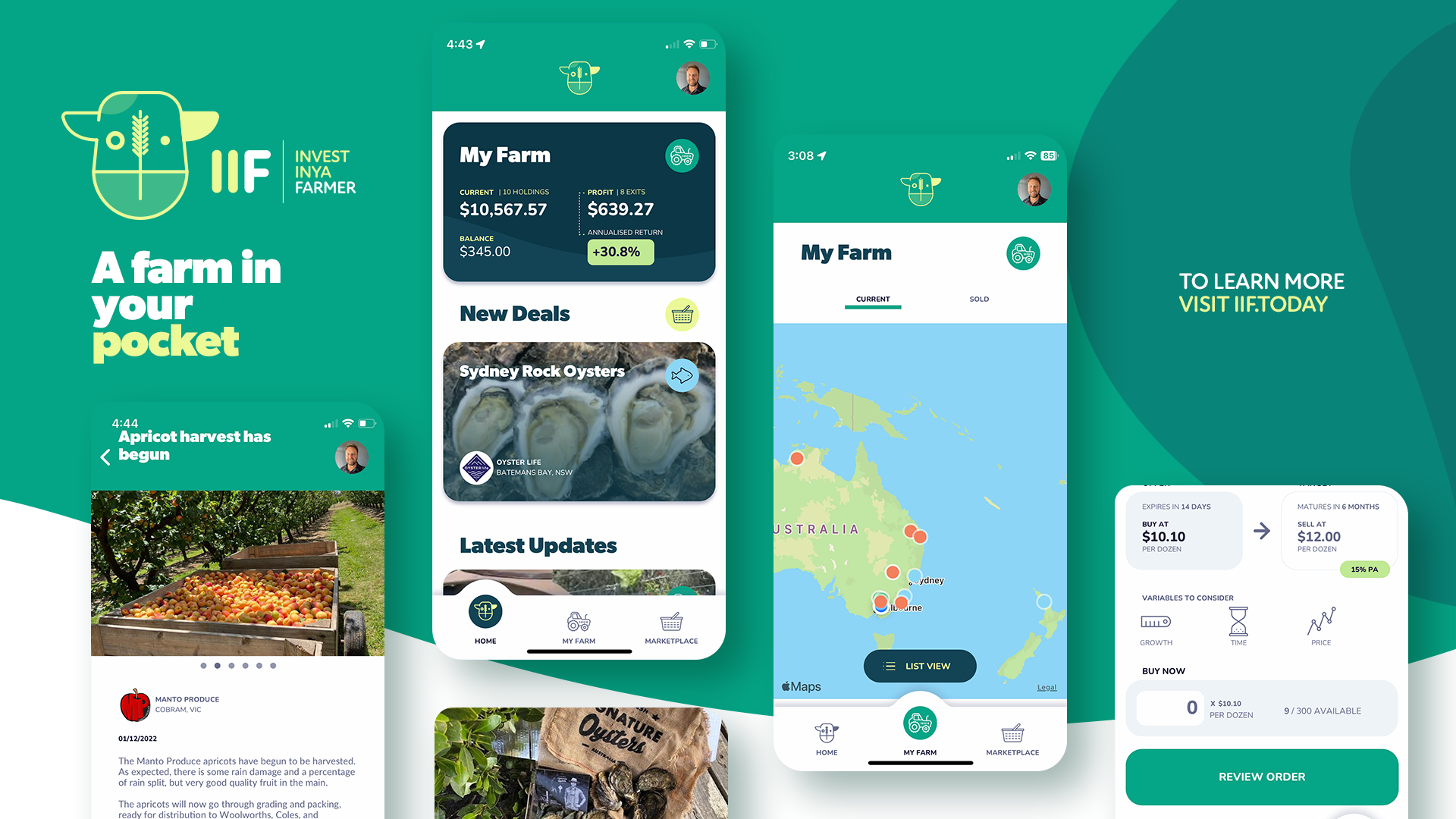
In the company’s own words, IIF “lets everyday people invest in farmers and what they produce, without owning a farm.”
Via a simple app, users can invest in various parts of agriculture—from beehives or single cows to a basket of oysters or an acre of canola—and track the status of their investments throughout the season. These investments cover the producer’s costs, and depending on the season, provide financial returns to users.
More importantly, the investments provide liquidity and risk management for farmers, helping them access a new type of capital outside of traditional ag lending, notes Verdex CEO Collin Phillip.
“It’s a way of expanding their capital base without triggering any other covenants or ratios for their lending,” he tells AgFunderNews. “A farmer that has a successful IIF crop could actually take on additional financing from a traditional lender that they deal with currently.”
A ‘truly national’ reach
Verdex Capital’s overarching mission is tied to boosting and bringing value to Canadian agrifood. While the firm has a number of companies in its portfolio, including ag biotech Ichor Ag and crop management system Picketa, it says IIF is one of the few that could have an impact across the entire country.
“We’re national in scope, and this is a portfolio company that is truly national in its reach as well,” says Philip, who cites row crop farming, greenhouses, and seafood production as just a few areas IIF touches.
Canada’s agricultural system currently employs more than 2 million individuals and accounts for around 7% of the country’s overall GDP. Climate change along with tariffs and trade disputes have made the sector much more vulnerable in recent years, putting farmer productivity and incomes at risk.
“We spend a lot of time looking at innovations on farm to help the farmer do more with less, grow their acres, be more efficient, whatever it is,” he adds. “But you can’t do any of that if you don’t actually have available capital to invest in new technology.”
Equipping growers with investments via IIF could give them the financing needed to trial new technologies or farming practices they might not otherwise have the means to employ with a more traditional lending vehicle.
The IIF platform also helps close the gap between producers and consumers, which Philip says is “more important than ever before.”
“This is a really, really innovative way to both help farmers and give access to consumers, not just to understand farming and farm production, but also to invest in that class. There really is no other vehicle for someone in downtown Calgary to invest in farming. This is as close as you can get to investing alongside the farmer themselves.”
‘Applicable in any market’
IIF recently earned regulatory approval in New Zealand and continues building momentum in its home country Australia.
Founder and CEO Nathan McPhee suggests Canada was a natural next market based on the fact that it’s similar to Australia in many ways: high levels of urbanization combined with a large commercial agriculture sector that’s becoming increasingly volatile.
“We proved the model in Australia. What we’re demonstrating in Canada is how rapidly it can be replicated in a new market,” he tells AgFunderNews. “If we can repeat that here, the opportunity across developed agricultural markets is significant.”
Philip says Canada is often a logical entry point into the North American market for many startups.
“Canada historically has been a testing ground for expansion into a bigger market like the US. If you get it wrong in Canada, it’s not great, but it’s not catastrophic. You blow up in the US, it’s fairly catastrophic.”
McPhee, who has relocated to Calgary to focus on the expansion, agrees that Canada is “a softer landing pad than the US.”
More importantly, says Philip, starting in Canada is a chance to bring the technology to that market sooner. “Rather than being an afterthought market, it’s an intentional expansion to help Canadian producers.”